
What does S420MC steel for car body stand for?
Explore the comprehensive guide to S420MC steel, its chemical composition, mechanical properties, and critical role in automotive lightweighting and structural safety.
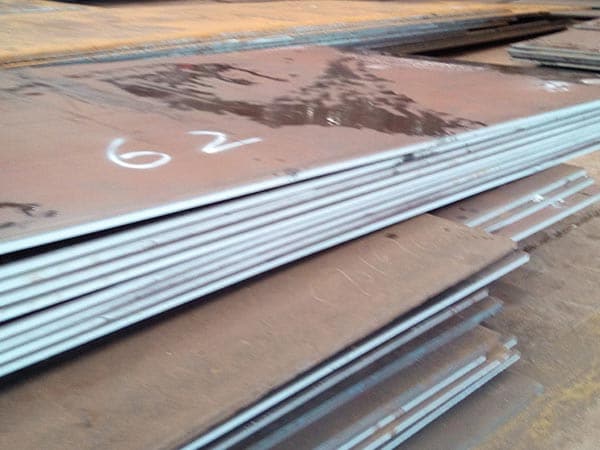
Decoding the Nomenclature: What S420MC Represents
In the complex world of metallurgy and automotive engineering, S420MC is not just a random sequence of characters. It is a precise technical designation under the European standard EN 10149-2. To understand its role in car body construction, we must first break down its alphanumeric code. The letter 'S' stands for 'Structural Steel,' indicating its primary purpose in load-bearing applications. The number '420' represents the minimum yield strength of 420 Megapascals (MPa). The 'M' signifies that the steel has undergone 'Thermomechanically Rolled' processing, a specialized heat treatment during the rolling phase. Finally, the 'C' denotes its suitability for 'Cold Forming,' meaning it can be bent or shaped at room temperature without cracking.
The Science of Thermomechanical Rolling (The 'M' Factor)
The thermomechanical rolling process is what sets S420MC apart from traditional hot-rolled steels. Unlike standard normalization, this process involves precise temperature control and specific deformation rates during the rolling mill phase. This technique results in an extremely fine-grained microstructure. A finer grain size is the only metallurgical mechanism that simultaneously increases both strength and toughness. For automotive manufacturers, this means S420MC can offer higher structural integrity while remaining lighter than conventional carbon steels. The fine grain structure also improves the steel's resistance to brittle fracture, which is a critical safety requirement for vehicle frames and chassis components.
Mechanical Properties and Performance Benchmarks
When selecting materials for car bodies, engineers look at the balance between strength and ductility. S420MC provides a superior strength-to-weight ratio compared to standard S355 grades. This allows for thinner sections to be used without compromising the vehicle's safety or load-carrying capacity.
| Property | Value Range (Typical) |
|---|---|
| Yield Strength (ReH) | Min. 420 MPa |
| Tensile Strength (Rm) | 480 - 620 MPa |
| Elongation (A80mm) | Min. 16% - 19% (depending on thickness) |
| Impact Energy (Charpy V-notch) | Tested at -20°C or -40°C upon request |
These mechanical properties ensure that the material can absorb significant energy during a collision, acting as a vital part of the vehicle's crumple zone while maintaining the rigidity of the passenger cabin.
Chemical Composition: The Role of Micro-Alloying
S420MC is classified as a High Strength Low Alloy (HSLA) steel. Its strength is not derived from high carbon content—which would make the steel brittle and difficult to weld—but from the strategic addition of micro-alloying elements like Niobium (Nb), Vanadium (V), and Titanium (Ti). These elements form carbides and nitrides that pin grain boundaries during processing, preventing grain growth and enhancing the precipitation hardening effect.
- Carbon (C): Kept below 0.12% to ensure excellent weldability and prevent hardening in the heat-affected zone.
- Manganese (Mn): Typically around 1.60%, it increases hardenability and strength.
- Silicon (Si): Controlled to maintain surface quality and prevent scale issues during hot-dip galvanizing.
- Micro-alloys (Nb, V, Ti): Their combined total is usually less than 0.22%, yet they are the primary drivers of the 420 MPa yield strength.
Exceptional Cold Forming and Fabricating Performance
The 'C' in S420MC highlights its exceptional cold-forming capabilities. In automotive manufacturing, complex shapes are often required for chassis members, cross-beams, and longitudinal rails. S420MC allows for tight bending radii without the risk of surface tearing or edge cracking. Because of its low carbon equivalent (CEV), it exhibits minimal springback compared to other high-strength steels, which improves dimensional accuracy during mass production. For manufacturers, this translates to fewer rejects and more efficient stamping processes.
Welding Characteristics in Automotive Assembly
Modern car bodies are assembled using a variety of welding techniques, including spot welding, laser welding, and MIG/MAG welding. S420MC is highly favored because its low alloy content results in a low carbon equivalent. This means the steel is less susceptible to cold cracking in the heat-affected zone (HAZ). It does not require pre-heating or post-weld heat treatment, which is essential for high-speed automated production lines. The stability of the microstructure ensures that the welded joints retain a high percentage of the base metal's strength, ensuring the overall structural continuity of the vehicle frame.
Environmental Adaptability and Durability
Automotive components are exposed to diverse environmental conditions, from sub-zero arctic temperatures to high-humidity coastal regions. S420MC is designed to maintain its toughness even at low temperatures. This is particularly important for heavy-duty trucks and commercial vehicles that operate in harsh climates. Furthermore, S420MC is highly compatible with modern coating technologies. Whether it is E-coating (electrophoretic painting) or hot-dip galvanizing, the surface of S420MC provides excellent adhesion, ensuring long-term corrosion resistance and extending the service life of the vehicle.
Applications in the Automotive Industry
The primary application of S420MC is in the structural skeleton of vehicles where weight reduction is paramount. By replacing traditional structural steels with S420MC, manufacturers can reduce the weight of a component by 15% to 25% while maintaining the same load-bearing capacity. Common applications include:
- Truck Chassis Frames: The high yield strength allows for thinner, lighter frame rails that can still carry heavy payloads.
- Cross Members: Providing lateral rigidity to the vehicle frame while allowing for complex geometries.
- Longitudinal Beams: Critical for crash safety and energy absorption during front-end impacts.
- Suspension Components: Control arms and brackets that require a balance of strength and fatigue resistance.
- Pressed Parts: Brackets and reinforcements within the car body-in-white (BIW).
The Role of S420MC in Sustainable Manufacturing
As global regulations on carbon emissions become stricter, the automotive industry is under pressure to produce more fuel-efficient vehicles. Lightweighting is the most effective way to achieve this. S420MC contributes to sustainability by enabling "down-gauging"—using thinner steel sheets to achieve the same structural performance. This reduces the total amount of raw material required and lowers the vehicle's fuel consumption and CO2 footprint over its lifecycle. Additionally, as a low-alloy steel, S420MC is fully recyclable, fitting perfectly into the circular economy of the modern steel and automotive industries.
Selecting the Right S420MC Supplier
Not all S420MC is created equal. When sourcing this material for automotive production, it is essential to verify the mill's compliance with EN 10149-2 standards. Key quality indicators include tight tolerances on thickness and flatness, consistent chemical composition, and verified mechanical test reports. High-quality S420MC should have a clean surface finish, free from slivers or scale pits, to ensure optimal performance in automated stamping and welding cells. Working with a supplier who understands the nuances of thermomechanical rolling ensures that the material will perform predictably during the most demanding fabrication processes.
Leave a message