
How to improve the hardenability of s700mce galvanealed coil
Explore professional strategies to enhance the hardenability and mechanical performance of S700MC galvanealed coils through micro-alloying, thermal control, and process optimization.
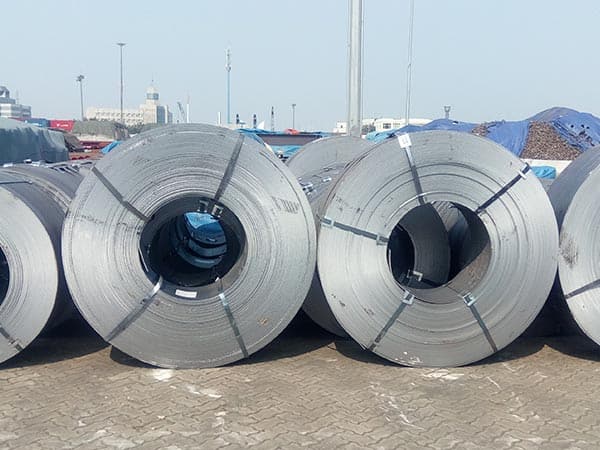
The Fundamentals of S700MC and Galvanealed Surface Interaction
S700MC is a high-strength low-alloy (HSLA) steel produced through thermomechanical rolling, designed to offer a minimum yield strength of 700 MPa. When this material is processed into a galvanealed (ZF) coil, it undergoes a specific heat treatment where the zinc coating is heated to allow iron from the substrate to diffuse into the zinc layer. This creates a zinc-iron alloy coating that is exceptionally hard and provides superior weldability and paint adhesion. However, the thermal cycle required for galvanealing can influence the underlying microstructure. Improving the hardenability of S700MC galvanealed coils involves a sophisticated balance between chemical composition and the thermal history of the strip to ensure that the high-strength properties are not only maintained but enhanced during subsequent processing.
Chemical Composition Optimization for Enhanced Hardenability
The hardenability of S700MC is primarily driven by its micro-alloying elements, specifically Niobium (Nb), Titanium (Ti), and Vanadium (V). To improve hardenability, the focus must be on the synergy between these elements. Niobium plays a critical role in grain refinement by pinning grain boundaries during the recrystallization phase. By increasing the volume fraction of Nb(C,N) precipitates, the steel maintains a fine-grained structure even when subjected to the reheating phases of the galvanealing line.
Adding trace amounts of Boron (B) is one of the most effective ways to significantly boost hardenability. Boron segregates to the austenite grain boundaries, delaying the transformation to ferrite and pearlite, which allows for the formation of stronger phases like bainite or even martensite at slower cooling rates. When combined with Manganese (Mn) levels optimized between 1.5% and 2.1%, the Continuous Cooling Transformation (CCT) curve shifts to the right, providing a wider window for achieving the desired hardness throughout the coil thickness.
The Role of Thermomechanical Control Process (TMCP)
Hardenability is not solely a function of chemistry; the rolling process itself dictates the final response of the S700MC substrate. Implementing a rigorous TMCP strategy ensures that the austenite is heavily deformed (pancaked) before transformation. This high dislocation density provides numerous nucleation sites for fine precipitates. To improve the hardenability of the galvanealed product, the finishing temperature must be precisely controlled. If the finishing temperature is too high, grain growth occurs, reducing the effective hardenability. Conversely, a lower finishing temperature combined with accelerated cooling (ACC) ensures a predominantly bainitic microstructure, which is more resistant to the tempering effects of the galvanealing furnace.
Thermal Cycle Management in the Galvanealing Line
The galvanealing process typically involves reheating the galvanized strip to 500°C–560°C. This temperature range can lead to "over-aging" in some HSLA steels, causing a drop in yield strength. To improve hardenability and maintain strength, the heating rate and soaking time must be minimized. Modern galvanealing lines use induction heating to rapidly reach the alloying temperature, which limits the diffusion time and prevents the coarsening of the strengthening precipitates. By maintaining a precise iron content (8-12%) in the coating, the integrity of the substrate's hardenable phases is preserved.
Mechanical Properties and Performance Data
The following table outlines the typical mechanical properties of S700MC galvanealed coils when hardenability is optimized through chemical and thermal control:
| Property | Standard Range | Optimized Range (Enhanced Hardenability) |
|---|---|---|
| Yield Strength (MPa) | ≥ 700 | 720 - 780 |
| Tensile Strength (MPa) | 750 - 950 | 780 - 980 |
| Elongation A80 (%) | ≥ 10 | 12 - 15 |
| Bending Radius (180°) | 0.5t - 1.0t | 0.5t |
| Hardness (HV) | 230 - 260 | 250 - 280 |
Influence of Nitrogen and Aluminum Balance
To further refine hardenability, the ratio of Aluminum (Al) to Nitrogen (N) must be strictly managed. Aluminum is used for deoxidation, but it also forms AlN precipitates. If Nitrogen is not effectively tied up by Titanium, it can interfere with the effectiveness of Boron. By ensuring a Ti/N ratio of at least 3.4, Titanium Nitrides (TiN) form at high temperatures, protecting the Boron and allowing it to remain in solid solution to perform its hardenability-enhancing function. This chemical precision is vital for S700MC coils intended for complex structural components where uniform hardness is mandatory.
Process Performance: Welding and Cold Forming
Improving hardenability often raises concerns regarding weldability. However, because S700MC achieves its strength through grain refinement and micro-alloying rather than high carbon content (C ≤ 0.12%), it retains excellent weldability. The galvanealed coating further improves spot welding performance compared to pure zinc coatings by providing a more stable electrical resistance. During cold forming, the enhanced hardenability ensures that the material does not undergo localized thinning. The work-hardening exponent (n-value) is maintained, allowing for better strain distribution in complex geometries such as automotive chassis parts or crane boom sections.
Environmental and Industry Adaptability
S700MC galvanealed coils are increasingly used in environments requiring both high structural integrity and corrosion resistance. The improved hardenability allows for the reduction of material thickness (lightweighting) without sacrificing safety. In the heavy transport and automotive industries, this translates to lower fuel consumption and higher payload capacities. The galvanealed surface provides a robust barrier against cyclic corrosion, making it suitable for underbody components exposed to road salts and moisture. The synergy of a hardenable HSLA core and a Zn-Fe alloy shell makes this material a premier choice for modern engineering challenges.
Advanced Cooling Strategies Post-Galvanealing
The final step in improving the hardenability profile involves the cooling section after the galvanealing furnace. Implementing a multi-stage cooling process—initial slow cooling to stabilize the Zn-Fe phase followed by rapid water quenching or high-velocity air cooling—can lock in the mechanical properties. This rapid final cooling prevents any secondary transformation of the remaining austenite into softer phases, ensuring that the hardness achieved through micro-alloying is consistent from the surface to the core of the coil. This level of control is what distinguishes premium S700MC galvanealed products in the global steel market.
Leave a message