
What is the cheapest density of domex steel?
Discover the cost-effectiveness of Domex (Strenx) steel. Learn how its high strength-to-weight ratio and consistent density optimize manufacturing costs and performance.
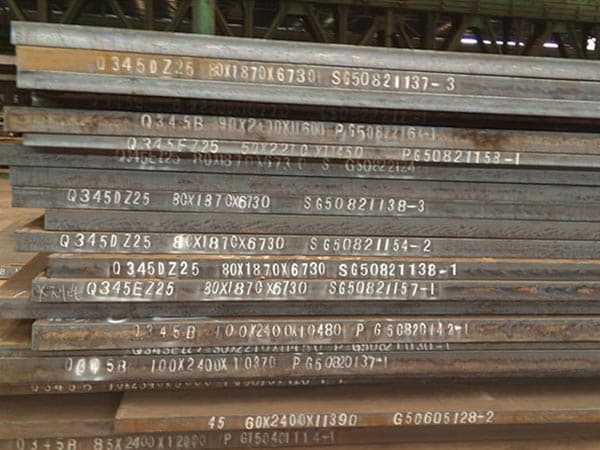
The Physical Reality of Domex Steel Density
When discussing the cheapest density of Domex steel, it is essential to first clarify a fundamental metallurgical principle: the physical density of steel remains remarkably constant. For Domex steel—now widely known under the brand name Strenx—the density is approximately 7.85 g/cm³ (7850 kg/m³). This value is consistent across the entire range of grades, from Domex 240 to Domex 700 and beyond. Therefore, the term "cheapest density" does not refer to a variation in the material's mass per unit volume, but rather to the cost-efficiency achieved through weight reduction and the optimization of material usage.
Domex is a high-strength low-alloy (HSLA) steel produced through a thermomechanical rolling process. By utilizing its superior yield strength, engineers can specify thinner gauges without sacrificing structural integrity. This "down-gauging" is where the true cost savings are found. While the price per ton of high-strength Domex might be higher than standard mild steel, the total cost of the final product often decreases because significantly less material is required to support the same load.
The Economic Logic of High-Strength Steel Grades
The quest for the most cost-effective Domex grade requires an understanding of the relationship between yield strength and material volume. Standard structural steels like S235 or S355 require thicker plates to handle high stresses. In contrast, Domex 700MC offers a yield strength of 700 MPa, which is double that of S355. This allows for a reduction in thickness by up to 40% in many applications.
When you reduce the thickness, you are effectively buying less "weight" to fulfill the same functional requirement. This is the secret to finding the "cheapest" way to use steel density. By selecting a grade that maximizes strength, you minimize the volume of steel purchased, transported, and processed. The total cost of ownership drops because lighter structures consume less fuel during transport and allow for higher payloads in mobile equipment.
Mechanical Properties and Performance Stability
Domex steels are engineered for consistency. The thermomechanical rolling process ensures a fine-grained microstructure that provides excellent toughness and fatigue resistance. Unlike traditional hot-rolled steels, Domex maintains tight tolerances on thickness and flatness, which is critical for automated manufacturing environments.
| Grade Name | Yield Strength (min MPa) | Tensile Strength (MPa) | Elongation (min %) | Density (kg/m³) |
|---|---|---|---|---|
| Domex 355MC | 355 | 430-550 | 23 | 7850 |
| Domex 420MC | 420 | 480-620 | 20 | 7850 |
| Domex 600MC | 600 | 650-820 | 13 | 7850 |
| Domex 700MC | 700 | 750-950 | 12 | 7850 |
The table above illustrates that while the density remains static at 7850 kg/m³, the yield strength increases dramatically. For a manufacturer, the "cheapest" grade is often the one that hits the sweet spot between material cost and the ability to reduce component weight. For heavy-duty trailers, Domex 700 is frequently cited as the most economical choice because the weight savings directly translate into increased shipping capacity.
Processing Advantages: Cutting, Welding, and Bending
The cost-effectiveness of Domex steel extends beyond the raw material price. Its low carbon equivalent (CEV) makes it exceptionally easy to weld. Traditional high-strength steels often require expensive pre-heating or post-weld heat treatments to prevent cracking. Domex eliminates many of these steps, reducing labor costs and energy consumption in the workshop.
- Cold Forming: Domex is designed for cold bending. Its high purity and fine grain structure allow for very tight bending radii without the risk of surface cracking.
- Laser and Plasma Cutting: The consistent chemical composition ensures clean edges and minimal dross, which reduces the need for secondary grinding operations.
- Welding Efficiency: Excellent weldability allows for high-speed automated welding, ensuring high throughput in production lines.
By reducing processing time and secondary operations, the "effective cost" of the steel density is lowered. A cheaper, lower-grade steel might actually be more expensive to fabricate because it requires more passes during welding or fails more frequently during the bending process.
Environmental Adaptation and Sustainability
In the modern industrial landscape, environmental impact is a cost factor. Using high-strength Domex steel contributes to a lower carbon footprint. Because the material is stronger, you use less of it. This means less iron ore is mined, less coal is burned for smelting, and fewer emissions are generated during the production of each component.
Furthermore, the weight reduction in the final product—such as a crane arm or a truck chassis—leads to significant fuel savings over the vehicle's lifespan. This makes Domex an environmentally "cheap" choice when considering the Life Cycle Assessment (LCA). The density of the steel doesn't change, but the efficiency with which that density is utilized improves the overall sustainability profile of the project.
Industry-Specific Cost Benefits
The application of Domex spans across multiple high-demand sectors. In the transportation industry, the goal is to maximize payload. Every kilogram saved in the chassis is an extra kilogram of cargo that can be carried. Here, Domex 700 is the industry standard for cross-members and longitudinal beams.
In the lifting and crane industry, high-strength steel is mandatory. The ability to reach higher and lift more depends on the boom's weight. By using Domex, manufacturers can create lighter, more stable cranes that are easier to transport between job sites. The "cheapness" here is found in the operational flexibility and the reduced need for heavy counterweights.
Agricultural machinery also benefits from the impact resistance of Domex. Equipment like plows and harvesters must withstand abrasive soil and sudden impacts. The toughness of Domex ensures that these machines last longer, reducing the cost of replacement parts and downtime. When you factor in the longevity of the material, the initial investment in a high-strength grade becomes the most economical path forward.
Optimizing Procurement for Domex Steel
To get the best value, procurement specialists should focus on thickness optimization. Since density is fixed, the only way to reduce weight is to reduce volume. Working closely with designers to move from an 8mm standard plate to a 5mm Domex plate can result in a 37.5% reduction in weight. This reduction often offsets the higher price per kilogram of the specialized steel.
Additionally, sourcing Domex in the correct sheet or coil sizes can minimize scrap. The high precision of the rolling process means that Domex has very little crown (thickness variation across the width), allowing for more efficient nesting of parts during laser cutting. This maximizes material utilization, ensuring that every gram of the 7.85 g/cm³ density is used effectively.
Final Technical Considerations
When selecting a grade, it is vital to consider the impact toughness requirements. Domex grades are often available with specific impact testing at low temperatures (e.g., -20°C or -40°C), designated by suffixes like 'MC'. If your application involves cold climates, choosing a grade with guaranteed toughness prevents brittle fracture, which is a catastrophic and expensive failure mode. Investing in the correct grade for the environment is always cheaper than dealing with field failures.
The "cheapest density" of Domex is therefore a holistic concept. It is the result of using a material with a standard density of 7850 kg/m³ but with such high performance that you need very little of it to achieve your engineering goals. By focusing on high-strength grades like Domex 700MC, manufacturers can reduce material weight, lower fabrication costs, and deliver a superior, more sustainable product to the market.
Leave a message