
China s460mc 1.0982 en 10149-2 pickling steel sheet prices continue to decline
In-depth analysis of China S460MC (1.0982) pickling steel sheet prices, mechanical properties, and industrial applications. Expert guide for steel procurement.
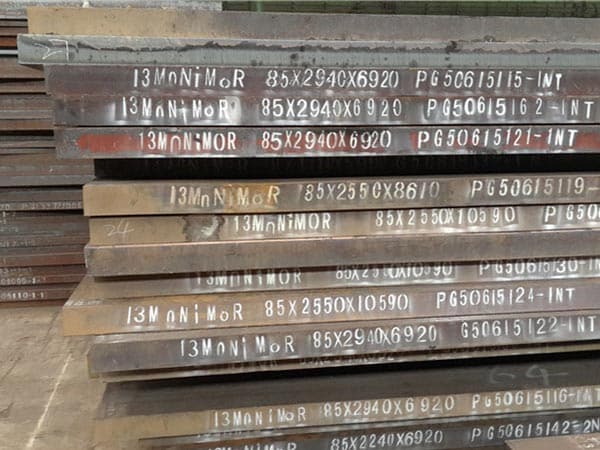
Understanding the Market Dynamics of S460MC 1.0982 Pickling Steel Sheets
The global steel market is currently navigating a complex phase, and specifically, China S460MC 1.0982 EN 10149-2 pickling steel sheet prices continue to decline. This trend is driven by a combination of increased domestic production capacity and a shift in global demand for high-strength low-alloy (HSLA) materials. For procurement specialists and structural engineers, this price correction offers a strategic window to acquire premium materials at a lower cost-to-performance ratio. S460MC is not merely a commodity; it is a sophisticated metallurgical product designed for high-stress environments where weight reduction and structural integrity are paramount.
Metallurgical Profile: The Chemistry of S460MC (1.0982)
The excellence of S460MC, designated by the numeric material number 1.0982 under the EN 10149-2 standard, lies in its precise chemical composition. Unlike standard carbon steels, S460MC utilizes micro-alloying elements to achieve its superior strength without sacrificing ductility. The addition of Niobium (Nb), Titanium (Ti), and Vanadium (V) facilitates grain refinement during the thermomechanical rolling process. This process ensures that the steel maintains a fine-grained microstructure, which is essential for both toughness and weldability.
| Element | Max % (S460MC) |
|---|---|
| Carbon (C) | 0.12 |
| Manganese (Mn) | 1.60 |
| Silicon (Si) | 0.50 |
| Phosphorus (P) | 0.025 |
| Sulfur (S) | 0.015 |
| Aluminium (Al) | 0.015 |
| Nb + Ti + V | 0.22 |
Low carbon content is a defining feature of 1.0982 steel, ensuring that the material remains highly weldable and resistant to cold cracking. The strict control over sulfur and phosphorus levels enhances the internal purity of the steel, reducing the risk of lamellar tearing in complex welded joints.
Mechanical Properties and Structural Advantages
The "460" in S460MC represents the minimum yield strength of 460 MPa. This high yield point allows engineers to design thinner sections that can carry the same loads as thicker, heavier mild steels. This "lightweighting" capability is a primary driver for its use in the transportation and heavy machinery sectors. The "MC" suffix indicates that the steel is thermomechanically rolled (M) and intended for cold forming (C).
| Property | Value (Thickness ≤ 16mm) |
|---|---|
| Yield Strength (MPa) | ≥ 460 |
| Tensile Strength (MPa) | 520 - 670 |
| Elongation A80mm (%) | ≥ 14 |
| Bending Radius (180°) | 0.8t (for t ≤ 3mm) |
The elongation properties of S460MC are particularly impressive for a steel of this strength class. It allows for complex bending and flanging operations without the risk of surface cracking, provided the minimum bending radii are respected. This makes it an ideal candidate for chassis components and crane booms where geometry is often intricate.
The Pickling and Oiling Process: Why Surface Quality Matters
When discussing China S460MC 1.0982 EN 10149-2 pickling steel sheets, the term "pickling" refers to a chemical cleaning process. Hot-rolled steel naturally develops a dark oxide layer known as mill scale. Pickling involves passing the steel through a series of hydrochloric acid baths to strip away this scale, followed by a water rinse and the application of a thin layer of protective oil (P&O). This process offers several critical advantages:
- Improved Surface Finish: Pickled sheets have a clean, smooth, and metallic appearance, which is essential for aesthetic applications or high-precision laser cutting.
- Enhanced Coating Adhesion: Without mill scale, paints, powders, and zinc coatings adhere far more effectively to the steel surface, significantly extending the lifespan of the final product.
- Reduced Tool Wear: Mill scale is abrasive. Using pickled steel protects downstream fabrication equipment, such as stamping dies and press brake tools, from premature wear.
- Dimensional Consistency: The removal of scale allows for more accurate thickness measurements and tighter tolerances during fabrication.
Fabrication and Processing Performance
S460MC is engineered for modern manufacturing environments. Its behavior during welding, cutting, and forming is predictable and highly efficient. Welding: Due to its low carbon equivalent (CEV), S460MC can be welded using all standard methods, including MAG, TIG, and laser welding. It does not typically require preheating for standard thicknesses, which accelerates production timelines. Cold Forming: The fine-grained structure permits tight bending radii. For thicknesses up to 3mm, a bending radius of 0.8 times the thickness is achievable, making it versatile for complex bracketry and structural frames. Laser Cutting: The clean surface of pickled S460MC ensures high-speed laser cutting with minimal dross, resulting in clean edges that require little to no post-processing.
Strategic Industrial Applications
The demand for S460MC spans across various high-performance industries. Automotive and Transportation: It is the material of choice for truck chassis, cross members, and heavy-duty trailer frames. The ability to reduce vehicle weight directly translates to higher fuel efficiency and increased payload capacity. Heavy Machinery: In the construction and mining equipment sector, S460MC is used for crane arms, excavator buckets, and telescopic booms. Its high strength-to-weight ratio allows for longer reach and higher lifting capacities. Renewable Energy: Solar tracking systems and wind turbine internal components benefit from the durability and strength of 1.0982 steel, especially in environments where structural reliability over 25 years is mandatory. Agricultural Equipment: Plows, harvesters, and silos utilize S460MC to withstand the rigorous mechanical stresses of farming operations while maintaining a manageable weight for tractor towing.
Analyzing the Price Decline in China
Several factors contribute to the fact that China S460MC 1.0982 EN 10149-2 pickling steel sheet prices continue to decline. First, Chinese mills have optimized their thermomechanical rolling lines, leading to higher yields and lower production costs. Second, the domestic real estate sector's cooling has redirected steel production capacity toward high-end manufacturing grades like S460MC, increasing market supply. Third, fluctuations in iron ore and coking coal prices have lowered the raw material cost base. For international buyers, this presents an opportunity to source high-specification material at prices that were previously reserved for lower-grade steels. However, it is vital to verify that the material meets the full EN 10149-2 certification requirements, including impact testing if specified.
Sourcing Considerations and Quality Assurance
When procuring S460MC from the Chinese market during a price downtrend, quality consistency remains the priority. Buyers should demand Mill Test Certificates (MTC) that clearly state the chemical composition, yield strength, tensile strength, and elongation. Furthermore, the pickling quality should be inspected for uniform oiling and the absence of "under-pickling" (residual scale) or "over-pickling" (pitting). Partnering with reputable suppliers who understand the nuances of the EN 10149-2 standard ensures that the cost savings from the price decline do not come at the expense of material performance. The current market environment allows for the optimization of supply chains, enabling manufacturers to upgrade their product designs using S460MC while maintaining or even reducing overall production costs.
Leave a message