
What is the price of s420 pickling steel equivalent per ton in Shanghai, China
Explore current S420 pickling steel prices in Shanghai. This guide covers technical specifications, equivalent standards like Q420, and industrial applications for high-strength P&O steel.
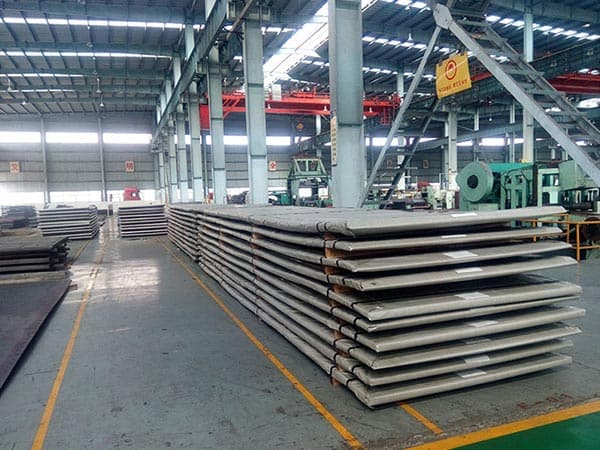
Understanding the Market Valuation of S420 Pickling Steel in Shanghai
Navigating the steel market in Shanghai requires a deep understanding of both current pricing trends and the technical nuances of the materials being traded. As of the current fiscal quarter, the price of S420 pickling steel (specifically S420MC under the EN 10149-2 standard) in Shanghai typically ranges between 4,800 RMB to 5,500 RMB per metric ton. This price fluctuation is influenced by several factors, including the reputation of the mill—such as Baosteel, Shougang, or Ansteel—the thickness of the coil, and the specific surface treatment requirements. For international buyers, this converts to approximately $670 to $770 USD per ton, depending on the prevailing exchange rate and export tax rebates.
Pickled and Oiled (P&O) steel like S420 offers a unique value proposition. By removing the mill scale through an acid bath and applying a protective oil layer, manufacturers receive a product that is ready for immediate processing. This eliminates the need for in-house shot blasting or additional cleaning, which directly impacts the total cost of ownership beyond the initial purchase price per ton.
Technical Specifications and Material Properties of S420MC
The S420 grade, particularly the S420MC variant, is a high-strength low-alloy (HSLA) steel designed for cold forming. The "MC" designation indicates that the steel is thermomechanically rolled, which provides a fine-grained microstructure that balances high yield strength with excellent ductility. This makes it a preferred choice for structural components that require weight reduction without sacrificing safety.
- Yield Strength: Minimum 420 MPa, ensuring the material can withstand significant stress before permanent deformation.
- Tensile Strength: Typically ranges from 480 to 620 MPa, providing a robust safety margin for dynamic loads.
- Elongation: Minimum 16% to 19% (depending on thickness), allowing for complex bending and flanging operations.
- Impact Toughness: Excellent performance even at low temperatures, which is critical for equipment used in northern climates.
The chemical composition is carefully controlled to enhance weldability and formability. By keeping carbon levels low (usually below 0.12%) and utilizing micro-alloying elements like Niobium (Nb), Vanadium (V), and Titanium (Ti), mills produce a steel that resists cracking during intensive fabrication processes.
Global Equivalents: S420MC vs. Q420 vs. ASTM Grades
When sourcing from Shanghai, it is common to encounter the Chinese national standard (GB/T). The closest equivalent to the European S420MC is the Q420MD or Q420ND. Understanding these cross-references is vital for engineers who need to ensure that the substituted material meets the original design's safety factors. The following table provides a comparison of the most common equivalents found in the Shanghai market.
| Standard | Grade | Yield Strength (min) | Tensile Strength | Characteristics |
|---|---|---|---|---|
| EN 10149-2 | S420MC | 420 MPa | 480-620 MPa | Thermomechanically rolled, high formability |
| GB/T 1591 | Q420MD | 420 MPa | 520-680 MPa | Chinese standard HSLA, widely available in Shanghai |
| ASTM | A1011 HSLAS Gr 60 | 415 MPa | 520 MPa | American standard equivalent for hot-rolled sheet |
| JIS G3134 | SPFH 590 | 420 MPa | 590 MPa | Japanese standard for automotive structural use |
While these grades are often used interchangeably, slight variations in phosphorus and sulfur content can affect the steel's performance in ultra-precision laser cutting or high-frequency welding. It is always recommended to review the Mill Test Certificate (MTC) to verify that the specific heat meets your project's chemical and mechanical thresholds.
Advantages of the Pickling Process for S420 Steel
The "pickling" aspect of S420 P&O steel is not merely a surface cleaning; it is a critical enhancement of the material's industrial utility. When hot-rolled steel is cooled, it forms a dark, brittle layer of iron oxide known as scale. If left untreated, this scale can damage stamping dies, interfere with weld quality, and cause paint to peel. The pickling process in Shanghai's advanced mills involves passing the steel through a series of hydrochloric acid tanks to achieve a clean, silver-grey finish.
1. Extended Tool Life: The absence of abrasive scale significantly reduces the wear and tear on expensive stamping and forming tools, leading to lower maintenance costs and less downtime. 2. Superior Coating Adhesion: Whether you are powder coating, painting, or galvanizing, the pickled surface provides a much better mechanical bond than raw hot-rolled steel. 3. Enhanced Laser Cutting: Scale can cause "blowouts" or inconsistent edges during laser cutting. S420 pickling steel ensures a smooth, consistent cut, which is essential for high-precision components.
Strategic Applications Across Key Industries
The high strength-to-weight ratio of S420 pickling steel has made it a staple in modern manufacturing. By using a 420 MPa yield steel instead of a standard 235 MPa carbon steel, engineers can reduce the thickness of parts by up to 30% while maintaining the same structural integrity. This weight saving is a primary driver of demand in the Shanghai export market.
- Automotive Industry: Used extensively for chassis members, cross-beams, and suspension brackets where weight reduction directly improves fuel efficiency or EV range.
- Heavy Machinery: Ideal for crane booms, excavator arms, and agricultural equipment that must endure extreme stress cycles.
- Solar Energy Systems: S420 is increasingly used for solar tracking racks, providing the stiffness needed to resist wind loads while remaining light enough for easy installation.
- Storage and Logistics: High-rise racking systems utilize S420 to support massive vertical loads with thinner profiles, maximizing warehouse space.
Factors Influencing S420 Steel Prices in Shanghai
To secure the best price per ton, it is important to understand the variables that move the needle in the Shanghai market. Shanghai serves as the headquarters for Baosteel, which often sets the benchmark price for the rest of China. When Baosteel adjusts its monthly pricing policy, the entire market follows suit. Additionally, the proximity to the Port of Shanghai provides a logistical advantage, but it also means prices are sensitive to global shipping demand.
Environmental regulations also play a significant role. During periods of high air pollution, mills in surrounding provinces like Hebei or Jiangsu may face production caps, tightening the supply of S420 coils and driving up prices. Furthermore, the cost of iron ore and coking coal remains the fundamental floor for steel pricing. Buyers should monitor the iron ore futures on the Dalian Commodity Exchange (DCE) as a leading indicator of where S420 prices might head in the coming weeks.
Optimizing Your Procurement Strategy
When requesting quotes for S420 pickling steel in Shanghai, precision in your specifications will lead to better pricing. Specify the required width (e.g., 1250mm or 1500mm), the thickness tolerance (standard vs. precision), and the oiling volume. Some applications require "light oiling" to prevent mess, while others need "heavy oiling" for long-term sea transit to prevent rust. By aligning your technical requirements with the mill's production strengths, you can often negotiate better terms and ensure that the S420 equivalent you receive is perfectly suited for your manufacturing environment.
Leave a message