
What is the hardness of s420mc automotive steel material properties?
Detailed guide on S420MC automotive steel, covering hardness, mechanical properties, chemical composition, and industrial applications for vehicle manufacturing.
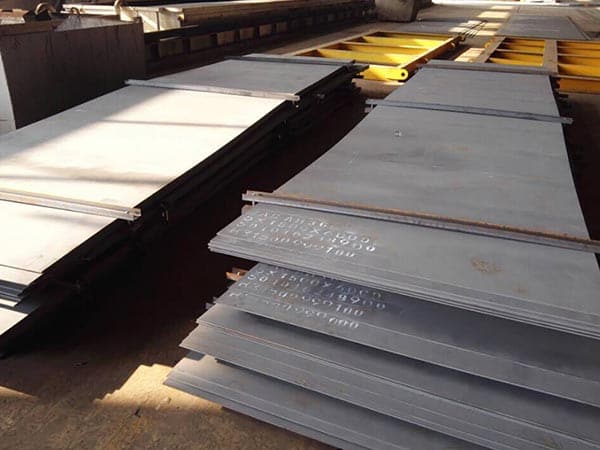
Understanding S420MC: The Backbone of Modern Automotive Engineering
S420MC is a high-strength, low-alloy (HSLA) steel specifically engineered for the demanding requirements of the automotive industry. Governed by the European standard EN 10149-2, this material is produced through a thermomechanical rolling process (TMCP). The designation 'S' identifies it as structural steel, '420' signifies its minimum yield strength of 420 MPa, and 'MC' indicates it is thermomechanically rolled for cold forming. Unlike traditional hot-rolled steels, S420MC offers a superior balance of strength, weight reduction, and formability, making it an essential material for vehicle chassis, cross members, and other structural components.
The Hardness of S420MC: Technical Interpretation
When discussing the hardness of S420MC, it is important to note that hardness is not typically the primary specification listed in official material certificates. Instead, structural steels are categorized by their yield and tensile strengths. However, for machining, tooling, and wear-resistance analysis, hardness is a critical proxy. For S420MC, the Brinell hardness (HBW) typically ranges between 140 and 185 HBW, while the Vickers hardness (HV) generally falls between 150 and 195 HV.
This specific hardness range is achieved through grain refinement rather than high carbon content. Because the carbon level is kept low (usually below 0.12%), the material maintains excellent ductility. The hardness is high enough to provide structural rigidity and resistance to surface deformation, yet low enough to allow for significant cold deformation without the risk of cracking. This 'sweet spot' in hardness is what allows automotive manufacturers to press-form complex shapes while maintaining the integrity of the safety cage or chassis.
Chemical Composition and Its Influence on Material Properties
The unique properties of S420MC are a direct result of its precisely controlled chemical composition. The use of micro-alloying elements is the secret behind its high strength-to-weight ratio. By adding small amounts of Niobium (Nb), Vanadium (V), and Titanium (Ti), manufacturers can achieve a fine-grained microstructure during the thermomechanical rolling process.
| Element | Maximum Percentage (%) |
|---|---|
| Carbon (C) | 0.12 |
| Manganese (Mn) | 1.60 |
| Silicon (Si) | 0.50 |
| Phosphorus (P) | 0.025 |
| Sulfur (S) | 0.015 |
| Aluminum (Al) | 0.015 (min) |
| Nb + V + Ti | 0.22 (Combined) |
The low carbon content is vital for weldability and prevents the formation of brittle martensite in the heat-affected zone (HAZ). Manganese and Silicon contribute to solid-solution strengthening, while the micro-alloys (Nb, V, Ti) inhibit grain growth, resulting in a fine ferrite-pearlite structure that enhances both yield strength and toughness.
Mechanical Performance: Beyond Just Hardness
While hardness provides a snapshot of surface resistance, the mechanical properties of S420MC define its performance under load. The thermomechanical rolling process ensures that these properties are consistent across the entire coil or plate. This consistency is vital for automated automotive assembly lines where springback must be predictable.
- Yield Strength (ReH): Minimum 420 MPa. This is the stress level where the steel begins to plastically deform.
- Tensile Strength (Rm): 480 to 620 MPa. This represents the maximum stress the material can withstand before necking or failure.
- Elongation (A80): Typically 16% to 19% depending on thickness. This high elongation indicates excellent ductility for cold forming.
- Bending Radius: S420MC can be bent at very tight radii (often 0.5t to 1.5t), which is essential for compact automotive part designs.
Processing Performance: Welding and Cold Forming
One of the primary reasons S420MC is favored in the automotive industry is its exceptional processing performance. Since modern vehicles are largely assembled through automated welding and stamping, the material must be 'forgiving' during fabrication.
Weldability: Due to its low carbon equivalent (CEV), S420MC can be welded using all standard methods, including MIG/MAG, TIG, and resistance welding. It does not require pre-heating or post-weld heat treatment in most applications, which significantly reduces manufacturing costs and cycle times. The fine-grained structure remains relatively stable during welding, preserving the strength of the joints.
Cold Forming: The 'MC' suffix denotes its suitability for cold forming. S420MC can undergo deep drawing, flanging, and complex bending. Its low yield-to-tensile ratio allows for a wide range of plastic deformation before failure, which is critical for energy-absorbing components like crumple zones. Engineers must account for the material's grain direction; bending perpendicular to the rolling direction usually yields the best results.
Environmental Adaptability and Durability
Automotive components are exposed to harsh environments, including road salt, moisture, and fluctuating temperatures. While S420MC is not a stainless steel, its fine-grained structure offers slightly better atmospheric corrosion resistance than standard mild steels. However, for long-term durability, it is typically coated with zinc (galvanized) or E-coated.
Furthermore, S420MC exhibits excellent low-temperature toughness. In many automotive safety standards, the material must maintain its ductility even at -20°C or -40°C to ensure that structural components do not shatter during a collision in cold climates. The thermomechanical rolling process is specifically designed to enhance this low-temperature impact strength.
Key Applications in the Automotive Industry
The adoption of S420MC has allowed vehicle manufacturers to reduce the weight of structural frames by up to 20% compared to traditional S355 grades. This weight reduction directly contributes to better fuel efficiency and lower CO2 emissions without compromising passenger safety.
- Truck Chassis and Frames: The high yield strength allows for thinner longitudinal beams that can still carry heavy payloads.
- Cross Members: Used in the support structure of cars and commercial vehicles to provide torsional rigidity.
- Cold Pressed Parts: Brackets, pillars, and reinforcement plates that require high strength and complex geometry.
- Crane Arms and Lifting Equipment: Although primarily an automotive steel, its properties make it ideal for mobile cranes where weight is a critical factor.
Comparative Analysis: S420MC vs. Other Grades
When selecting a material, engineers often compare S420MC with S355MC and S500MC. S355MC offers higher ductility but lower strength, requiring thicker sections. Conversely, S500MC provides higher strength but is more sensitive to the bending radius and has slightly lower elongation. S420MC is often considered the 'goldilocks' grade—offering a perfect balance of high strength, excellent formability, and cost-effectiveness. Its hardness is high enough to resist wear in bolted joints but low enough to prevent tool wear in stamping dies, making it an economically sound choice for high-volume production.
By understanding the hardness and comprehensive material properties of S420MC, engineers can optimize part designs for both performance and manufacturability. Whether it is the fine-grained microstructure or the predictable springback during forming, S420MC remains a cornerstone of modern high-strength steel applications.
Leave a message