
What are the advantages and disadvantages of s420mc astm equivalent
Explore the comprehensive comparison of S420MC and its ASTM equivalents like A1011 and A656. Learn about mechanical properties, pros, cons, and industrial applications.
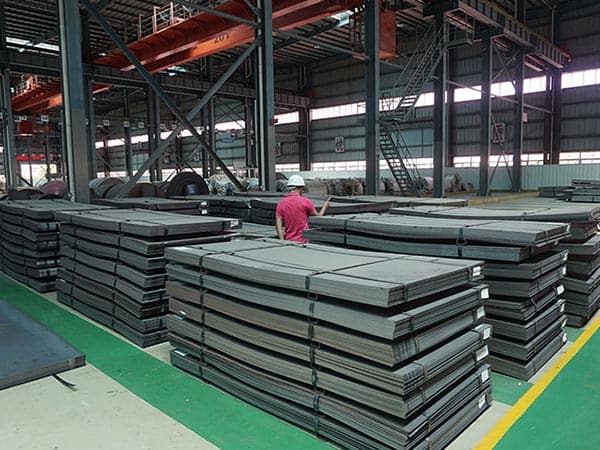
Understanding S420MC and Its ASTM Counterparts
S420MC is a high-yield-strength steel specifically designed for cold forming, governed by the European standard EN 10149-2. As industries strive for lightweighting and higher efficiency, identifying the right ASTM equivalent becomes crucial for global procurement and engineering consistency. The most common ASTM equivalents for S420MC include ASTM A1011 Grade 60 (for thinner sheets) and ASTM A656 Grade 60 (for thicker plates). These materials are thermomechanically rolled, a process that refines the grain structure to achieve a balance of high strength and excellent ductility.
The Core Advantages of S420MC and Its ASTM Equivalents
The primary appeal of S420MC and its ASTM Grade 60 equivalents lies in their mechanical efficiency. These steels offer a yield strength of at least 420 MPa (approximately 60 ksi), which is significantly higher than standard structural steels like S235 or ASTM A36. This strength allows engineers to reduce the thickness of components without compromising structural integrity.
- Exceptional Weight Reduction: By utilizing the high yield strength of S420MC equivalents, manufacturers can reduce the overall weight of vehicles and machinery. This is particularly vital in the automotive and transport sectors where lower weight translates directly into improved fuel economy and higher payload capacity.
- Superior Cold Formability: Despite its high strength, S420MC is engineered for complex bending and folding. The low carbon content and fine-grain structure ensure that the material does not crack during tight-radius bending, making it ideal for intricate chassis components.
- Excellent Weldability: The carbon equivalent (CEV) of these steels is kept remarkably low. This facilitates easy welding using standard methods like MIG, TIG, or submerged arc welding without the intensive need for pre-heating, which reduces production time and costs.
- Impact Toughness: Thermomechanical rolling ensures that these steels maintain good toughness even at lower temperatures, which is a critical safety factor for equipment operating in harsh environments.
Technical Comparison: S420MC vs. ASTM Equivalents
When substituting S420MC with ASTM standards, it is essential to compare the chemical composition and mechanical requirements. While they are often used interchangeably, subtle differences exist in the permissible ranges of alloying elements like Manganese, Niobium, and Vanadium.
| Property | S420MC (EN 10149-2) | ASTM A1011 HSLAS Gr 60 | ASTM A656 Grade 60 |
|---|---|---|---|
| Yield Strength (min) | 420 MPa | 415 MPa (60 ksi) | 415 MPa (60 ksi) |
| Tensile Strength | 480 - 620 MPa | 520 MPa min | 520 MPa min |
| Elongation (min) | 16% - 19% (varies by thickness) | 18% | 17% |
| Carbon (max) | 0.12% | 0.15% | 0.18% |
| Manganese (max) | 1.60% | 1.35% | 1.65% |
As shown in the table, ASTM A1011 Grade 60 is the closest match for thin-gauge applications, while ASTM A656 Grade 60 is more appropriate for structural plates. Engineers must verify the specific elongation and impact requirements of their project before finalizing the substitution.
Disadvantages and Limitations to Consider
While the benefits are numerous, S420MC and its ASTM equivalents are not universal solutions. Certain trade-offs must be managed during the design and manufacturing phases.
- Springback Challenges: Due to the high yield strength, these materials exhibit significant elastic recovery (springback) after bending. Tooling must be designed with precise compensation to achieve the desired final geometry.
- Thickness Constraints: S420MC is typically available in thicknesses up to 20mm. For applications requiring extremely heavy sections, other grades or quenched and tempered steels might be necessary.
- Corrosion Resistance: These are not weathering steels. Without proper coating, galvanizing, or painting, they are susceptible to oxidation in humid or saline environments.
- Anisotropy: The thermomechanical rolling process can lead to directional properties. The material may behave differently when bent parallel to the rolling direction compared to transverse bending.
Industrial Applications and Processing Performance
The versatility of S420MC ASTM equivalents makes them staples in heavy-duty engineering. In the trucking industry, they are used for longitudinal beams and cross-members where high fatigue resistance is mandatory. In construction machinery, components like crane booms and excavator frames benefit from the high strength-to-weight ratio.
Processing these steels requires an understanding of their metallurgy. Laser cutting is highly effective due to the clean surface finish of thermomechanically rolled plates. However, when welding, it is vital to control the heat input. Excessive heat can lead to grain growth in the heat-affected zone (HAZ), which may locally reduce the yield strength and toughness. Using low-hydrogen consumables is recommended to prevent cold cracking.
Environmental Adaptability and Sustainability
From a sustainability perspective, S420MC and its ASTM equivalents contribute to a circular economy. The ability to use less steel to achieve the same structural performance reduces the carbon footprint associated with raw material extraction and transportation. Furthermore, these steels are fully recyclable. Their performance in low-temperature environments makes them suitable for infrastructure projects in northern climates, provided that the specific sub-zero impact testing (e.g., Charpy V-notch) is specified during the ordering process.
Selecting between S420MC and an ASTM equivalent often comes down to regional availability and specific project certifications. While S420MC is the standard in Europe and much of Asia, ASTM A1011 and A656 dominate the North American market. Understanding the nuances of these standards ensures that structural integrity is maintained while optimizing manufacturing efficiency and cost-effectiveness.
Leave a message