
What is the process principle of wys700 steel pickling steel sheet
Explore the technical principles of WYS700 pickling steel, including chemical reactions, mechanical properties, and industrial applications in automotive and heavy machinery.
The Fundamentals of WYS700 High-Strength Pickling Steel
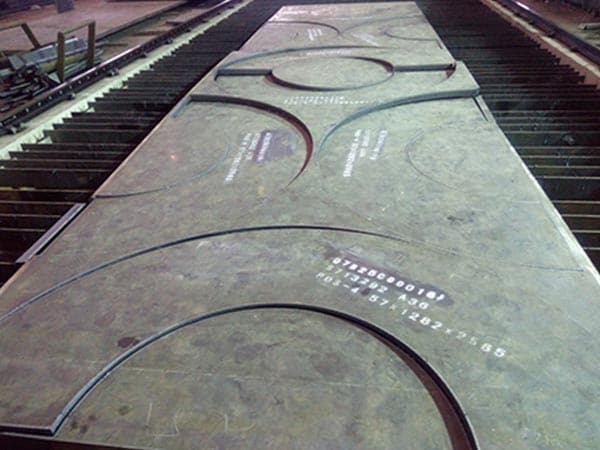
WYS700 represents a sophisticated category of high-strength low-alloy (HSLA) steel, specifically engineered for structural applications where weight reduction and high load-bearing capacity are paramount. The "700" designation refers to its minimum yield strength of 700 MPa, a threshold that places it firmly in the high-performance material bracket. The pickling process is not merely a cleaning step but a critical surface transformation that bridges the gap between raw hot-rolled steel and high-precision manufacturing requirements. By removing the iron oxide scale formed during hot rolling, WYS700 pickling steel offers a clean, uniform surface that is essential for subsequent processes like laser cutting, welding, and coating.
The Chemical Mechanism of the Pickling Process
The core principle of producing WYS700 pickling steel lies in the controlled chemical dissolution of the oxide scale. When hot-rolled steel cools, it develops a complex tri-layer scale consisting of hematite (Fe2O3), magnetite (Fe3O4), and wustite (FeO). In a continuous pickling line, the steel strip passes through a series of hydrochloric acid (HCl) baths. The acid penetrates the porous outer layers to reach the wustite layer, which is closest to the steel substrate and most soluble in acid. The primary chemical reactions involve the conversion of iron oxides into soluble ferrous chloride (FeCl2) and water. Specifically, the reaction FeO + 2HCl → FeCl2 + H2O facilitates the rapid detachment of the scale. This process must be meticulously timed to ensure complete scale removal without over-etching the underlying high-strength matrix, which could lead to surface pitting or hydrogen embrittlement.
Mechanical Integrity and Microstructural Stability
Maintaining the mechanical properties of WYS700 during pickling is a feat of metallurgical engineering. Unlike lower-grade steels, WYS700 relies on a fine-grained microstructure, often achieved through thermomechanical controlled processing (TMCP). The pickling bath temperature is typically kept below 85°C to prevent any thermal alteration of the grain structure. The steel exhibits a remarkable balance of strength and ductility. Its yield strength of ≥700 MPa is complemented by a tensile strength ranging from 750 to 950 MPa, while maintaining an elongation of at least 12%. This allows the material to withstand significant deformation during cold forming without cracking. The pickling process also reveals the true surface topography, allowing for rigorous quality inspection of any metallurgical defects that might have been hidden under the scale.
| Property Type | Technical Specification | Typical Value (WYS700) |
|---|---|---|
| Yield Strength (ReH) | MPa | ≥ 700 |
| Tensile Strength (Rm) | MPa | 750 - 950 |
| Elongation (A80mm) | % | ≥ 12 |
| Bending Radius (180°) | t = thickness | ≤ 2.0t |
| Surface Finish | Ra (μm) | 0.6 - 1.2 |
Process Advantages: Why Pickling Matters for WYS700
Choosing WYS700 in its pickled and oiled state over standard hot-rolled plate offers several industrial advantages. First, the removal of the abrasive oxide scale significantly extends the life of stamping dies and cutting tools. In high-speed manufacturing environments, the consistency of the pickled surface ensures uniform friction during forming, which reduces the risk of localized thinning or necking. Furthermore, the absence of scale is critical for modern welding techniques. Iron oxide is a non-conductor and can cause arc instability or slag inclusions in MIG/MAG welding. With WYS700 pickling steel, the weld pool is cleaner, leading to superior joint integrity and fatigue resistance. For industries focusing on aesthetics and corrosion protection, the pickled surface provides an ideal substrate for powder coating or painting, ensuring high adhesion levels that are impossible to achieve on scaled surfaces.
Environmental Adaptation and Surface Protection
Once the pickling process is complete, the reactive steel surface is highly susceptible to atmospheric corrosion, commonly known as flash rusting. To counteract this, WYS700 sheets are immediately coated with a thin layer of electrostatic rust-preventative oil. This oil film serves a dual purpose: it acts as a barrier against moisture and oxygen during transport and storage, and it functions as a light lubricant for subsequent light-duty forming operations. For manufacturers operating in humid environments, this protection is vital for maintaining the material's integrity. Additionally, the pickling process itself has evolved to be more environmentally conscious, with modern acid regeneration plants (ARP) recovering up to 99% of the spent hydrochloric acid, thereby minimizing chemical waste and reducing the carbon footprint of the steel production cycle.
Expanding Industry Applications
The unique properties of WYS700 pickling steel have led to its widespread adoption across various demanding sectors. In the automotive industry, it is a preferred material for chassis components, cross-members, and suspension parts where high strength is required to enhance crash safety while reducing vehicle weight for better fuel efficiency. The heavy machinery sector utilizes WYS700 for crane booms, excavator buckets, and agricultural equipment frames. In these applications, the material's high strength-to-weight ratio allows for larger payloads and longer reach. The clean surface of the pickled sheet is also highly valued in the production of precision-engineered profiles and cold-formed sections used in modern warehouse racking systems, where dimensional accuracy and surface quality are non-negotiable.
Technical Considerations for Fabrication
Working with WYS700 requires an understanding of its high-strength nature. When laser cutting, the absence of scale allows for higher cutting speeds and cleaner edges compared to hot-rolled plates, reducing the need for secondary grinding. However, because of its 700 MPa yield strength, the springback effect during bending is more pronounced than with mild steel. Fabricators must account for this by using larger punch radii and over-bending techniques. Welding WYS700 is highly efficient due to its low carbon equivalent (Ceq), which minimizes the risk of cold cracking in the heat-affected zone (HAZ). Using low-hydrogen consumables and controlled heat input ensures that the welded joint retains a significant portion of the base metal's strength, making it suitable for dynamic loading conditions.
- Superior surface cleanliness for high-precision laser and plasma cutting.
- Enhanced tool life in stamping and blanking operations.
- Excellent substrate for high-adhesion paint and coating systems.
- Optimized for weight-critical structural designs in transport and machinery.
- Reduced welding defects due to the elimination of surface oxides.
The integration of WYS700 pickling steel into a production workflow represents a commitment to quality and efficiency. By understanding the chemical and mechanical principles that govern this material, engineers can push the boundaries of design, creating structures that are lighter, stronger, and more durable. The synergy between advanced metallurgy and precise surface treatment makes WYS700 a cornerstone of modern industrial manufacturing.
Leave a message