
How to improve the quality of S355MC engineering car steel
Explore technical strategies to enhance S355MC engineering car steel quality, focusing on chemical optimization, TMCP rolling, and microstructure control for automotive applications.
Understanding the Fundamentals of S355MC High-Strength Steel
S355MC is a high-yield-strength hot-rolled steel designed specifically for cold forming applications, governed by the EN 10149-2 standard. In the automotive and engineering machinery sectors, this material is indispensable for chassis components, cross members, and structural frames where weight reduction and high load-bearing capacity are paramount. Improving the quality of S355MC requires a holistic approach that spans from liquid steel refining to the final leveling process. The objective is to achieve a fine-grained ferrite-pearlite microstructure that balances 355 MPa yield strength with exceptional ductility and impact toughness.
Chemical Composition Optimization and Micro-alloying Strategies
The foundation of high-quality S355MC lies in the precise control of its chemical footprint. While the standard provides broad limits, premium quality is achieved through narrow-range control of carbon (C), manganese (Mn), and micro-alloying elements like niobium (Nb), vanadium (V), and titanium (Ti). Reducing carbon content to below 0.10% significantly improves weldability and cold-forming properties, while manganese acts as the primary solid solution strengthener. The strategic addition of Nb and Ti is critical for grain refinement during the rolling process. Nb retards recrystallization, allowing for a finer final grain size, which simultaneously increases strength and toughness.
| Element | Standard Requirement (%) | Optimized Target for Quality (%) | Impact on Performance |
|---|---|---|---|
| Carbon (C) | ≤ 0.12 | 0.06 - 0.08 | Enhances weldability and prevents brittle cracking. |
| Manganese (Mn) | ≤ 1.50 | 1.00 - 1.30 | Provides solid solution strengthening. |
| Silicon (Si) | ≤ 0.50 | ≤ 0.05 | Minimizes surface defects during galvanizing. |
| Niobium (Nb) | ≤ 0.09 | 0.03 - 0.05 | Refines grain size and increases yield strength. |
| Sulfur (S) | ≤ 0.02 | ≤ 0.005 | Improves transverse ductility and impact energy. |
Advanced Smelting and Inclusion Engineering
To improve the internal quality of S355MC, steelmakers must focus on cleanliness. Low sulfur and phosphorus levels are non-negotiable for engineering car steel subjected to dynamic loads. Utilizing Ladle Furnace (LF) refining and Vacuum Degassing (RH/VD) ensures the removal of harmful gases like hydrogen and nitrogen. Calcium treatment is essential for inclusion shape control, converting elongated manganese sulfides into spherical calcium aluminates. This prevents lamellar tearing and improves the hole-expansion ratio, a critical metric for automotive stamping parts.
Thermo-Mechanical Controlled Processing (TMCP) Excellence
The rolling stage is where the mechanical properties of S355MC are truly forged. TMCP is the gold standard for producing high-strength low-alloy (HSLA) steels. By controlling the heating temperature of the slab (typically between 1150°C and 1250°C), we ensure that micro-alloying elements are fully dissolved into the austenite. The roughing stage should focus on maximizing the reduction ratio to break down the as-cast structure. The finish rolling temperature must be strictly controlled near the Ar3 transformation point to ensure that the final phase transformation results in an ultra-fine ferrite grain size (ASTM 10 or finer). This refinement is the only mechanism that increases both strength and toughness simultaneously.
Laminar Cooling and Microstructure Homogeneity
Post-rolling cooling rates dictate the final phase distribution. For S355MC, a laminar cooling system must be employed to achieve a uniform ferrite-pearlite or ferrite-bainite structure. Rapid cooling suppresses the formation of coarse pearlite, which can act as a site for crack initiation. If the cooling rate is too slow, grain growth occurs, reducing the yield strength. If too fast, martensitic islands may form, compromising the steel's ability to be cold-bent. Maintaining a coiling temperature between 580°C and 640°C ensures optimal precipitation of Nb/Ti carbonitrides, which provides secondary hardening.
Surface Quality and Dimensional Precision
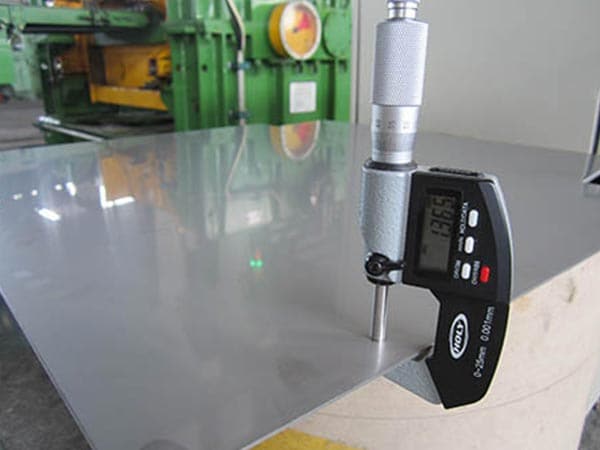
Automotive manufacturers demand impeccable surface quality for S355MC to ensure paint adhesion and prevent fatigue failure. High-pressure descaling during the rolling process is vital to remove primary and secondary scales. Furthermore, the flatness of the steel plate or coil is critical for automated laser cutting and robotic welding. Utilizing advanced tension levelers and skin-pass mills can eliminate residual stresses and improve the yield point elongation (YPE) behavior, ensuring a smooth surface after forming without Lüders bands.
Enhancing Environmental Adaptability and Corrosion Resistance
Engineering car steel often operates in harsh environments, from salted winter roads to humid tropical climates. While S355MC is not a weathering steel by definition, its corrosion resistance can be enhanced through subtle adjustments in copper (Cu) and chromium (Cr) levels without affecting weldability. Furthermore, ensuring a clean surface free of decarburization layers improves the effectiveness of subsequent coating processes like E-coating or hot-dip galvanizing. The resistance to low-temperature brittle fracture is another quality benchmark; high-quality S355MC should maintain impact energy levels above 27J at -40°C, ensuring safety in arctic conditions.
Weldability and Fabrication Performance
The ultimate test of S355MC quality is its performance in the fabrication shop. High-quality S355MC must exhibit a low Carbon Equivalent (Cev ≤ 0.34), making it suitable for high-speed CO2 shielded welding and laser welding without the need for preheating. The heat-affected zone (HAZ) should remain tough and resistant to softening. During cold bending, the steel must show no signs of cracking even at tight radii (e.g., 0.5t to 1.0t). Improving the quality means ensuring consistency across different batches, allowing automotive OEMs to maintain stable production parameters without constant machine recalibration.
- Grain Refinement: Utilizing Nb/Ti micro-alloying to achieve a fine ferrite structure.
- Cleanliness: Reducing S and P to ultra-low levels for superior impact toughness.
- TMCP Control: Precise management of finish rolling and coiling temperatures.
- Formability: Optimizing the hole-expansion ratio for complex automotive geometries.
- Consistency: Narrowing the tolerance for yield strength and thickness.
The Role of Digitalization in Quality Assurance
Modern steel production incorporates Big Data and AI to monitor the quality of S355MC in real-time. By tracking thousands of variables from the blast furnace to the finishing line, manufacturers can predict mechanical properties before the steel even cools. This proactive approach allows for the segregation of non-conforming material and ensures that only the highest grade of engineering car steel reaches the customer. Implementing an end-to-end traceability system also assists automotive manufacturers in meeting stringent IATF 16949 standards, providing a clear history of the material's processing path.
Leave a message