
Is stainless steel as strong as S500MC tensile test?
A detailed technical comparison between S500MC high-strength low-alloy steel and various stainless steel grades, focusing on tensile test results, yield strength, and industrial application performance.
The Core Question: Is Stainless Steel as Strong as S500MC?
In the world of structural engineering and material science, the term "strong" is often used loosely. To provide a definitive answer to whether stainless steel is as strong as S500MC, we must look directly at the tensile test data. S500MC is a high-strength low-alloy (HSLA) steel specifically designed for cold forming, governed by the EN 10149-2 standard. Its name itself reveals its primary characteristic: a minimum yield strength of 500 MPa. When comparing this to stainless steel, the answer is not a simple yes or no, because "stainless steel" refers to a vast family of alloys with wildly different mechanical profiles. While standard austenitic grades like 304 or 316 often fall short in yield strength, specialized martensitic or duplex stainless steels can match or even exceed the performance of S500MC under specific conditions.
Understanding the Mechanical Profile of S500MC
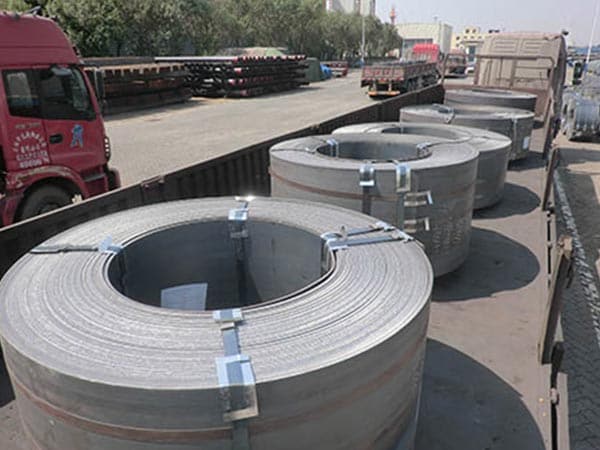
S500MC is produced through a thermo-mechanically rolled process. This controlled cooling and rolling technique refines the grain structure of the steel, allowing it to achieve high strength without the need for heavy alloying elements that might compromise weldability or formability. The tensile test for S500MC typically reveals a yield strength of at least 500 MPa and a tensile strength ranging between 550 and 700 MPa. Its elongation properties are also notable, usually sitting around 12% to 14% for thinner gauges, which allows for complex bending and folding without cracking. This balance of high yield-to-weight ratio makes it a favorite for automotive chassis, truck frames, and heavy machinery components where reducing weight while maintaining structural integrity is paramount.
Comparing Stainless Steel Grades: Austenitic, Ferritic, and Duplex
To compare stainless steel against S500MC, we must categorize the stainless family. The most common stainless steels are the austenitic grades (300 series). A standard annealed 304 stainless steel typically has a yield strength of approximately 210 to 250 MPa. In this state, it is significantly "weaker" than S500MC in terms of resisting permanent deformation. However, austenitic steels have a high capacity for work hardening. If cold-worked, 304 or 301 stainless can reach tensile strengths exceeding 1000 MPa, though this comes at the cost of ductility. On the other hand, Duplex stainless steels, such as 2205 (S32205), offer a much closer comparison. Duplex grades combine the best of austenitic and ferritic structures, providing yield strengths in the range of 450 to 550 MPa, making them a legitimate rival to S500MC in structural applications.
Direct Tensile Test Data Comparison
The following table illustrates the typical mechanical properties derived from tensile testing for S500MC versus common stainless steel grades in their standard delivery states.
| Material Grade | Yield Strength (MPa) | Tensile Strength (MPa) | Elongation (A50mm %) | Primary Advantage |
|---|---|---|---|---|
| S500MC (HSLA) | 500 min | 550 - 700 | 12 - 14 | High Strength/Weight Ratio |
| SS 304 (Austenitic) | 210 min | 520 - 720 | 45 min | Corrosion Resistance/Ductility |
| SS 316L (Austenitic) | 220 min | 510 - 710 | 40 min | Chloride Resistance |
| SS 430 (Ferritic) | 240 min | 450 - 600 | 22 min | Thermal Conductivity |
| Duplex 2205 | 450 - 550 | 620 - 880 | 25 min | Strength + Corrosion Resistance |
Micro-Alloying vs. Chromium Enrichment
The strength of S500MC comes from micro-alloying elements such as Niobium (Nb), Vanadium (V), and Titanium (Ti). These elements form carbides and nitrides that pin grain boundaries during the rolling process, preventing grain growth and resulting in a fine-grained microstructure. This is why S500MC can remain so strong even when relatively thin. In contrast, the "strength" of stainless steel is often secondary to its chemical resistance. The high Chromium (Cr) content (minimum 10.5%) creates a passive oxide layer that prevents rust. While Chromium and Nickel (Ni) provide some solid solution strengthening, they do not refine the grain structure as aggressively as the micro-alloys in S500MC. Therefore, to get a stainless steel as strong as S500MC, one must either choose a Duplex grade or utilize precipitation-hardening grades like 17-4 PH, which can reach yield strengths over 1000 MPa after heat treatment.
Environmental Adaptability and Longevity
While S500MC wins on the cost-to-strength metric for indoor or coated applications, its environmental adaptability is limited. Without proper painting, galvanizing, or powder coating, S500MC will succumb to atmospheric corrosion quickly. Stainless steel, however, maintains its structural integrity in harsh environments, such as marine settings or chemical processing plants. If a structural component requires the 500 MPa yield strength of S500MC but will be exposed to salt spray, the engineer must either invest in expensive coating systems for the HSLA steel or transition to a Duplex stainless steel. The "strength" of a material in a real-world scenario also involves its resistance to thickness loss over time due to corrosion, where stainless steel eventually surpasses S500MC in long-term load-bearing capacity.
Processability: Welding and Forming
S500MC is engineered for the modern factory. Its low carbon equivalent (CEV) makes it exceptionally easy to weld using standard MIG/MAG or laser welding techniques without the risk of cold cracking in the heat-affected zone (HAZ). It also excels in cold forming, allowing for tight bend radii that would snap many other high-strength steels. Stainless steel, particularly the 300 series, is much more difficult to machine and form due to its rapid work-hardening rate. Welding stainless steel also requires more precision, specialized filler metals, and post-weld cleaning to maintain corrosion resistance. When the project demands high-speed production of complex structural shapes, S500MC is often the more pragmatic choice, provided the environment is controlled.
Fatigue Resistance and Dynamic Loading
In applications involving dynamic loads, such as crane arms or trailer chassis, fatigue resistance is a critical component of "strength." S500MC’s fine-grained structure provides excellent resistance to fatigue crack initiation. Tensile tests only show the static limit, but cyclic loading tests often reveal that S500MC performs predictably under stress. Stainless steels, while ductile, can sometimes exhibit unpredictable fatigue behavior if the work-hardening is non-uniform. For heavy-duty transport, the consistent yield point of S500MC allows designers to push the limits of material thickness, resulting in lighter vehicles that can carry heavier payloads compared to those built with standard stainless steel grades.
Choosing the Right Material for the Application
The decision between S500MC and stainless steel hinges on the specific priorities of the project. If the primary goal is achieving a 500 MPa yield strength at the lowest possible cost for a structural frame that will be protected from the elements, S500MC is the undisputed winner. Its performance in tensile tests proves it is a robust, reliable, and highly processable material. However, if the application demands that same strength level in a corrosive environment, or if the aesthetic of the metal is a factor, a Duplex stainless steel or a cold-worked austenitic grade becomes necessary. While S500MC is "stronger" than basic 304 stainless in a raw yield strength comparison, the versatility of the stainless steel family ensures there is always a grade capable of meeting the challenge, albeit at a higher price point.
Leave a message