
What is minimum yield strength of S700MC hot rolled coil yield strength?
Explore the comprehensive technical specifications of S700MC hot rolled coil, focusing on its 700 MPa minimum yield strength, chemical composition, and industrial applications.
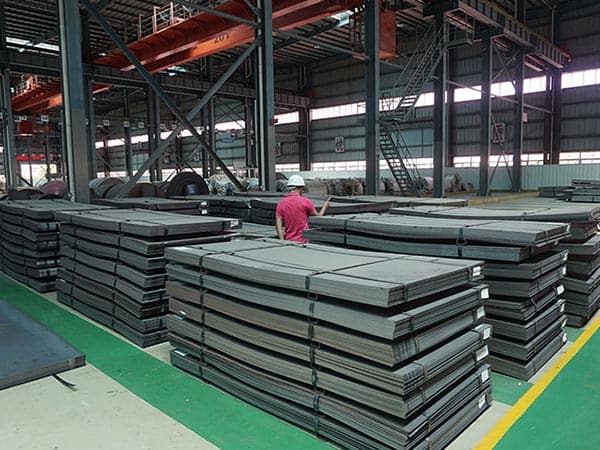
Defining the 700 MPa Benchmark: What is S700MC?
S700MC is a high-strength, low-alloy (HSLA) steel specifically designed for cold forming. The nomenclature itself reveals its core identity: 'S' stands for structural steel, '700' represents the minimum yield strength of 700 MPa, 'M' indicates its thermomechanically rolled condition, and 'C' signifies its suitability for cold forming. This grade is governed by the EN 10149-2 standard, which outlines the requirements for hot-rolled flat products with high yield strength.
The 700 MPa yield strength is a critical threshold in modern engineering. It allows designers to significantly reduce the thickness of structural components without compromising load-bearing capacity. This transition from conventional grades like S355 to S700MC is the cornerstone of 'lightweighting' strategies across various heavy industries, driving efficiency and reducing material costs.
The Significance of Thermomechanical Rolling (TMCP)
The exceptional properties of S700MC are not achieved through traditional heat treatment but through a sophisticated process known as Thermomechanical Control Process (TMCP). This involves precise control of the rolling temperature and the cooling rate. By rolling at specific temperatures where the austenite does not recrystallize, the grain structure of the steel is refined to an ultra-fine level.
Fine grain size is the only strengthening mechanism that simultaneously improves both strength and toughness. For S700MC, this means the material can withstand a minimum yield stress of 700 MPa while maintaining excellent ductility and resistance to brittle fracture, even at sub-zero temperatures. This process also ensures a low carbon equivalent, which is vital for the material's superior weldability compared to quenched and tempered steels of similar strength.
Detailed Mechanical Properties of S700MC
While the 700 MPa yield strength is the headline figure, understanding the full mechanical profile is essential for structural integrity calculations. The yield strength is measured at the point where the material exhibits a 0.2% non-proportional extension. Below is a detailed breakdown of the mechanical expectations for S700MC hot rolled coils.
| Property | Value (Metric) | Condition/Note |
|---|---|---|
| Minimum Yield Strength (ReH) | 700 MPa | Nominal thickness ≤ 16mm |
| Tensile Strength (Rm) | 750 - 950 MPa | Range for structural stability |
| Minimum Elongation (A80mm) | 10% | Thickness < 3mm |
| Minimum Elongation (A5) | 12% | Thickness ≥ 3mm |
| Impact Energy (Charpy-V) | 40J / 27J | Typically tested at -20°C or -40°C |
It is important to note that the yield strength can vary slightly depending on the rolling direction (longitudinal vs. transverse), although the TMCP process aims to minimize this anisotropy. Engineers must account for these values when performing Finite Element Analysis (FEA) for complex load-bearing structures.
Chemical Composition and Micro-alloying Strategy
To reach a 700 MPa yield strength without making the steel brittle or difficult to weld, S700MC utilizes a precise micro-alloying strategy. The carbon content is kept extremely low (typically ≤ 0.12%) to ensure excellent weldability and formability. The strength is derived from the addition of elements like Niobium (Nb), Titanium (Ti), and Vanadium (V).
- Niobium (Nb): Increases the recrystallization temperature, allowing for effective grain refinement during rolling.
- Titanium (Ti): Forms stable nitrides that prevent grain growth during the welding process.
- Vanadium (V): Contributes to precipitation hardening, adding to the overall yield strength.
- Manganese (Mn): Enhances hardenability and solid solution strengthening, usually kept around 2.10% maximum.
This chemical balance ensures that the Carbon Equivalent Value (CEV) remains low, often below 0.45. A low CEV means that S700MC does not require extensive preheating before welding, which is a massive advantage in high-volume manufacturing environments like trailer chassis production.
Cold Forming and Bending Capabilities
Despite its high yield strength, S700MC is specifically engineered for cold forming. This makes it ideal for producing complex profiles, C-channels, and U-beams through press braking or roll forming. However, due to the high strength, the elastic springback is more significant than in lower-grade steels like S355.
When bending S700MC, the minimum recommended inside bend radius (r) depends on the thickness (t) and the orientation of the bend relative to the rolling direction. For a 90-degree bend transverse to the rolling direction, a typical minimum radius is 2.0t to 2.5t. Using a smaller radius may lead to micro-cracking on the outer tension surface. High-quality tooling and consistent lubrication are essential to maintain the integrity of the 700 MPa yield structure during the forming process.
Advanced Welding Considerations
Welding S700MC requires an understanding of how heat affects the TMCP-refined grain structure. While the material is highly weldable using standard methods like MAG (Metal Active Gas), SAW (Submerged Arc Welding), or Laser welding, the Heat Affected Zone (HAZ) can experience slight softening if the heat input is too high.
To preserve the 700 MPa yield strength across the joint, it is recommended to:
- Limit the heat input (kJ/mm) to prevent excessive grain growth in the HAZ.
- Use matching or slightly over-alloyed filler metals to ensure the weld metal meets the base metal's strength.
- Maintain controlled interpass temperatures to ensure uniform cooling.
Because of the low carbon content, S700MC is remarkably resistant to cold cracking, reducing the need for post-weld heat treatment (PWHT), which could actually degrade the mechanical properties of TMCP steels.
Industry Applications: Where 700 MPa Makes the Difference
The primary driver for using S700MC is weight reduction. By replacing S355 (355 MPa yield) with S700MC (700 MPa yield), a designer can theoretically reduce the weight of a component by nearly 40-50% while maintaining the same safety factor. This has profound implications for several sectors:
1. Heavy Transportation and Logistics: In the manufacture of truck chassis, trailers, and semi-trailers, S700MC allows for thinner longitudinal beams. This reduces the 'dead weight' of the vehicle, directly increasing the payload capacity and improving fuel efficiency. For long-haul transport, this translates to significant carbon emission reductions over the vehicle's lifespan.
2. Lifting and Mobile Equipment: Mobile cranes, boom arms, and agricultural machinery rely on S700MC to achieve high reach and lift capacity. The high yield strength ensures that the structures can withstand immense stress without permanent deformation, while the lower weight improves the stability and mobility of the equipment.
3. Construction and Infrastructure: Cold-formed sections made from S700MC are increasingly used in telescopic masts, racking systems, and specialized structural frames where space is at a premium and high load-bearing performance is mandatory.
Environmental Adaptability and Durability
S700MC exhibits good environmental adaptability. While it is not a 'weathering steel' like Corten, its fine-grain structure provides a uniform surface for protective coatings. Whether through hot-dip galvanizing, powder coating, or specialized painting, the steel's surface integrity ensures long-term protection against corrosion.
Furthermore, the high fatigue strength associated with a 700 MPa yield point makes it suitable for dynamic loading environments. In the automotive sector, components like cross members and bumper brackets benefit from the material's ability to absorb energy during impacts, contributing to enhanced passenger safety. The material's performance at low temperatures (tested via Charpy V-notch) ensures that structures remain safe in arctic or high-altitude environments where traditional steels might become brittle.
Procurement and Quality Assurance
When sourcing S700MC hot rolled coils, it is vital to verify the Mill Test Certificate (MTC) against the EN 10149-2 standard. Buyers should pay close attention to the yield-to-tensile ratio; a lower ratio generally indicates better ductility and energy absorption capacity. Consistency in thickness tolerances and flatness is also paramount, especially for automated laser cutting and robotic welding lines.
As global industries pivot towards sustainable practices, the role of high-strength steels like S700MC will only grow. By using less steel to achieve the same structural goals, manufacturers reduce the total energy consumed in production, transport, and end-use, making S700MC a key material in the green transition of the engineering world.
Leave a message