
How to reduce delamination of S315MC automotive steel sheet yield
Explore professional strategies to reduce delamination in S315MC automotive steel. Learn about metallurgical optimization, rolling processes, and quality control to improve manufacturing yield.
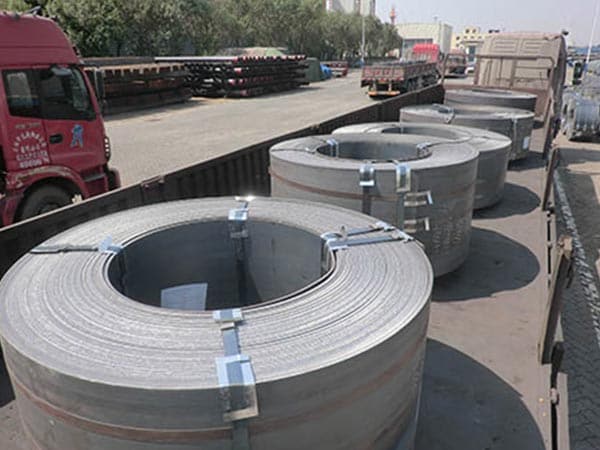
Understanding S315MC and the Challenge of Delamination
S315MC is a high-yield strength, hot-rolled steel specifically designed for cold forming in the automotive industry. Compliant with the EN 10149-2 standard, this grade is favored for its excellent weldability and bendability, making it a staple for chassis components, structural frames, and cross members. However, one of the most persistent issues affecting the yield and reliability of S315MC is delamination—a defect where the steel separates into layers along its thickness. This phenomenon not only compromises the structural integrity of the vehicle but also leads to significant material waste and production downtime.
The Metallurgical Root Causes of Delamination in S315MC
To effectively reduce delamination, it is essential to identify its origin. In S315MC, delamination is rarely a surface issue; it typically stems from internal metallurgical inconsistencies. The primary culprits include non-metallic inclusions, particularly elongated manganese sulfides (MnS) and clusters of alumina (Al2O3). During the high-reduction stages of hot rolling, these inclusions flatten and elongate, creating internal interfaces that act as crack initiation sites when the material undergoes stress during forming.
Another critical factor is centerline segregation. During the continuous casting process, alloying elements like carbon, manganese, and phosphorus tend to concentrate in the center of the slab. If not managed, this results in a brittle core that is prone to splitting when subjected to the tensile forces of cold bending or stamping. Furthermore, hydrogen-induced cracking (HIC) can manifest as delamination if the hydrogen content is not strictly controlled during the steelmaking phase.
Optimizing the Steelmaking Process for Inclusion Control
The foundation of reducing delamination lies in the melting and refining stages. Achieving high cleanliness is paramount for S315MC. Implementing vacuum degassing (VD) or RH degassing helps minimize hydrogen and oxygen levels, significantly reducing the risk of gas-related internal voids.
Calcium treatment is a highly effective technique for inclusion shape control. By injecting calcium into the molten steel, angular alumina and elongated sulfides are transformed into spherical calcium aluminates and complex oxy-sulfides. These spherical shapes do not elongate during rolling, thereby maintaining a more isotropic structure and preventing the formation of the weak planes that lead to delamination.
| Element/Process | Target Control | Impact on Delamination |
|---|---|---|
| Sulfur (S) | < 0.010% | Reduces MnS formation and elongation. |
| Phosphorus (P) | < 0.020% | Minimizes centerline segregation and brittleness. |
| Calcium (Ca) | Shape Control | Globularizes inclusions to prevent linear defects. |
| Hydrogen (H) | < 2ppm | Prevents internal pressure cracks and flaking. |
Precision Control in Continuous Casting
The casting stage is where the physical structure of S315MC is established. To combat delamination, manufacturers must focus on reducing the "mini-ingot" effect in the center of the slab. Electromagnetic Stirring (EMS) is a vital tool here; it promotes a larger equiaxed zone and breaks up columnar crystals, which helps distribute alloying elements more uniformly across the cross-section.
Additionally, controlling the secondary cooling intensity ensures that the solidification front moves evenly. Rapid, uneven cooling can trap impurities in the center, whereas a controlled, soft-reduction technique at the end of the casting strand can physically squeeze the center to close shrinkage porosities, directly addressing the core causes of delamination before the slab even reaches the rolling mill.
Thermomechanical Rolling Strategies
S315MC relies on thermomechanical controlled processing (TMCP) to achieve its high yield strength (minimum 315 MPa) without excessive alloying. However, the rolling parameters must be finely tuned to avoid delamination. If the finishing temperature is too low (entering the dual-phase region), the deformation of ferrite and austenite occurs differently, creating mechanical anisotropy.
Maintaining a finishing rolling temperature above the Ar3 point ensures a uniform grain structure. Furthermore, the cooling rate after rolling—often achieved through Laminar Cooling—must be optimized. A cooling rate that is too fast can induce internal thermal stresses, while a rate that is too slow might lead to grain coarsening. A balanced approach ensures a fine-grained ferritic-pearlitic structure that resists the propagation of internal cracks.
Advanced Testing and Quality Assurance
To guarantee a high yield of defect-free S315MC sheets, a robust inspection protocol is necessary. Ultrasonic Testing (UT) is the gold standard for detecting internal delamination. High-frequency sound waves can identify discontinuities that are invisible to the naked eye, allowing for the segregation of sub-standard material before it reaches the stamping press.
- Metallographic Examination: Regular sampling to check for inclusion morphology and grain size uniformity.
- Bend Testing: 180-degree cold bend tests provide immediate feedback on the material's tendency to delaminate under stress.
- Hardness Mapping: Checking for hardness spikes in the center of the sheet which indicate segregation.
Enhancing Yield Through Proper Handling and Storage
Environmental factors can exacerbate underlying material tendencies. S315MC sheets should be stored in dry, temperature-controlled environments to prevent hydrogen pickup from moisture, which can trigger delayed cracking or delamination in high-strength steels. During the blanking and shearing process, ensuring sharp tooling is critical; dull blades can induce heavy localized deformation at the edges, which acts as a catalyst for delamination to spread inward.
Future-Proofing S315MC Production
The automotive industry's push for lighter, stronger materials means that S315MC must perform flawlessly under increasingly complex forming geometries. By integrating Big Data analytics into the production line—correlating ladle chemistry, casting speeds, and rolling temperatures with final inspection results—manufacturers can create a feedback loop that predicts and prevents delamination events. This proactive approach transforms quality control from a reactive filter into a strategic tool for yield optimization.
Implementing these technical refinements ensures that S315MC remains a reliable choice for automotive structural applications, providing the necessary balance of strength and formability while minimizing the costly impact of internal material defects. Focusing on the microstructural health of the steel is the most effective way to secure high-quality output and maintain a competitive edge in the global automotive supply chain.
Leave a message