
What are the basic requirements for S960MC automotive steel plate on sale cutting and after-cutting
Detailed technical guide on cutting and post-processing requirements for S960MC ultra-high-strength automotive steel, focusing on HAZ management and mechanical integrity.
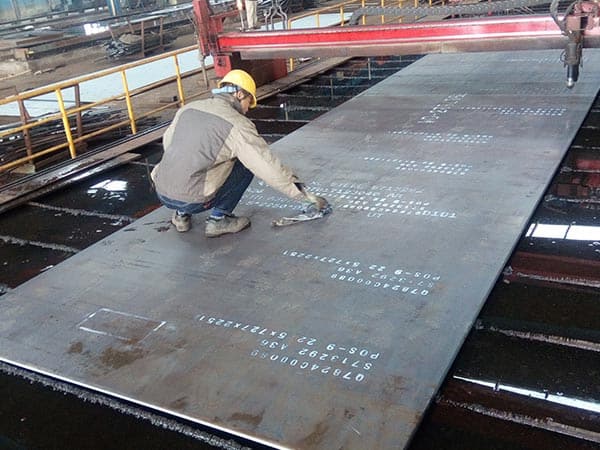
The Technical Essence of S960MC in Modern Engineering
S960MC is a high-strength, thermomechanically rolled steel designed specifically for cold forming applications where weight reduction and structural integrity are paramount. As an ultra-high-strength steel (UHSS) complying with the EN 10149-2 standard, it offers a minimum yield strength of 960 MPa. The utilization of such materials allows automotive manufacturers to significantly reduce vehicle weight without compromising safety or load-bearing capacity. However, the very properties that make S960MC desirable—its fine-grained microstructure and precise alloying—make it sensitive to thermal and mechanical processing. Understanding the nuances of cutting and subsequent handling is critical for maintaining the material's superior performance.
Chemical Composition and Material Foundation
The performance of S960MC during cutting is fundamentally linked to its chemical makeup. Unlike traditional carbon steels, S960MC utilizes a sophisticated blend of micro-alloying elements such as Niobium (Nb), Vanadium (V), and Titanium (Ti) to achieve grain refinement. This refinement is the key to its high strength and toughness. The low carbon content ensures relatively good weldability, but the presence of these alloying elements means that the heat input during cutting must be strictly controlled to prevent the degradation of the tempered martensitic or bainitic structure.
| Element | C (max) | Si (max) | Mn (max) | P (max) | S (max) | Al (min) |
|---|---|---|---|---|---|---|
| Content (%) | 0.20 | 0.60 | 2.20 | 0.025 | 0.010 | 0.015 |
Low impurity levels (Phosphorus and Sulfur) are essential for maintaining edge quality during thermal cutting, as these elements can lead to localized brittleness and micro-cracking at the cut surface.
Thermal Cutting Requirements: Managing the Heat-Affected Zone (HAZ)
When S960MC steel plates are on sale and ready for processing, the choice of cutting method is the most influential factor in determining the final component's quality. Thermal cutting methods, such as laser and plasma, introduce significant heat into the material. For S960MC, the primary concern is the Heat-Affected Zone (HAZ). Excessive heat can lead to a localized reduction in hardness and yield strength, often referred to as the "softening effect."
- Laser Cutting: This is the preferred method for S960MC. The high power density and narrow beam result in a very small HAZ. To maintain the 960 MPa yield strength near the edge, high-speed cutting with nitrogen as a shielding gas is recommended. This prevents oxidation and minimizes the time the material spends at critical transformation temperatures.
- Plasma Cutting: While faster for thicker plates, plasma cutting introduces more heat than laser. For S960MC, fine-hole plasma or underwater plasma cutting is suggested to dissipate heat rapidly. The use of oxygen-rich plasma gas should be avoided if the edge is to be welded later without further grinding, as it creates a hard oxide layer.
- Oxy-Fuel Cutting: Generally discouraged for S960MC plates thinner than 10mm. The slow cutting speed and massive heat input can soften the material up to several millimeters from the edge, effectively negating the benefits of the thermomechanical rolling process.
Mechanical Cutting and Cold Processing
For applications where thermal influence must be zero, mechanical cutting methods like waterjet cutting or shearing are employed. Waterjet cutting is ideal for S960MC because it preserves the original microstructure perfectly. However, the mechanical force of shearing requires high-capacity equipment due to the material's 960 MPa yield strength. When shearing, the blade clearance must be precisely adjusted—typically 12% to 15% of the plate thickness—to prevent excessive burr formation and edge work-hardening.
After-Cutting Requirements: Edge Integrity and Stress Relief
The process does not end once the plate is cut. Post-cutting requirements are vital for ensuring the longevity of automotive components, especially those subject to fatigue or dynamic loading. The edges of S960MC plates are susceptible to micro-cracks and residual stresses.
Edge Grinding: After thermal cutting, the edge often has a thin layer of recast material. For high-stress automotive parts like crane booms or chassis frames, grinding the cut edges to a depth of 0.5mm to 1.0mm is standard practice. This removes potential crack initiation sites and improves the fatigue life of the component.
Hydrogen Embrittlement Prevention: If the cut plates are to be pickled or galvanized, there is a risk of hydrogen embrittlement. S960MC, being a high-strength steel, is particularly sensitive. It is crucial to ensure that the cutting process does not create deep, sharp notches where hydrogen can accumulate. Baking the material at 200°C post-processing can help diffuse any trapped hydrogen.
Mechanical Properties and Performance Post-Processing
Maintaining the mechanical properties post-cutting is the benchmark of successful processing. The following table illustrates the target properties that must be preserved in the bulk material after the cutting phase.
| Property | Yield Strength (MPa) | Tensile Strength (MPa) | Elongation A5 (%) | Impact Energy (-40°C) |
|---|---|---|---|---|
| S960MC Value | ≥ 960 | 980 - 1250 | ≥ 7 | ≥ 27 J |
If the cutting process is poorly managed, the yield strength in the HAZ can drop by as much as 20-30%, leading to structural failure under design loads. Testing the hardness profile across the cut edge is a common quality control requirement in the automotive industry.
Environmental Adaptation and Surface Protection
S960MC is often used in environments where it is exposed to corrosive elements or extreme temperatures. After cutting, the exposed edges are vulnerable. Applying a zinc-rich primer or immediate e-coating is standard in automotive assembly lines to prevent edge corrosion. Furthermore, because S960MC maintains excellent toughness at low temperatures (down to -40°C), the cutting process must not introduce brittle phases that could lead to cold-shortness in arctic or high-altitude environments.
Optimizing the Workflow for Industrial Efficiency
Integrating S960MC into a production line requires a holistic approach. From the moment the plate is sourced, through the nesting process to minimize waste, and finally to the precision cutting and edge treatment, every step must be calibrated for ultra-high-strength characteristics. Modern CNC cutting machines now incorporate "Cooling Mist" technologies that follow the laser head, further reducing the thermal footprint on the S960MC substrate. By adhering to these stringent cutting and post-cutting requirements, manufacturers can fully leverage the weight-saving potential of S960MC while ensuring the highest standards of structural safety and durability.
Leave a message