
How strong is S900MC cold rolled oil exporting?
Discover the technical prowess of S900MC high-strength steel. This guide explores its 900MPa yield strength, cold forming capabilities, and why it dominates the global export market for heavy machinery and structural engineering.
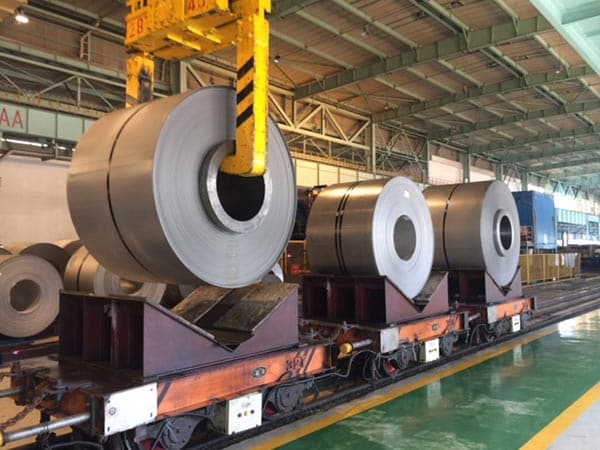
The Metallurgical Foundation of S900MC Strength
S900MC represents the pinnacle of thermomechanically rolled high-strength low-alloy (HSLA) steels. When discussing how 'strong' this material is in the context of global exports and industrial applications, we must first look at its internal structure. Unlike traditional quenched and tempered steels, S900MC achieves its remarkable 900 MPa minimum yield strength through a precise thermomechanical control process (TMCP). This process refines the grain structure to a microscopic level, ensuring that the material remains incredibly tough while maintaining a lightweight profile.
The chemical composition is a masterclass in micro-alloying. By utilizing small amounts of niobium (Nb), vanadium (V), and titanium (Ti), manufacturers can produce a steel that is significantly stronger than standard structural grades without the brittleness often associated with high-carbon steels. This low carbon equivalent (CEV) is a critical factor for export markets, as it directly translates to superior weldability and processing ease for end-users in the oil, gas, and heavy lifting sectors.
| Element | C (max) | Si (max) | Mn (max) | P (max) | S (max) | Al (min) |
|---|---|---|---|---|---|---|
| Percentage (%) | 0.20 | 0.60 | 2.20 | 0.025 | 0.015 | 0.015 |
Mechanical Resilience and Performance Metrics
The strength of S900MC is not merely a theoretical number; it is a functional advantage that allows engineers to reduce the weight of structures by up to 30% compared to S355 grade steel. This weight reduction is the primary driver for its high export demand. In the logistics and oil transportation industries, lighter equipment means higher payloads and lower fuel consumption, creating a direct economic incentive for its adoption.
Beyond yield strength, the tensile strength of S900MC typically ranges between 930 and 1200 MPa. This range provides a safety buffer for structural components subjected to dynamic loads. Furthermore, the elongation properties ensure that the material can absorb energy without catastrophic failure, a vital characteristic for equipment operating in harsh environments like offshore oil rigs or arctic mining sites.
| Property | Yield Strength (MPa) | Tensile Strength (MPa) | Elongation A5 (%) | Bending Radius (90°) |
|---|---|---|---|---|
| S900MC Value | ≥ 900 | 930 - 1200 | ≥ 7 | ≥ 3.0t |
The Cold Forming Advantage in Global Manufacturing
A common misconception is that extremely high-strength steel is difficult to shape. S900MC defies this by offering exceptional cold-forming properties. Because it is produced via thermomechanical rolling, it retains a level of ductility that allows for tight bending radii. For international manufacturers, this means they can produce complex structural shapes without the need for expensive heat treatment or specialized hot-forming equipment.
When exporting S900MC, the consistency of its surface finish and thickness tolerances is paramount. Cold-rolled variants or thin-gauge hot-rolled plates that undergo specialized leveling processes provide the precision required for automated laser cutting and robotic welding. This consistency reduces waste and downtime, making it a favorite for high-volume production lines in the automotive and crane manufacturing industries.
- Excellent Bendability: Allows for streamlined designs with fewer welds.
- High Fatigue Resistance: Ideal for components subjected to cyclic loading.
- Uniform Hardness: Ensures predictable behavior during machining and drilling.
- Weight Optimization: Enables the construction of taller cranes and longer trailer beds.
Welding Integrity and Structural Reliability
The 'strength' of an exported steel grade is often judged by how well it performs after it has been joined. S900MC excels here due to its low carbon content. Traditional high-strength steels often suffer from a brittle heat-affected zone (HAZ) after welding, but S900MC maintains its structural integrity. This is crucial for oil and gas infrastructure where weld failure can lead to environmental disasters.
To maximize the strength of S900MC joints, it is recommended to use low-hydrogen welding consumables and to monitor the heat input carefully. The ability to weld this material without extensive pre-heating (depending on thickness) significantly lowers production costs and speeds up the assembly of large-scale structures. This efficiency is a major selling point in the competitive export market, where labor costs and project timelines are under constant scrutiny.
Environmental Adaptation and Durability
Exporting steel for global use means it must withstand diverse climates, from the humid tropics to the freezing sub-zero temperatures of northern oil fields. S900MC is designed with impact toughness in mind. Many variants are tested at -20°C or even -40°C to ensure they do not become brittle in extreme cold. This environmental adaptability makes it a versatile choice for global projects where the destination climate might be unpredictable.
While S900MC is not a stainless grade, its fine-grain structure provides a better substrate for modern anti-corrosion coatings. Whether it is galvanizing, painting, or specialized powder coating, the surface of S900MC bonds well with protective layers, ensuring a long service life even in corrosive maritime or industrial atmospheres. Durability is a core component of its market strength.
Economic Impact and Market Demand
The strength of S900MC in the export market is also tied to the global push for sustainability. As industries strive to meet carbon reduction targets, the 'less is more' philosophy of high-strength steel becomes indispensable. By using less steel to achieve the same structural load-bearing capacity, companies reduce the carbon footprint of the raw material, the transportation of the material, and the eventual operation of the machinery.
From mobile cranes and truck chassis to sophisticated oil exploration equipment, S900MC is the backbone of modern heavy engineering. Its ability to provide 900 MPa of yield strength while remaining workable makes it a high-value export commodity. Suppliers who can provide documented proof of compliance with EN 10149-2 standards find themselves at a significant advantage in the international arena.
The strategic use of S900MC allows for the engineering of equipment that was previously impossible. Thinner walls in telescopic booms, lighter frames for high-capacity trailers, and more resilient supports for oil platforms are all made possible by this specific steel grade. Its 'strength' is therefore not just a physical property, but a catalyst for industrial innovation and economic efficiency on a global scale.
Leave a message