
Is S700MC cold forming autobobile steel sheet exporter hot or cold rolled?
Comprehensive guide on S700MC steel properties, clarifying its thermomechanical rolling process, mechanical performance, and industrial applications in automotive and heavy machinery.
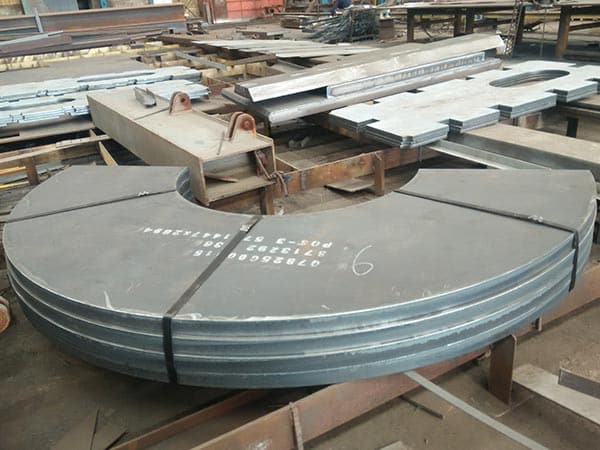
The Fundamental Nature of S700MC: Hot Rolled or Cold Rolled?
Understanding the metallurgical classification of S700MC is essential for engineers and procurement specialists in the automotive and heavy machinery sectors. To answer the core question: S700MC is a hot-rolled, thermomechanically rolled (TMCP) high-strength low-alloy (HSLA) steel. Although the "C" in its designation stands for "Cold forming," this refers to the material's intended processing method by the end-user, not the rolling state at the mill. Under the European standard EN 10149-2, S700MC is defined as a product that achieves its exceptional mechanical properties through a controlled rolling process followed by rapid cooling.
Thermomechanical rolling is a sophisticated production technique where the final deformation is carried out within a specific temperature range, leading to a refined grain structure that cannot be achieved by traditional heat treatment alone. This process allows S700MC to maintain a minimum yield strength of 700 MPa while remaining relatively thin and highly ductile, bridging the gap between standard structural steels and ultra-high-strength quenched and tempered grades.
Chemical Composition and Grain Refinement Mechanisms
The performance of S700MC relies heavily on its micro-alloying strategy. Unlike traditional carbon steels that rely on high carbon content for strength—which often compromises weldability—S700MC utilizes a low-carbon chemistry combined with trace amounts of Niobium (Nb), Vanadium (V), and Titanium (Ti).
- Carbon (C): Kept below 0.12% to ensure excellent weldability and prevent the formation of brittle martensite in the heat-affected zone.
- Manganese (Mn): Typically around 2.10% to enhance solid solution strengthening and hardenability.
- Micro-alloys (Nb, V, Ti): These elements form fine carbides and nitrides that pin grain boundaries during the rolling process, resulting in an extremely fine ferrite-pearlite or bainitic microstructure.
- Silicon (Si) and Aluminum (Al): Used for deoxidation and further grain refinement.
This fine-grained structure is the secret behind the steel's ability to absorb energy and resist crack propagation, making it an ideal candidate for safety-critical automotive components.
Mechanical Properties and Performance Benchmarks
When sourcing from an S700MC exporter, understanding the mechanical limits is vital for design accuracy. The material is characterized by a high yield-to-tensile ratio, which allows for significant weight reduction in structural designs.
| Property | Value (Thickness ≤ 16mm) |
|---|---|
| Minimum Yield Strength (ReH) | 700 MPa |
| Tensile Strength (Rm) | 750 - 950 MPa |
| Minimum Elongation (A80mm) | 10% - 12% (depending on thickness) |
| Minimum Bending Radius (90°) | 1.5t to 2.0t |
The high yield strength allows engineers to use thinner sheets to support the same loads as thicker, lower-grade steels. This "lightweighting" effect is a primary driver for the adoption of S700MC in the transport industry, where reducing vehicle mass directly translates to improved fuel efficiency and increased payload capacity.
Cold Forming and Fabrication Excellence
Despite being a hot-rolled product, S700MC is engineered specifically for cold forming. Its high ductility allows for complex bending and folding operations without the risk of surface cracking or springback issues typically associated with high-strength materials.
When performing cold bending, it is critical to consider the rolling direction. While S700MC offers good transverse properties, bending perpendicular to the rolling direction generally allows for tighter radii. The surface quality of S700MC is often enhanced through pickling and oiling (S700MC+P), which removes the mill scale formed during hot rolling. This results in a smooth, clean surface that is comparable to cold-rolled steel, making it suitable for high-precision laser cutting and subsequent painting or coating.
Welding and Joining Characteristics
One of the most significant advantages of S700MC is its superior weldability. Because the strength is derived from grain refinement rather than high carbon or alloy content, the Carbon Equivalent (CEV) remains low. This means S700MC can be welded using standard methods such as MAG (Metal Active Gas), MIG, and Laser welding without the need for preheating in most thickness ranges.
However, care must be taken regarding the heat input. Excessive heat can cause grain growth in the heat-affected zone (HAZ), which may lead to a localized reduction in strength. Using low-heat input welding parameters and high-quality filler metals that match the strength of the base material is recommended to maintain the integrity of the joint.
Environmental Adaptability and Fatigue Resistance
Automotive and construction environments expose materials to cyclic loading and varying temperatures. S700MC demonstrates excellent fatigue resistance due to its homogeneous microstructure and lack of large inclusions. This makes it highly reliable for chassis frames and crane booms that undergo thousands of load cycles during their service life.
In terms of low-temperature toughness, S700MC can be specified to meet impact energy requirements at -20°C or even -40°C (often designated as S700MCK2). This ensures the material remains ductile and resists brittle fracture even in arctic conditions, a critical factor for global exporters shipping to diverse climates.
Expanding Applications: Beyond the Automobile
While the automotive sector is the primary consumer of S700MC for parts like cross members, longitudinal beams, and bumper reinforcements, its utility extends far beyond passenger cars.
- Heavy Transport: Trailer chassis and side walls where weight savings increase profitability.
- Lifting Equipment: Telescopic crane booms and aerial work platforms requiring high strength-to-weight ratios.
- Agricultural Machinery: Plow frames and harvester components that need to withstand high stress and abrasion.
- Storage Systems: High-bay racking and heavy-duty shelving where vertical load capacity is paramount.
The transition from traditional S355 or S500 grades to S700MC allows manufacturers to reduce the total weight of a structure by up to 30%, significantly lowering material costs and carbon footprints during the lifecycle of the product.
Selecting the Right S700MC Exporter
When sourcing S700MC, it is vital to verify the material's origin and certification. A reputable exporter should provide Mill Test Certificates (MTC) according to EN 10204 3.1, detailing the chemical analysis and mechanical test results. Furthermore, the flatness and thickness tolerances are critical for automated production lines. Many top-tier exporters offer value-added services such as precision decoiling, laser cutting, and pickling to ensure the steel is ready for immediate integration into the manufacturing process.
The distinction between hot-rolled and cold-rolled is often confused due to the "cold forming" label, but S700MC proves that a thermomechanically hot-rolled process can deliver the precision and versatility required for the most demanding modern engineering challenges.
Leave a message