
What is the s460mc cold forming autobobile steel composition hot rolling
Comprehensive analysis of S460MC steel composition, mechanical properties, and its application in the automotive industry for lightweighting.
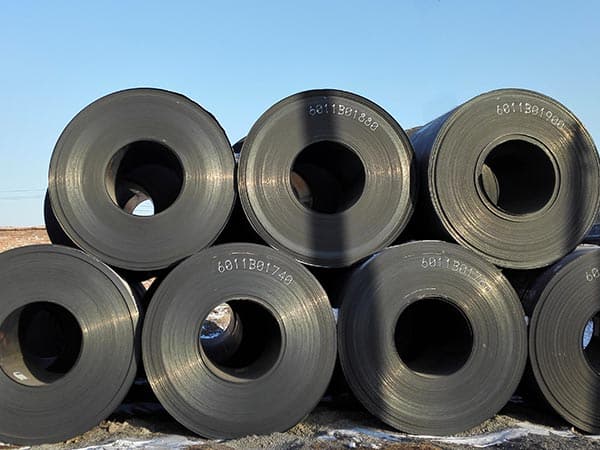
The Core Essence of S460MC in Modern Engineering
In the pursuit of industrial efficiency and vehicle lightweighting, S460MC stands out as a high-strength low-alloy (HSLA) steel specifically designed for cold forming. Governed by the European standard EN 10149-2, this material represents a sophisticated balance between high yield strength and exceptional ductility. The 'S' denotes structural steel, '460' refers to the minimum yield strength of 460 MPa, and 'MC' indicates it is thermomechanically rolled (M) for cold forming (C). Understanding its composition and hot rolling nuances is essential for engineers aiming to optimize structural integrity while reducing overall mass.
Decoding the Chemical Composition of S460MC
The performance of S460MC is not accidental; it is the result of precise metallurgical engineering. Unlike traditional carbon steels, S460MC utilizes micro-alloying elements to achieve its strength without sacrificing weldability or formability. The carbon content is kept intentionally low to ensure the steel remains ductile and easy to weld.
| Element | Maximum Percentage (%) | Primary Function |
|---|---|---|
| Carbon (C) | 0.12 | Ensures weldability and prevents brittleness. |
| Manganese (Mn) | 1.60 | Increases strength and hardness; improves hardenability. |
| Silicon (Si) | 0.50 | Deoxidizer and solid solution strengthener. |
| Phosphorus (P) | 0.025 | Controlled to maintain toughness. |
| Sulphur (S) | 0.015 | Kept low to improve surface quality and ductility. |
| Aluminum (Al) | 0.015 (min) | Grain refinement and deoxidation. |
| Niobium (Nb) | 0.09 | Micro-alloying for grain refinement and precipitation hardening. |
| Vanadium (V) | 0.20 | Enhances strength through carbide formation. |
| Titanium (Ti) | 0.15 | Prevents grain growth during hot rolling. |
The synergy of Niobium (Nb), Vanadium (V), and Titanium (Ti) is the secret behind the fine-grained microstructure. These elements form stable carbides and nitrides that pin grain boundaries during the hot rolling process, preventing them from coarsening. This fine grain structure is the primary reason why S460MC can maintain high strength alongside impressive impact toughness.
Mechanical Properties and Performance Metrics
S460MC is engineered to perform under stress. Its mechanical properties are tailored for components that require complex shaping but must support significant loads. The thermomechanical rolling process ensures that these properties are consistent across the entire length of the coil.
- Yield Strength (ReH): Minimum 460 MPa. This is the threshold where the steel begins to deform plastically.
- Tensile Strength (Rm): 520 to 670 MPa. This represents the maximum stress the material can withstand before necking.
- Elongation (A80mm): Minimum 14% (depending on thickness). This allows for significant bending and stretching during fabrication.
- Bending Radius: S460MC allows for tight bending radii, typically 0.8 to 1.5 times the thickness, making it ideal for intricate automotive frames.
The Role of Thermomechanical Hot Rolling (TMCP)
The 'M' in S460MC signifies thermomechanically rolled. This is not a standard hot rolling process. It involves strict control of the temperature and the deformation rate during the rolling stages. By rolling the steel at specific temperatures where recrystallization is inhibited, the grains are flattened and elongated, creating a high density of nucleation sites for the final ferrite transformation.
This process results in an ultra-fine grain size that cannot be achieved through conventional heat treatment like normalizing. The benefit for the end-user is twofold: increased strength through the Hall-Petch relationship and improved toughness. Because the strength is derived from the grain structure rather than high carbon or alloy content, the Carbon Equivalent (CEV) remains low, ensuring that the steel is exceptionally easy to weld without the risk of cold cracking.
Cold Forming and Fabrication Advantages
For manufacturers, the "C" in S460MC (Cold Forming) is the most critical designation. This steel is designed to be bent, pressed, and folded in its cold state. Its high yield-to-tensile ratio means that while it is strong, it still possesses enough "reserve" ductility to flow into dies without fracturing.
When working with S460MC, fabricators benefit from:
- Reduced Springback: Although higher strength steels generally have more springback, the consistent microstructure of S460MC allows for predictable compensation in tool design.
- Excellent Edge Quality: The low impurity levels (low S and P) mean that sheared edges are less likely to crack during subsequent flanging or stretching operations.
- Superior Surface Finish: Hot rolled S460MC often comes with a pickled and oiled surface, providing a clean canvas for welding and painting.
Strategic Applications in the Automotive Industry
The automotive sector is the largest consumer of S460MC. As emissions regulations tighten, manufacturers must reduce vehicle weight without compromising safety. S460MC allows for the use of thinner gauges to achieve the same structural stiffness as thicker, lower-grade steels.
Common applications include:
- Chassis Components: Longitudinal and transverse beams that require high load-bearing capacity.
- Truck Frames: S460MC provides the durability needed for heavy-duty transport while keeping the deadweight low to maximize payload.
- Cold Pressed Parts: Brackets, reinforcements, and suspension towers where complex geometries meet high stress.
- Crane and Lifting Equipment: Telescopic booms and structural supports where weight-to-strength ratios are critical for stability.
Environmental Adaptability and Sustainability
S460MC is highly adaptable to various environmental conditions. Its fine-grained structure provides a natural resistance to brittle fracture, even at lower temperatures, which is vital for vehicles operating in cold climates. Furthermore, the ability to use less material (downgauging) directly contributes to a reduction in the carbon footprint of the final product. Less steel means less energy consumed in production and less fuel consumed during the vehicle's lifecycle.
Comparative Analysis: S460MC vs. Traditional Structural Steels
When compared to standard S355 grade steels, S460MC offers a significant jump in performance. While S355 is a versatile workhorse, S460MC allows for a weight reduction of approximately 20-30% in many structural applications. Unlike quenched and tempered steels, S460MC does not lose its properties significantly during welding, as its strength is not solely dependent on a heat-treated martensitic structure but on the stable fine-grained ferrite-pearlite matrix produced during TMCP rolling.
Choosing S460MC is a strategic decision for high-performance engineering. Its chemical composition is a masterclass in micro-alloying, and its hot rolling process is a testament to modern metallurgical control. For any application requiring a blend of high strength, excellent cold formability, and reliable weldability, S460MC remains a premier choice in the global steel market.
Leave a message