
What is the available size of S315MC cold rolled sheet material?
Comprehensive guide on S315MC cold rolled sheet sizes, including thickness, width, and length availability, mechanical properties, and industrial applications.
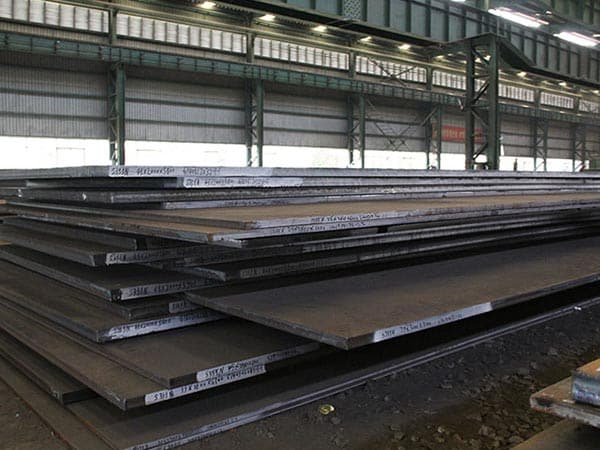
Understanding the Dimensional Landscape of S315MC Cold Rolled Sheets
S315MC is a high-strength low-alloy (HSLA) steel specifically designed for cold forming processes. While the S315MC designation originates from the EN 10149-2 standard, which primarily covers thermomechanically rolled steels, the market frequently demands these properties in thinner, cold-rolled formats to achieve superior surface finishes and tighter dimensional tolerances. Determining the available size of S315MC cold rolled sheet material requires looking at the intersection of metallurgical capability and modern rolling mill constraints.
The "S" in S315MC stands for structural steel, "315" denotes the minimum yield strength of 315 MPa, and "MC" indicates that the material is thermomechanically rolled for cold forming. When this grade is processed through cold reduction mills, it typically targets gauges that hot-rolling cannot efficiently reach. The availability of sizes is not just a matter of stock but a reflection of the material's ability to maintain its high-strength characteristics across different thicknesses.
Standard Thickness and Width Availability
For S315MC cold rolled sheets, the thickness range is significantly more precise than its hot-rolled counterparts. Most high-tier steel mills provide this material in a thickness range starting from 0.5 mm up to 3.0 mm. In specific specialized production lines, it is possible to find ultra-thin gauges down to 0.4 mm, though these are often subject to minimum order quantities. The standard increments usually follow 0.1 mm or 0.5 mm steps, allowing engineers to optimize weight without sacrificing structural integrity.
Width availability is largely dictated by the width of the master coils used during the cold rolling process. For S315MC, the standard widths are:
- 900 mm to 1250 mm: The most common range for automotive and general engineering components.
- 1250 mm to 1500 mm: Widely used for larger structural panels and chassis parts.
- Slit Strip: Master coils can be slit into narrow strips as small as 10 mm to 20 mm for specific stamping applications.
Length availability for sheets (as opposed to coils) is highly customizable. While standard lengths like 2000 mm, 2500 mm, and 3000 mm are common in warehouse stocks, custom lengths up to 6000 mm can be produced via decoiling and leveling lines, provided the flatness requirements are met.
| Dimension Type | Common Range (mm) | Specialized Range (mm) |
|---|---|---|
| Thickness | 1.0 - 2.5 | 0.4 - 3.0 |
| Width | 1000 - 1250 | Up to 1500 |
| Length | 2000 - 3000 | Up to 6000 (Custom) |
Chemical Composition and Micro-alloying Excellence
The size availability and performance of S315MC are deeply rooted in its chemical makeup. To achieve a yield strength of 315 MPa while maintaining excellent cold-formability, the steel utilizes micro-alloying elements such as Niobium (Nb), Vanadium (V), and Titanium (Ti). These elements facilitate grain refinement, which is crucial for maintaining ductility in thinner cold-rolled sheets.
The carbon content is kept low (typically below 0.12%) to ensure exceptional weldability. Manganese acts as a solid solution strengthener, while the controlled levels of Silicon and Phosphorus ensure the material remains clean and free from internal defects that could lead to cracking during tight-radius bending. This chemical balance allows the material to be rolled into thin sheets without becoming overly brittle, a common challenge with higher-carbon structural steels.
Mechanical Performance and Structural Integrity
The mechanical properties of S315MC cold rolled sheets are the primary reason for its selection in weight-sensitive applications. Unlike standard mild steels (like DC01), S315MC offers a significantly higher strength-to-weight ratio. This allows manufacturers to use thinner sheets to achieve the same structural load-bearing capacity, leading to lighter final products and reduced material costs.
Key mechanical properties include:
- Yield Strength (ReH): Minimum 315 MPa.
- Tensile Strength (Rm): 390 to 510 MPa.
- Elongation (A80mm): Minimum 20% to 24% depending on thickness.
The high elongation value is particularly important for cold-rolled sheets, as it indicates the material's ability to undergo complex deep-drawing and bending operations without failure. This makes S315MC an ideal candidate for components that require both strength and intricate geometry.
Cold Forming and Fabrication Versatility
S315MC is engineered for fabrication. Its "MC" designation specifically highlights its suitability for cold forming. When working with cold-rolled S315MC, fabricators benefit from the smooth surface finish (typically bright or matte) which reduces tool wear during stamping and pressing. The material exhibits minimal springback compared to higher-grade HSLA steels like S700MC, making it easier to achieve precise angles in bending operations.
Weldability is another standout feature. Whether using MIG, TIG, or spot welding, S315MC maintains its structural integrity in the heat-affected zone (HAZ) better than many other high-strength steels. Because the carbon equivalent (CEV) is low, there is a significantly reduced risk of cold cracking, eliminating the need for pre-heating in most standard applications. This processing efficiency is a major driver for its use in high-volume production environments.
Industry-Specific Applications
The availability of S315MC in specific thin-gauge sizes has opened doors across various industrial sectors. Its primary use case is found in the Automotive Industry, where it is utilized for seat frames, longitudinal beams, and various reinforcement brackets. The ability to down-gauge from a 2.0 mm standard steel to a 1.5 mm S315MC sheet can result in a 25% weight saving for specific components, directly contributing to fuel efficiency and reduced emissions.
In the Logistics and Transport sector, S315MC is used for the manufacturing of light-weight shelving, pallet racks, and trailer components. The material's durability ensures that these structures can withstand heavy loads while remaining light enough for easy maneuverability. Additionally, the Construction Machinery industry employs S315MC for crane booms and telescopic parts where high yield strength is non-negotiable.
Surface Quality and Dimensional Tolerances
One of the main advantages of choosing cold-rolled S315MC over hot-rolled pickled and oiled (HRPO) versions is the superior dimensional control. Cold-rolled sheets follow the EN 10131 standard for tolerances, which provides much tighter limits on thickness, width, and flatness. This precision is vital for automated robotic welding and high-speed stamping lines where even a 0.05 mm deviation can cause production downtime.
The surface of cold-rolled S315MC is free from scale and is typically oiled to prevent oxidation during transport and storage. This clean surface is ready for immediate painting, powder coating, or galvanizing, further reducing the processing steps for the end-user. For applications requiring high aesthetic standards, such as exposed brackets or furniture components, the cold-rolled finish is the preferred choice.
Selecting the Right Size for Your Project
When specifying S315MC cold rolled sheet material, it is essential to consider the grain direction. Like most rolled steels, the material's properties are slightly different longitudinal to the rolling direction versus transverse. For tight bends, it is generally recommended to bend transverse to the rolling direction to maximize the allowable bend radius.
Furthermore, while the standard yield strength is 315 MPa, the actual test results (MTC - Mill Test Certificate) often show slightly higher values. Engineers should consult with suppliers to ensure the chosen thickness and width align with the specific coil-to-sheet leveling capabilities of the service center to avoid internal stresses that could lead to warping after laser cutting. By understanding the full spectrum of size availability and the underlying material science, manufacturers can fully leverage S315MC to create stronger, lighter, and more efficient products.
Leave a message