
Is 1.0976 hot-rolled steel and tool steel the same?
Comprehensive analysis of 1.0976 (S355MC) hot-rolled steel versus tool steel. Explore chemical composition, mechanical properties, and industrial applications.
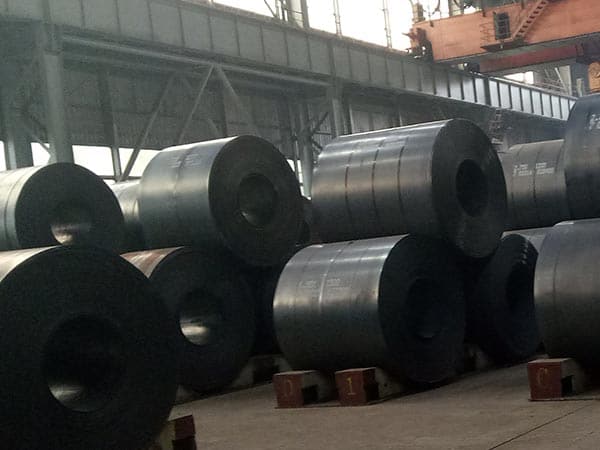
Defining 1.0976: The High-Strength Structural Specialist
To answer the question directly: 1.0976 hot-rolled steel and tool steel are not the same. They belong to entirely different categories of metallurgy, designed for divergent engineering purposes. 1.0976, commonly known under the designation S355MC according to the EN 10149-2 standard, is a thermomechanically rolled high-yield strength steel specifically engineered for cold forming. While it is a product of the hot-rolling mill, its metallurgical DNA is optimized for structural integrity and formability rather than the extreme hardness or wear resistance associated with tool steels.
1.0976 is part of a family of micro-alloyed steels. The "MC" suffix denotes that it is thermomechanically rolled (M) and intended for cold forming (C). This material is a staple in modern manufacturing where weight reduction and high load-bearing capacity are paramount. Unlike tool steels, which are often high-carbon or high-alloy materials, 1.0976 maintains a low carbon content to ensure exceptional weldability and ductility.
The Metallurgical Gap: Chemical Composition Analysis
The fundamental difference between 1.0976 and tool steel lies in their chemical blueprints. Tool steels, such as D2, H13, or M2, are saturated with carbon and alloying elements like chromium, tungsten, molybdenum, and vanadium to achieve high hardness and red-hardness (the ability to maintain hardness at high temperatures). In contrast, 1.0976 utilizes micro-alloying technology.
| Element | 1.0976 (S355MC) Max % | Typical Tool Steel (e.g., D2) % |
|---|---|---|
| Carbon (C) | 0.12 | 1.40 - 1.60 |
| Manganese (Mn) | 1.50 | 0.60 |
| Chromium (Cr) | - | 11.00 - 13.00 |
| Silicon (Si) | 0.50 | 0.60 |
| Niobium/Titanium/Vanadium | Sum ≤ 0.22 | Varies (High) |
As illustrated, 1.0976 has a very low carbon threshold. This low carbon content is the secret behind its superior cold-forming properties. Tool steels, with their high carbon and chromium content, would crack if subjected to the same cold-bending processes that 1.0976 handles with ease. The micro-alloying elements in 1.0976 (Nb, Ti, V) serve to refine the grain structure during the thermomechanical rolling process, providing strength without sacrificing toughness.
Mechanical Performance: Strength vs. Hardness
When evaluating 1.0976, the focus is on yield strength and elongation. For tool steels, the primary metrics are Rockwell hardness (HRC) and abrasion resistance. 1.0976 is designed to yield at a minimum of 355 MPa. It is built to absorb energy and deform plastically before failure, which is a critical safety feature in automotive and structural applications.
Tool steels are often heat-treated to reach hardness levels of 58-64 HRC. If you were to attempt to heat-treat 1.0976 in the same manner, it would not achieve significant hardness because it lacks the necessary carbon to form a dense martensitic structure. Conversely, if you tried to use a tool steel to manufacture a truck chassis, the material would be too brittle, leading to catastrophic fractures under vibration or impact.
Processing and Manufacturing Capabilities
The processing pathways for these materials are worlds apart. 1.0976 is a "workhorse" for high-volume production involving stamping, laser cutting, and robotic welding. Its fine-grained structure ensures that when the steel is bent, the edges do not crack, and the "springback" effect is predictable, allowing for high-precision components.
- Weldability: 1.0976 is exceptionally easy to weld using standard methods like MIG, TIG, or submerged arc welding due to its low carbon equivalent (CEV). Tool steels generally require complex pre-heating and post-weld heat treatment (PWHT) to prevent cracking.
- Cold Forming: 1.0976 can be folded and flanged to tight radii. Tool steels are typically machined in an annealed state and then hardened, as they cannot be cold-formed in any significant capacity.
- Surface Finish: As a hot-rolled product, 1.0976 usually comes with a thin, tightly adherent scale, though it is frequently supplied in a pickled and oiled (P&O) condition for better surface quality in painting or coating.
Environmental Adaptability and Durability
1.0976 demonstrates excellent resilience in structural environments. Its fine-grain structure provides better low-temperature impact toughness than standard hot-rolled carbon steels. This makes it suitable for machinery operating in cold climates, where ordinary steels might become brittle.
However, 1.0976 is not a corrosion-resistant steel. Like most carbon steels, it requires protective coatings such as galvanizing, powder coating, or painting if exposed to moisture or corrosive chemicals. Tool steels, depending on their chromium content (like the "semi-stainless" D2), may offer slightly better atmospheric corrosion resistance, but they are primarily designed for controlled industrial environments (molds, dies, and cutting stations) rather than outdoor structural exposure.
Industrial Applications: Where 1.0976 Shines
The application spectrum for 1.0976 is dominated by the automotive and heavy machinery sectors. It is the go-to material for components that must be light yet incredibly strong. You will find 1.0976 in:
- Automotive Chassis: Longitudinal beams, cross members, and reinforcement brackets where weight saving translates directly to fuel efficiency.
- Crane Systems: Telescopic booms and support structures that require high yield strength to lift heavy loads without adding unnecessary dead weight.
- Agricultural Equipment: Plow frames, harvester components, and trailer chassis that endure high stress and vibration.
- Cold Pressed Parts: Any complex geometric shape that requires a high-strength material to be formed from a flat sheet.
Tool steel, meanwhile, stays in the machine shop. It is used to create the very dies and punches that shape the 1.0976 sheets. The tool steel provides the "force" and the "mold," while 1.0976 provides the "body" of the final product.
Identifying the Right Choice for Your Project
Choosing between these materials is rarely a matter of preference but a matter of functional necessity. If your project involves building a structure, a vehicle frame, or a heavy-duty bracket that needs to be welded and formed, 1.0976 (S355MC) is the technically correct and cost-effective choice. It offers a balance of high strength, excellent ductility, and manufacturing ease that tool steels cannot match.
If your goal is to cut other metals, mold plastics, or create a component that must withstand intense friction and maintain its shape under high pressure, you must look toward the tool steel category. The high cost and difficult processability of tool steel are justified only when the application demands extreme surface hardness and dimensional stability under heat.
Understanding that 1.0976 is a high-strength low-alloy (HSLA) steel rather than a tool steel is vital for engineers and procurement specialists. Confusing the two could lead to significant failures in manufacturing or application. 1.0976 represents the pinnacle of hot-rolled structural technology, offering a sophisticated grain structure that bridges the gap between basic carbon steel and high-performance alloys, but it remains firmly in the structural and forming camp.
Leave a message