
What grade is equal to the 1.8969 high yield strength alloy quality steel
Discover the global equivalents of 1.8969 (S355J2W) steel, including ASTM A588 and Q355GNH. This guide covers mechanical properties, chemical composition, and industrial applications of weathering steel.
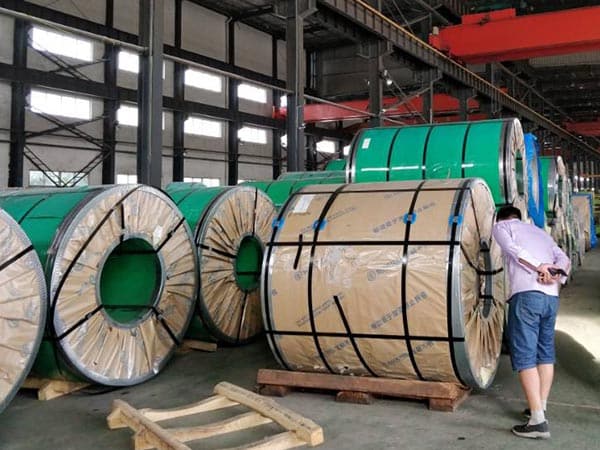
Understanding the 1.8969 Steel Specification
The material number 1.8969 refers to a specific grade of high-strength, low-alloy (HSLA) structural steel with enhanced atmospheric corrosion resistance, defined under the European standard EN 10025-5. In the alphanumeric system, this grade is commonly known as S355J2W. The 'S' denotes structural steel, '355' represents the minimum yield strength of 355 MPa for thicknesses up to 16mm, 'J2' indicates a longitudinal Charpy V-notch impact test at -20°C with a minimum energy of 27 Joules, and the 'W' signifies that the steel has improved atmospheric corrosion resistance.
This steel is part of the weathering steel family, often referred to by the genericized trademark COR-TEN. Unlike conventional carbon steel, 1.8969 develops a protective oxide layer, or patina, when exposed to alternating wet and dry conditions. This layer acts as a barrier, significantly slowing down the rate of further oxidation and eliminating the need for protective coatings like paint or galvanization in many environments.
Global Equivalents: Cross-Referencing 1.8969
Engineers and procurement specialists often need to source materials across different international standards. Identifying the exact equivalent for 1.8969 requires looking at chemical composition and mechanical performance metrics across ASTM (USA), JIS (Japan), and GB (China) standards.
- ASTM A588 Grade B: This is the most common American equivalent. While the chemistry differs slightly, particularly in Manganese and Chromium levels, the mechanical properties and weathering characteristics are highly comparable.
- ASTM A709 Grade 50W: Specifically used for bridge construction in the United States, this grade mirrors the performance of S355J2W in terms of yield strength and atmospheric resistance.
- JIS G3114 SMA490BW: The Japanese standard for atmospheric corrosion resisting steels for welded structures. The 'BW' suffix aligns closely with the 'J2W' requirements for toughness and weathering.
- GB/T 4171 Q355GNH: The Chinese national standard for high-weather-resistance structural steel. Q355GNH provides a similar yield threshold and chemical profile.
| Standard | Grade Designation | Yield Strength (min MPa) | Tensile Strength (MPa) |
|---|---|---|---|
| EN 10025-5 | 1.8969 / S355J2W | 355 | 470 - 630 |
| ASTM | A588 Grade B | 345 | 485 (min) |
| JIS G3114 | SMA490BW | 355 | 490 - 610 |
| GB/T 4171 | Q355GNH | 355 | 490 - 630 |
Chemical Composition and the Mechanism of Corrosion Resistance
The superior performance of 1.8969 is rooted in its precise alloying. The addition of Copper (Cu), Chromium (Cr), and Nickel (Ni) is critical. When these elements react with the atmosphere, they form a dense, amorphous layer of iron hydroxy-phosphates. This layer is much more stable than the porous rust found on standard carbon steel.
Phosphorus (P) is also intentionally controlled in these alloys. While typically considered an impurity in structural steel, in weathering grades, it enhances the formation of the protective patina. However, for 1.8969 (S355J2W), the Phosphorus content is kept lower than in 'S355J0WP' to ensure better weldability and impact toughness at lower temperatures. The inclusion of Nickel improves the steel's toughness and helps in the formation of a uniform patina in marine-adjacent environments, though it is not intended for direct salt-water immersion.
Mechanical Integrity and Structural Performance
Beyond its chemical resistance, 1.8969 is a high-performance structural material. Its yield strength of 355 MPa allows for significant weight savings in design compared to standard S235 or S275 grades. This strength-to-weight ratio is vital for large-scale infrastructures where dead load reduction is a priority.
The J2 impact testing ensures that the material remains ductile and resists brittle fracture even in cold climates. This makes 1.8969 an ideal candidate for outdoor structures in northern latitudes or high-altitude regions. The elongation properties, typically ranging from 20% to 22% depending on thickness, ensure that the material can undergo sufficient deformation before failure, providing a safety buffer in seismic or high-vibration applications.
Fabrication: Welding, Cutting, and Forming
Processing 1.8969 requires specific technical considerations to maintain its weathering properties. Welding is the most critical process. To ensure the weld bead has the same corrosion resistance as the base metal, specialized electrodes containing 2-3% Nickel or matching Copper-Chromium alloys must be used. Standard carbon steel welding consumables will result in a weld that rusts at a different rate and color, compromising both structural integrity and aesthetics.
Thermal cutting via plasma or laser is highly effective for this grade. Due to the alloy content, the heat-affected zone (HAZ) is relatively stable, though pre-heating may be necessary for very thick plates (typically over 40mm) to prevent cold cracking. Cold forming is also possible, but designers must account for the higher yield strength by using larger bend radii compared to mild steel to avoid cracking at the outer tension zone.
Diverse Industry Applications
The utility of 1.8969 extends across various heavy industries where longevity and low maintenance are paramount. In bridge engineering, it is the material of choice for highway overpasses. By eliminating the need for painting, it reduces long-term maintenance costs and minimizes traffic disruptions caused by repainting cycles.
In the railway industry, 1.8969 is used for freight wagons and coal hoppers. The abrasive nature of bulk cargo combined with outdoor exposure makes weathering steel's durability highly advantageous. Architectural facades have also embraced S355J2W for its evolving aesthetic; the transition from a bright orange-brown to a deep chocolate purple over several years provides a living texture that many modern architects value for industrial-chic designs.
Renewable energy infrastructure, particularly transmission towers and wind turbine bases in specific inland environments, utilizes 1.8969 to ensure a service life exceeding 50 years without the environmental hazard of peeling lead-based paints or the energy intensity of galvanizing large components.
Environmental Adaptation and Lifecycle Benefits
Choosing 1.8969 is an environmentally conscious decision. The elimination of VOCs (Volatile Organic Compounds) from paints and the reduction in maintenance energy contribute to a lower Life Cycle Assessment (LCA) score. Furthermore, the steel is 100% recyclable. When a weathering steel structure reaches the end of its life, it can be melted down to produce new high-quality alloy steel without the contamination issues associated with coated or galvanized scrap.
It is important to note that for 1.8969 to perform optimally, it must be allowed to dry. Constant immersion in water or burial in soil prevents the patina from stabilizing, leading to accelerated corrosion. Proper detailing, such as avoiding water traps and ensuring adequate drainage, is essential for maximizing the lifespan of this high-yield strength alloy quality steel.
Leave a message