
Is 1.0976 hot-rolled steel mild steel?
Explore the technical distinctions of 1.0976 (S355MC) hot-rolled steel. Learn why it differs from traditional mild steel through its HSLA classification, mechanical strength, and cold-forming capabilities.
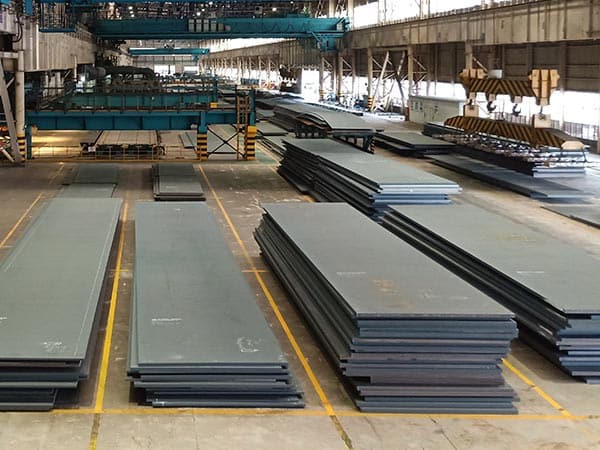
Defining the Identity of 1.0976 Steel
When engineers and procurement specialists ask, "Is 1.0976 hot-rolled steel mild steel?", the answer requires a nuanced understanding of metallurgical classification. 1.0976, commonly known by its EN 10149-2 designation S355MC, occupies a unique space between traditional mild steel and high-performance alloys. While it shares the low carbon footprint characteristic of mild steel, its mechanical properties and manufacturing process elevate it into the category of High-Strength Low-Alloy (HSLA) steel.
Traditional mild steel, such as S235JR (1.0038), is defined by its simplicity—primarily iron and carbon with minimal alloying. In contrast, 1.0976 is a thermomechanically rolled steel designed for cold forming. The "S" signifies structural steel, "355" denotes the minimum yield strength in megapascals (MPa), "M" indicates the thermomechanical rolling process, and "C" highlights its suitability for cold forming. Understanding this distinction is vital for optimizing weight-to-strength ratios in modern engineering projects.
The "Mild Steel" Comparison: Beyond Basic Carbon Steel
The confusion often arises because 1.0976 has a carbon content as low as, or even lower than, standard mild steel. However, the term "mild steel" usually implies a yield strength in the range of 200 to 250 MPa. With a minimum yield strength of 355 MPa, 1.0976 provides nearly 50% more load-bearing capacity than standard S235 mild steel. This allows for significant down-gauging, where thinner sections of 1.0976 can replace thicker sections of mild steel without sacrificing structural integrity.
The primary difference lies in the micro-alloying elements. While mild steel relies on carbon for strength, 1.0976 utilizes minute additions of niobium (Nb), vanadium (V), and titanium (Ti). these elements, combined with the thermomechanical rolling process, create a much finer grain structure. This fine grain is the secret behind its superior toughness and formability, characteristics that standard mild steel cannot match at equivalent strength levels.
Chemical Composition: The Science of Micro-Alloying
The chemical blueprint of 1.0976 is strictly controlled to ensure weldability and formability. By keeping carbon and manganese levels optimized and adding micro-alloys, the steel achieves high strength without becoming brittle.
| Element | Maximum Percentage (%) |
|---|---|
| Carbon (C) | 0.12 |
| Manganese (Mn) | 1.50 |
| Silicon (Si) | 0.50 |
| Phosphorus (P) | 0.025 |
| Sulfur (S) | 0.020 |
| Aluminum (Al) | 0.015 (min) |
| Niobium (Nb) | 0.09 |
| Vanadium (V) | 0.20 |
| Titanium (Ti) | 0.15 |
The extremely low carbon content (max 0.12%) is significantly lower than many structural mild steels, which can go up to 0.20% or higher. This low carbon is essential for the steel's exceptional weldability. The addition of Niobium and Titanium acts as a grain refiner during the rolling process, preventing grain growth and ensuring the finished plate has a uniform, high-density microstructure.
Mechanical Properties and Performance Benchmarks
The mechanical performance of 1.0976 is governed by the EN 10149-2 standard. It is specifically engineered to provide a high yield point while maintaining enough ductility for complex bending and folding operations.
| Property | Value (for nominal thickness ≤ 16mm) |
|---|---|
| Minimum Yield Strength (ReH) | 355 MPa |
| Tensile Strength (Rm) | 430 - 550 MPa |
| Minimum Elongation (A80mm) | 19% (thickness < 3mm) |
| Minimum Elongation (A5) | 23% (thickness ≥ 3mm) |
One of the standout features of 1.0976 is its yield-to-tensile ratio. This ratio is carefully balanced to allow for predictable spring-back during cold forming. Unlike standard mild steel, which might exhibit inconsistent behavior during high-speed stamping, 1.0976 offers high repeatability, making it a favorite for automated manufacturing lines.
Thermomechanical Rolling: The "M" Factor
The "M" in S355MC stands for thermomechanically rolled. This is not a standard hot-rolling process. It involves precise temperature control during the rolling stages, where the final deformation occurs in the non-recrystallization temperature range. This process forces the formation of a very fine ferrite-pearlite grain structure.
Standard mild steel is often normalized or simply hot-rolled, resulting in larger grains. The fine-grained structure of 1.0976 provides two major advantages:
- Enhanced Toughness: It remains ductile even at lower temperatures, reducing the risk of brittle fracture.
- Superior Surface Quality: The controlled cooling and rolling result in a tighter scale layer, which is easier to remove during pickling, leading to a better finish for painting or galvanizing.
Processing Performance: Bending, Welding, and Cutting
For fabricators, 1.0976 is a dream material because it combines the strength of high-alloy steels with the ease of processing found in mild steels. Cold forming is where this grade truly shines. It can be bent to very tight radii without cracking. For thicknesses under 3mm, the minimum inside bend radius is often as low as 0.25 times the thickness, though 0.5t to 1.5t is more common for thicker sections.
Weldability is another critical attribute. Because the Carbon Equivalent Value (CEV) is remarkably low, 1.0976 can be welded using all standard methods (MIG, TIG, Laser, Submerged Arc) without the need for preheating in most applications. The heat-affected zone (HAZ) remains stable, maintaining much of the base metal's strength and toughness.
In terms of thermal cutting, 1.0976 responds excellently to laser, plasma, and oxy-fuel cutting. Its low impurity levels (low Sulfur and Phosphorus) ensure clean edges with minimal dross, reducing the need for secondary grinding operations. This efficiency is a key driver for its adoption in high-volume production environments.
Strategic Industrial Applications
The unique properties of 1.0976 make it indispensable in industries where weight reduction and structural durability are paramount. It has largely replaced traditional mild steel in several key sectors:
- Automotive Industry: Used for chassis frames, cross members, and suspension parts where high strength is needed to improve safety and fuel efficiency through weight reduction.
- Heavy Machinery: Ideal for crane arms, telescopic booms, and excavator components that require high lift capacity and resistance to fatigue.
- Agricultural Equipment: Employed in the manufacturing of plows, harvesters, and trailers that must withstand harsh outdoor environments and high mechanical stress.
- Storage and Racking: High-density warehouse racking systems utilize 1.0976 to support massive loads with thinner, more efficient profiles.
- Transportation: Truck trailers and cold-formed sections for railway wagons benefit from the high payload capacity enabled by this HSLA grade.
Environmental Adaptability and Sustainability
1.0976 is highly adaptable to various environmental conditions. While it is not a "weathering steel" like Corten, its fine-grained structure provides a consistent base for protective coatings. When galvanized or painted, its corrosion resistance is excellent, making it suitable for outdoor structural use.
From a sustainability perspective, the ability to use less steel (down-gauging) to achieve the same structural performance directly reduces the carbon footprint of the final product. Furthermore, 1.0976 is 100% recyclable. Its low alloy content means it can be easily integrated back into the steelmaking process without requiring complex separation of alloying elements, supporting a circular economy in the manufacturing sector.
Technical Verdict: Why Choose 1.0976 Over Mild Steel?
Choosing between 1.0976 and standard mild steel depends on the specific demands of the application. If the project requires simple structural support where weight is not a concern, mild steel remains a cost-effective choice. However, for any application involving dynamic loads, weight sensitivity, or complex cold forming, 1.0976 is the superior technical solution.
Its classification as an HSLA steel rather than a simple mild steel is a testament to its advanced metallurgical design. By providing a higher yield strength, better toughness, and exceptional weldability, 1.0976 enables engineers to push the boundaries of design, creating lighter, stronger, and more efficient structures. Whether you are designing a truck chassis or a high-reach forklift, understanding the high-performance nature of 1.0976 is the first step toward engineering excellence.
Leave a message