
What is the difference between high strength steel and 1.0980 alloy steel sheet
Comprehensive comparison between general high strength steel and 1.0980 (S500MC) alloy steel sheet, covering chemical composition, mechanical performance, and industrial applications.
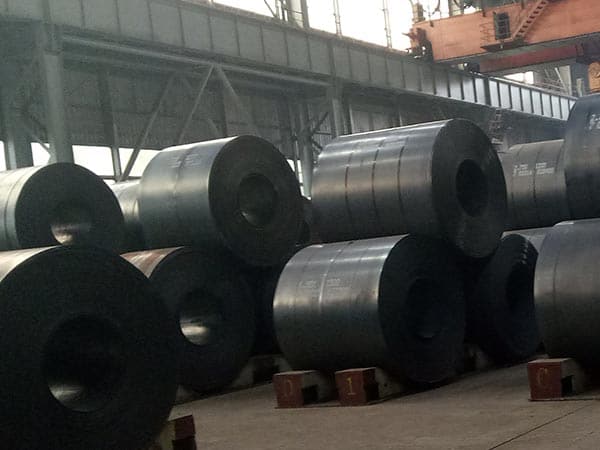
Defining the Relationship Between High Strength Steel and 1.0980
To understand the difference between high strength steel (HSS) and 1.0980 alloy steel sheet, it is essential first to clarify their classification. High strength steel is a broad category that encompasses a wide range of steel grades designed to provide superior mechanical properties compared to standard carbon steels. On the other hand, 1.0980 is a specific material number under the EN 10149-2 standard, commonly known as S500MC.
In essence, 1.0980 is a specialized subset of the high-strength low-alloy (HSLA) family. While "high strength steel" refers to an entire spectrum of materials with yield strengths typically ranging from 300 MPa to over 1500 MPa, 1.0980 specifically targets the 500 MPa yield strength threshold. This material is thermomechanically rolled, a process that meticulously controls the temperature and deformation during rolling to achieve a fine-grained microstructure, which is the secret behind its unique balance of strength and ductility.
Chemical Composition and Micro-alloying Strategies
Standard high strength steels often rely on varying levels of carbon and manganese to boost hardness and strength. However, this often comes at the cost of weldability and toughness. 1.0980 departs from this traditional approach by utilizing micro-alloying technology. It maintains a very low carbon content (typically ≤ 0.12%) to ensure excellent weldability and cold forming capabilities.
The "alloy" in 1.0980 alloy steel sheet primarily refers to the addition of trace elements such as Niobium (Nb), Titanium (Ti), and Vanadium (V). These elements form fine carbides and nitrides during the cooling process, which pin grain boundaries and prevent grain growth. This grain refinement allows 1.0980 to achieve high yield strength without the brittleness associated with high-carbon steels.
Mechanical Performance: A Comparative Analysis
When comparing 1.0980 to generic high strength steels, the mechanical performance highlights specific trade-offs. Many high strength steels focus solely on the ultimate tensile strength (UTS), but 1.0980 is engineered for yield strength consistency and elongation.
| Property | Generic HSS (Example: S355) | 1.0980 (S500MC) | Ultra-High Strength (UHSS) |
|---|---|---|---|
| Yield Strength (MPa) | ≥ 355 | ≥ 500 | ≥ 700 - 1200 |
| Tensile Strength (MPa) | 470 - 630 | 550 - 700 | 800 - 1500 |
| Min. Elongation (%) | 20 - 22 | ≥ 12 - 14 | ≤ 8 - 10 |
| Cold Bending Radius | 1.0t | 0.5t - 1.0t | 2.0t - 4.0t |
As shown in the table, 1.0980 occupies a "sweet spot." It offers significantly higher load-bearing capacity than standard structural steel like S355, yet it retains much better formability than ultra-high-strength grades. This makes it ideal for components that require complex shapes but must remain lightweight and strong.
Processing Performance: Weldability and Formability
One of the most significant differences lies in how these materials behave on the shop floor. Many high strength steels require pre-heating before welding to prevent hydrogen-induced cracking due to their high carbon equivalent (CEV). 1.0980, thanks to its low carbon and optimized micro-alloying, features a very low CEV. This allows for welding without pre-heating in most thicknesses, significantly reducing production time and energy costs.
Furthermore, the cold forming performance of 1.0980 is exceptional. While standard high strength steels might crack when subjected to tight bends, 1.0980 is specifically designed for cold-pressed parts. Its fine-grained structure allows for tight bending radii without surface tearing, which is critical for manufacturing complex automotive frames and longitudinal beams.
Environmental Adaptability and Low-Temperature Toughness
Environmental factors often dictate the choice between generic HSS and 1.0980. Generic steels may become brittle at sub-zero temperatures, leading to catastrophic failure under impact. 1.0980 is often tested for Charpy V-notch impact energy at -20°C or even -40°C.
The thermomechanical rolling process ensures that the steel maintains its toughness even in harsh climates. This makes 1.0980 a preferred choice for mobile machinery used in arctic environments or high-altitude construction, where standard HSS might fail. Additionally, its clean internal structure (low sulfur and phosphorus content) provides better resistance to lamellar tearing compared to lower-grade high strength steels.
Expanded Industry Applications
The choice between a general high strength steel and 1.0980 often comes down to the specific demands of the industry.
- Automotive Industry: 1.0980 is widely used for chassis components, cross members, and reinforcement parts where weight reduction is vital for fuel efficiency without compromising crash safety.
- Heavy Lifting & Crane Construction: The high strength-to-weight ratio allows for longer crane booms and lighter support structures, increasing the lifting capacity of mobile cranes.
- Transportation: In trailer and truck body manufacturing, using 1.0980 instead of standard HSS allows for thinner wall sections, increasing the payload capacity of the vehicle.
- Agricultural Machinery: Plows, harvesters, and tractors utilize 1.0980 for parts subjected to high stress and abrasive wear, benefiting from its toughness and ease of repair via welding.
Weight Reduction and Economic Efficiency
While the per-ton price of 1.0980 alloy steel sheet may be higher than standard structural HSS, the total cost of ownership is often lower. Because 1.0980 is stronger, engineers can specify thinner gauges to achieve the same structural integrity. This "lightweighting" leads to several economic advantages:
First, less raw material is purchased by weight. Second, transportation costs for the finished product are reduced. Third, in the automotive and shipping sectors, lower vehicle weight translates directly into lower fuel consumption and reduced CO2 emissions. Therefore, 1.0980 is not just a material choice but a strategic tool for sustainable engineering.
Surface Quality and Coating Compatibility
High strength steels produced via traditional hot rolling often have thick mill scale that can interfere with subsequent processing. 1.0980 is typically supplied in a condition that is conducive to pickling and oiling (P&O). This results in a superior surface finish that is ideal for laser cutting and high-quality painting or galvanizing.
The consistency of the surface layer ensures that when 1.0980 is used in automated production lines, there is less wear on tooling and more consistent results during robotic welding. This level of precision is often missing in commodity-grade high strength steels, where surface imperfections and thickness tolerances can vary more widely.
How to Select the Right Grade
Choosing between generic high strength steel and 1.0980 requires an analysis of the manufacturing process. If the project involves simple structural shapes with no significant weight constraints, a standard HSS like S355 may suffice. However, if the design requires intricate cold forming, superior weldability, and significant weight savings, 1.0980 (S500MC) is the superior technical solution.
Engineers must also consider the fatigue life. The fine-grained structure of 1.0980 provides better resistance to fatigue crack initiation compared to coarser-grained high strength steels. In dynamic applications like truck frames or moving machinery parts, this translates to a longer service life and fewer maintenance intervals, further justifying the selection of this high-performance alloy sheet.
Leave a message