
What are the main factors affecting the hardenability of 1.0986 weldable structural steel
Explore the critical factors influencing the hardenability of 1.0986 (S460MC) steel, including chemical composition, micro-alloying elements, and processing techniques for industrial applications.
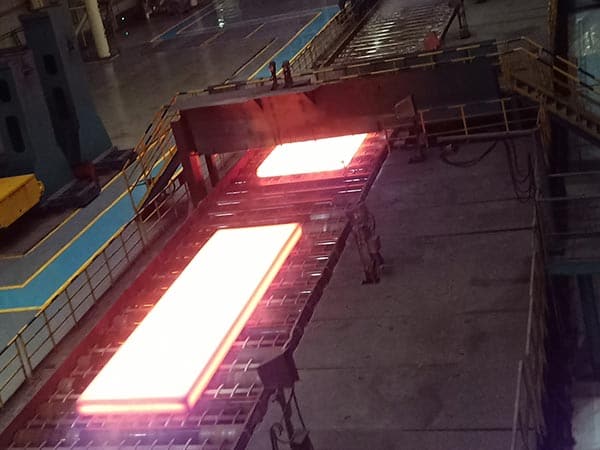
Understanding the Core Nature of 1.0986 Structural Steel
1.0986 steel, commonly known by its EN 10149-2 designation as S460MC, represents a high-strength, low-alloy (HSLA) steel specifically engineered for cold forming and welding applications. Unlike traditional carbon steels, 1.0986 relies on a fine-grained microstructure achieved through thermomechanical rolling (TMCP). The concept of hardenability in this specific grade is nuanced; while it is not designed for traditional quenching and tempering to achieve high hardness, its hardenability—specifically the tendency to form hard, brittle phases in the Heat Affected Zone (HAZ) during welding—is a critical parameter for structural integrity.
Hardenability determines how deep and to what extent a steel will harden when cooled from high temperatures. For 1.0986, controlling this property is essential to maintain the balance between high yield strength (minimum 460 MPa) and excellent weldability. Several metallurgical and process-related factors dictate this behavior, influencing how the material responds to thermal cycles in manufacturing environments.
The Role of Chemical Composition and Carbon Equivalent (CEV)
The primary factor affecting the hardenability of 1.0986 is its chemical makeup. Although it is a low-carbon steel, the synergy between its alloying elements determines its transformation kinetics. Carbon (C) is the most potent element for increasing hardness, but in 1.0986, it is strictly limited (usually below 0.12%) to ensure superior weldability and prevent the formation of martensite in the HAZ.
Manganese (Mn) plays a dual role. It increases hardenability by slowing down the transformation of austenite to pearlite, allowing for a more uniform structure. However, in 1.0986, Mn levels are optimized to provide solid solution strengthening without excessively increasing the risk of cold cracking. The Carbon Equivalent (CEV) is the standard metric used to evaluate this risk:
CEV = C + Mn/6 + (Cr+Mo+V)/5 + (Cu+Ni)/15
For 1.0986, the CEV is typically kept very low (often below 0.38), which directly correlates to low hardenability, making it highly resistant to cracking even without preheating in many welding scenarios.
Micro-Alloying Elements: Niobium, Vanadium, and Titanium
What sets 1.0986 apart from standard structural steels is the precise addition of micro-alloying elements. These elements—Niobium (Nb), Vanadium (V), and Titanium (Ti)—have a profound impact on the austenite grain size and the subsequent hardenability of the steel.
- Niobium: It increases the recrystallization temperature of austenite. During the thermomechanical rolling process, Nb prevents grain growth, resulting in an extremely fine grain structure. Fine grains generally decrease hardenability because they provide more nucleation sites for the transformation to softer phases like ferrite, which is desirable for maintaining toughness in 1.0986.
- Titanium: Often used to fix nitrogen and form stable nitrides, Ti prevents grain coarsening in the HAZ when the steel is subjected to the high temperatures of welding. By keeping the grain size small, Ti helps control the local hardenability, ensuring the weld area doesn't become excessively brittle.
- Vanadium: Contributes to precipitation hardening. While it can slightly increase hardenability, its primary function in 1.0986 is to enhance yield strength through the formation of fine carbides.
Thermomechanical Control Process (TMCP) and Microstructure
The manufacturing process of 1.0986 is as important as its chemistry. The Thermomechanical Control Process (TMCP) involves controlled rolling at specific temperature ranges followed by accelerated cooling. This process refines the grain size to a level unattainable by conventional normalizing.
A finer grain size reduces the "effective" hardenability in the context of avoiding brittle martensite. Because the grains are so small, the transformation from austenite to ferrite/pearlite occurs much more rapidly during cooling. This ensures that even with relatively fast cooling rates after welding, the 1.0986 steel maintains a ductile, fine-grained ferritic-bainitic microstructure rather than transforming into hard martensite. This is why 1.0986 can achieve high strength without the high alloy content that usually complicates welding.
Cooling Rates and Thermal Cycle Impact
In any structural application involving welding or heat treatment, the cooling rate (often expressed as t8/5, the time taken to cool from 800°C to 500°C) is a decisive factor. For 1.0986, the hardenability is low enough that it is forgiving across a wide range of cooling rates. However, if the cooling is extremely rapid—such as in thick-walled sections or when welding in very cold environments without proper insulation—the local hardness can still rise.
The interaction between the steel's low hardenability and the cooling rate ensures that the Hardness Vickers (HV) in the HAZ remains within acceptable limits (typically below 350 HV for S460MC), preventing hydrogen-induced cracking (HIC). This makes 1.0986 an ideal candidate for automated, high-speed welding processes where thermal cycles are tight.
Technical Specifications and Mechanical Properties
To better understand how these factors manifest in the material's performance, the following table outlines the typical mechanical and chemical characteristics of 1.0986 (S460MC):
| Property/Element | Value / Requirement |
|---|---|
| Yield Strength (ReH) | ≥ 460 MPa |
| Tensile Strength (Rm) | 520 - 670 MPa |
| Elongation (A80mm) | ≥ 14% |
| Carbon (C) max | 0.12% |
| Manganese (Mn) max | 1.60% |
| Silicon (Si) max | 0.50% |
| Al (Total) min | 0.015% |
| Nb + Ti + V max | 0.22% |
Environmental Adaptability and Industry Applications
The controlled hardenability of 1.0986 translates directly into its environmental adaptability. Because the steel does not easily form hard, brittle phases, it maintains excellent low-temperature toughness. This is vital for structures operating in cold climates or dynamic environments where brittle fracture could be catastrophic.
The automotive industry utilizes 1.0986 for chassis components, truck frames, and cold-pressed parts where weight reduction is necessary without sacrificing safety. In the heavy machinery sector, it is used for crane booms, excavator arms, and support structures. The ability to weld these components without extensive preheating—thanks to the low hardenability—significantly reduces production costs and improves manufacturing throughput.
Practical Implications for Fabrication
When working with 1.0986, fabricators must be aware that while the steel has low hardenability, it is sensitive to overheating. Excessive heat input during welding can lead to grain growth in the HAZ, which locally alters the properties achieved by the TMCP process. While the area won't necessarily "harden" in the traditional sense, it may lose yield strength and toughness if the fine-grained structure is destroyed.
Therefore, maintaining a balanced heat input is key. The use of low-hydrogen welding consumables is recommended, although 1.0986 is much less sensitive to hydrogen cracking than traditional S460 grades that are not thermomechanically rolled. The stability of the micro-alloyed carbides and nitrides ensures that even under standard industrial welding conditions, the material retains its high-performance characteristics across the entire joint.
Advanced Metallurgical Considerations
Recent studies in steel metallurgy suggest that the distribution of Boron (B), even in trace amounts, can significantly affect hardenability. In 1.0986, Boron is typically avoided or strictly controlled because it strongly increases hardenability by segregating to austenite grain boundaries. By keeping Boron out, 1.0986 maintains its "weld-friendly" profile. Additionally, the cleanliness of the steel—specifically low sulfur (S) and phosphorus (P) levels—ensures that the low-hardenability matrix is not compromised by inclusions that could act as stress concentrators or initiation points for lamellar tearing.
The synergy of low carbon, strategic micro-alloying, and TMCP processing makes 1.0986 a pinnacle of modern structural steel design. It provides the high strength required for modern engineering challenges while ensuring that the hardening behavior remains predictable and manageable during the most demanding fabrication processes.
Leave a message