
What is the difference between alloy steel and S650MC steel
Explore the comprehensive comparison between general alloy steel and S650MC high-strength steel. Learn about chemical composition, mechanical properties, and industrial applications.
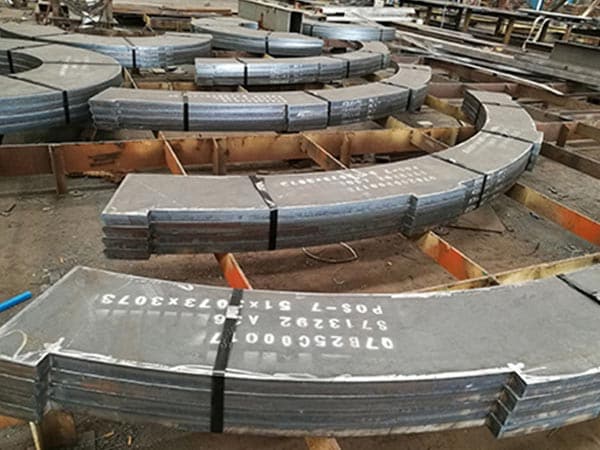
Defining the Core Identity: Alloy Steel vs. S650MC
To understand the difference between alloy steel and S650MC, it is essential to first clarify their classification. Alloy steel is a broad category of steel that is alloyed with a variety of elements in total amounts between 1.0% and 50% by weight to improve its mechanical properties. These elements often include manganese, nickel, chromium, molybdenum, vanadium, silicon, and boron. On the other hand, S650MC is a specific grade of high-yield-strength steel for cold forming, governed by the European standard EN 10149-2. While S650MC is technically a type of micro-alloyed steel, it is categorized specifically as a thermomechanically rolled steel designed for weight reduction and high structural integrity.
Chemical Composition and the Role of Micro-Alloying
Traditional alloy steels can be divided into low-alloy and high-alloy steels. Low-alloy steels usually contain less than 5% alloying elements, often focusing on increasing hardenability or corrosion resistance. S650MC, however, utilizes a precise micro-alloying strategy. It maintains a very low carbon content (typically ≤0.12%) to ensure excellent weldability and ductility, while relying on minute additions of niobium (Nb), vanadium (V), and titanium (Ti) to achieve its high strength. These elements refine the grain structure during the thermomechanical rolling process.
| Element | Typical Alloy Steel (e.g., 4140) | S650MC (EN 10149-2) |
|---|---|---|
| Carbon (C) | 0.38% - 0.43% | ≤ 0.12% |
| Manganese (Mn) | 0.75% - 1.00% | ≤ 2.00% |
| Chromium (Cr) | 0.80% - 1.10% | - |
| Molybdenum (Mo) | 0.15% - 0.25% | - |
| Niobium (Nb) | - | ≤ 0.09% |
| Titanium (Ti) | - | ≤ 0.15% |
The absence of high levels of chromium and molybdenum in S650MC makes it distinct from typical heat-treatable alloy steels. Instead of relying on quenching and tempering, S650MC gains its properties through the TMCP (Thermomechanical Control Process), which integrates controlled rolling and controlled cooling.
Mechanical Performance: Yield Strength and Ductility
The most striking difference lies in the yield strength. The '650' in S650MC stands for a minimum yield strength of 650 MPa. Traditional structural alloy steels might require complex heat treatments to reach these levels, whereas S650MC achieves this in its as-rolled state. Furthermore, S650MC is engineered for cold forming. It possesses a high degree of elongation (typically 10-12% depending on thickness), allowing it to be bent and shaped without cracking, a feat difficult for many high-strength alloy steels that become brittle as their strength increases.
- S650MC Yield Strength: Min 650 MPa
- S650MC Tensile Strength: 700 - 880 MPa
- Alloy Steel (Annealed): Varies widely, often 400-600 MPa
- Alloy Steel (Hardened): Can exceed 1000 MPa but with significantly lower ductility.
Processing and Fabricability Comparison
When it comes to manufacturing, S650MC offers significant advantages in weldability. Due to its low carbon equivalent (CEV), it does not require preheating or post-weld heat treatment in most applications, unlike many medium-carbon alloy steels which are prone to cold cracking in the heat-affected zone (HAZ). This makes S650MC a favorite for automated production lines in the automotive and heavy machinery sectors.
Cold Forming Capabilities: The 'MC' suffix denotes that the steel is intended for cold forming (C) and is thermomechanically rolled (M). S650MC can be subjected to tight bending radii, making it ideal for complex structural components like truck chassis frames and crane booms. Traditional alloy steels often require hot forming or intermediate annealing steps to achieve similar shapes without failure.
Environmental Adaptation and Weight Reduction
Modern engineering prioritizes lightweighting. S650MC allows designers to use thinner sections of steel without sacrificing load-bearing capacity. This reduction in material usage directly translates to lower vehicle weight, improved fuel efficiency, and reduced CO2 emissions. While high-performance alloy steels are used for specific wear-resistant or high-temperature environments, S650MC is the go-to solution for structural efficiency in ambient conditions.
In terms of environmental resistance, S650MC is not a stainless or weather-resisting steel. Like most carbon and low-alloy steels, it requires coating or painting if exposed to corrosive environments. However, its fine-grained structure provides slightly better resistance to atmospheric corrosion compared to standard mild steel, though it lacks the specialized protection of weathering steels like Corten.
Industry-Specific Applications
The choice between these materials depends heavily on the end-use. Alloy steels are frequently found in gears, shafts, fasteners, and engine components where hardness and wear resistance are paramount. S650MC, conversely, dominates the structural landscape of mobile equipment.
- Automotive Industry: S650MC is used for longitudinal beams, cross members, and reinforced chassis parts where high strength-to-weight ratios are critical.
- Lifting and Excavation: Telescopic cranes, excavator arms, and agricultural machinery utilize S650MC to handle high stress while remaining light enough for mobility.
- Cold Pressed Parts: Any structural component requiring complex geometry through pressing or bending benefits from the ductility of S650MC.
Economic Considerations and Availability
From a cost perspective, S650MC is often more economical than highly alloyed steels because it achieves its properties through the rolling process rather than expensive alloying elements like nickel or cobalt. However, because it requires specialized TMCP rolling mills, it is typically produced by major steel mills with advanced technology. Traditional alloy steels are more widely available in various forms (bars, tubes, plates), whereas S650MC is primarily available as hot-rolled strip and plate.
Engineers must also consider the impact toughness. S650MC is tested for impact strength at low temperatures (e.g., -20°C or -40°C), ensuring it performs reliably in harsh climates. Many general-purpose alloy steels may not have guaranteed low-temperature toughness unless specifically ordered to a certain sub-grade.
Summary of Key Differentiators
The fundamental difference is that alloy steel is a material family defined by chemistry, while S650MC is a performance-defined grade optimized for strength and formability. S650MC provides a unique balance: the strength of a high-alloy steel with the weldability and formability of a low-carbon steel. This makes it an indispensable tool for modern structural engineering where efficiency, safety, and weight reduction are the primary drivers of material selection.
Leave a message