
How to deal with iron oxide residual problem of S600MC pickled steel coil
Comprehensive technical guide on resolving iron oxide residuals in S600MC pickled steel coils, covering chemical analysis, process optimization, and industrial solutions.
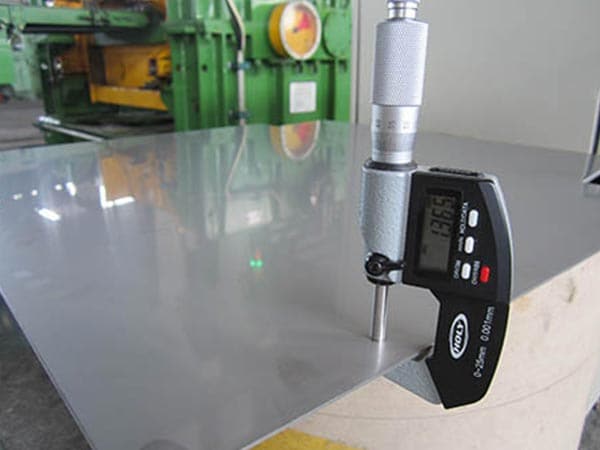
Understanding the Nature of S600MC and Surface Quality Requirements
S600MC is a high-strength low-alloy (HSLA) steel grade produced through thermomechanically rolled processes, specifically designed for cold forming. Its chemical composition and microstructure are engineered to provide a minimum yield strength of 600 MPa. In the global manufacturing landscape, particularly in the automotive and heavy machinery sectors, the surface quality of S600MC is paramount. Pickled steel coils (S600MC+PO) are preferred because the pickling process removes the hot-rolled scale, providing a clean surface for subsequent operations like laser cutting, welding, and painting.
However, iron oxide residuals—often manifesting as black spots, streaks, or a 'tiger skin' pattern—remain a persistent challenge. These residuals are not merely aesthetic flaws; they directly interfere with the electrical conductivity during welding and the adhesion of protective coatings. Addressing this issue requires a deep dive into the metallurgical properties of the steel and the chemical kinetics of the pickling line.
Mechanical and Chemical Attributes of S600MC
To solve the residual problem, one must first understand what makes S600MC unique. Unlike standard carbon steels, S600MC utilizes micro-alloying elements such as Niobium (Nb), Vanadium (V), and Titanium (Ti). These elements refine the grain structure but also influence how the oxide scale forms during the hot rolling stage.
| Element | Max Content (%) | Impact on Pickling |
|---|---|---|
| Carbon (C) | 0.12 | Low carbon facilitates faster acid penetration. |
| Manganese (Mn) | 1.90 | Can form complex oxides that are harder to dissolve. |
| Silicon (Si) | 0.50 | High Si can lead to Fe2SiO4 (fayalite) formation at the interface. |
| Niobium (Nb) | 0.09 | Influences the tightness of the scale layer. |
The presence of Silicon is particularly critical. When S600MC is heated to high temperatures during rolling, Silicon can react to form a thin layer of fayalite at the boundary between the steel substrate and the iron oxide. This layer acts as a chemical barrier, making standard hydrochloric acid (HCl) pickling less effective if the process parameters are not precisely tuned.
The Formation Mechanism of Iron Oxide Residuals
Iron oxide on hot-rolled S600MC typically consists of three layers: Hematite (Fe2O3) on the outermost surface, Magnetite (Fe3O4) in the middle, and Wustite (FeO) closest to the metal. Wustite is the easiest to dissolve in acid, while Magnetite is significantly more resistant.
Residual problems occur when the cooling rate after hot rolling is uneven, or when the coiling temperature is too high. High coiling temperatures promote the transformation of Wustite into Magnetite and proeutectoid iron, a process known as the 'eutectoid transformation.' This results in a 'stubborn' scale that does not peel off easily during the mechanical scale-breaking phase or dissolve quickly in the acid tanks.
Technical Solutions: Optimizing the Pickling Process
Dealing with residuals on S600MC requires a multi-pronged approach involving mechanical, chemical, and operational adjustments.
- Enhanced Mechanical Scale Breaking: Before the steel enters the acid tanks, it should pass through a tension leveler or a scale breaker. For S600MC, increasing the elongation percentage (typically between 0.5% to 1.5%) creates micro-cracks in the oxide layer. These cracks allow the acid to penetrate deeper and reach the Wustite layer faster, accelerating the 'undercutting' process.
- Acid Concentration and Temperature Control: The pickling rate increases with acid concentration and temperature. For S600MC, maintaining a hydrochloric acid concentration of 80-120 g/L in the final tanks and a temperature of 75°C to 85°C is often necessary. If residuals persist, the concentration of Ferrous Chloride (FeCl2) must be monitored; excessive FeCl2 can saturate the solution and slow down the reaction.
- Turbulent Pickling Technology: Modern lines use high-pressure sprays to create turbulence. This physical action helps sweep away the hydrogen bubbles and dissolved iron salts that accumulate on the surface of the S600MC coil, ensuring fresh acid is always in contact with the remaining residuals.
- Use of Chemical Accelerators: Adding specialized surfactants or pickling accelerators can reduce the surface tension of the acid. This allows the liquid to seep into the microscopic pores of the S600MC scale, effectively loosening the 'tiger skin' patterns that are common in high-strength grades.
Environmental Adaptability and Material Integrity
While aggressive pickling removes residuals, it poses a risk of 'over-pickling,' which can lead to hydrogen embrittlement—a critical concern for high-strength steels like S600MC. Hydrogen atoms can diffuse into the grain boundaries, reducing the steel's ductility and causing sudden failure under stress.
To prevent this, the use of high-quality corrosion inhibitors is mandatory. These inhibitors form a monomolecular protective film on the cleaned metal surface, preventing the acid from attacking the steel substrate while allowing it to continue dissolving the iron oxide residuals. This ensures that the S600MC retains its excellent cold-forming properties and high fatigue strength.
Industry-Specific Applications and Surface Standards
The demand for S600MC without iron oxide residuals is driven by several high-tech industries:
Automotive Chassis and Frames: In the production of longitudinal beams, any residual scale can cause 'arcing' during robotic welding, leading to porous welds. A perfectly pickled surface ensures consistent weld penetration and structural integrity.
Laser Cutting Services: Precision laser cutting requires a uniform surface. Iron oxide residuals absorb laser energy differently than the base metal, which can result in uneven edges, dross formation, and increased nozzle wear. S600MC with a clean, pickled finish allows for higher cutting speeds and cleaner geometries.
Heavy Lifting Equipment: For crane booms and telescopic arms, S600MC is often powder-coated. Residuals act as a weak link; if the oxide remains under the paint, it will eventually flake off, leading to localized corrosion and compromising the safety of the equipment.
Prevention During Storage and Handling
Once the iron oxide residuals are successfully removed, the S600MC surface is highly reactive. To prevent 'flash rust' or secondary oxidation, the steel must be immediately passivated or oiled. For S600MC, electrostatic oiling is the industry standard, applying a uniform layer of rust-preventative oil (usually 0.5 to 2.0 g/m²).
Storage conditions are equally vital. Pickled S600MC coils should be stored in climate-controlled warehouses with low humidity. Temperature fluctuations can cause condensation (sweating), which reacts with the steel to form new oxides, negating the efforts of the pickling process.
Advanced Diagnostic Methods
When residuals occur, metallurgical departments should employ Scanning Electron Microscopy (SEM) and Energy Dispersive Spectroscopy (EDS). By analyzing the oxygen-to-iron ratio and the presence of trace elements like Silicon or Manganese in the residual spots, engineers can determine whether the problem originated in the hot strip mill (rolling temperature) or the pickling line (acid chemistry). This data-driven approach moves the solution from trial-and-error to scientific precision.
Effective management of iron oxide residuals on S600MC pickled steel coils is a balance of mechanical force, chemical precision, and metallurgical understanding. By optimizing the scale-breaking tension, refining acid bath parameters, and utilizing inhibitors, manufacturers can deliver a high-performance material that meets the rigorous standards of modern engineering.
Leave a message