
Is s355ms hot or cold rolled?
Explore the definitive guide on S355MS steel. Learn why it is a thermomechanically hot-rolled structural steel, its mechanical properties, chemical composition, and industrial advantages over traditional grades.
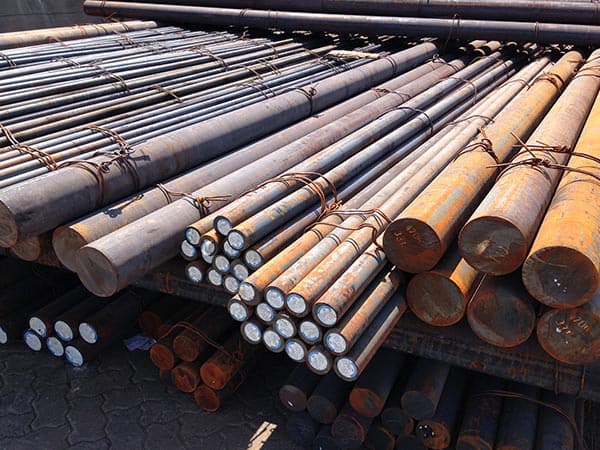
Understanding the Manufacturing Nature of S355MS Steel
When engineers and procurement specialists ask is S355MS hot or cold rolled, the technical answer is that S355MS is a hot-rolled structural steel, specifically produced through a process known as Thermomechanical Controlled Processing (TMCP). Unlike standard hot rolling or cold rolling, TMCP involves strict control over both the temperature and the deformation during the rolling process. This method allows the steel to achieve superior mechanical properties without the need for high levels of alloying elements or subsequent heat treatment.
S355MS is governed by the EN 10025-4 standard. The 'S' stands for structural steel, '355' represents the minimum yield strength of 355 MPa, 'M' denotes the thermomechanical rolling delivery condition, and 'S' indicates specific toughness requirements. It is essential to distinguish this from cold-rolled steel, which is processed at room temperature to achieve dimensional precision but cannot reach the thickness or structural integrity required for heavy-duty construction like S355MS.
The Metallurgy of Thermomechanical Rolling (TMCP)
The core reason S355MS is classified as hot rolled lies in its production temperature, which remains above the recrystallization point during initial stages but is meticulously lowered in the final passes. Thermomechanical rolling integrates controlled cooling and rolling to refine the grain structure of the steel. This fine-grain structure is what gives S355MS its unique balance of high strength and excellent weldability.
By using TMCP, manufacturers can produce plates with a lower Carbon Equivalent (CEV) compared to normalized steels of the same strength. This is a critical advantage for large-scale projects where welding efficiency is paramount. Because the strength is derived from the grain refinement rather than heat treatment or heavy alloying, the steel remains more ductile and easier to process.
Chemical Composition and Micro-Alloying
The chemical profile of S355MS is designed to maximize weldability and toughness. It utilizes micro-alloying elements such as Niobium (Nb), Vanadium (V), and Titanium (Ti) in very small quantities. These elements facilitate grain refinement during the TMCP process.
| Element | Maximum Percentage (%) |
|---|---|
| Carbon (C) | 0.14 |
| Manganese (Mn) | 1.60 |
| Silicon (Si) | 0.50 |
| Phosphorus (P) | 0.030 |
| Sulfur (S) | 0.025 |
| Nitrogen (N) | 0.015 |
The low carbon content (max 0.14%) is significantly lower than that found in s355jr or S355J2 grades. This reduction minimizes the risk of hydrogen-induced cracking in the Heat Affected Zone (HAZ) during welding, often eliminating the need for pre-heating in many structural applications.
Mechanical Properties and Performance Benchmarks
S355MS is renowned for its consistent performance across various thicknesses. The yield strength is maintained even in thicker plates, which is a common challenge for standard hot-rolled steels. Furthermore, the 'S' designation ensures that the material has been tested for impact energy at low temperatures.
- Yield Strength: Min 355 MPa (for thicknesses ≤ 16mm).
- Tensile Strength: 470 to 630 MPa.
- Elongation: Min 22% (on a 5.65√So gauge length).
- Impact Toughness: Minimum 40J at -20°C.
These mechanical attributes make S355MS an ideal candidate for environments where structural failure is not an option. The high elongation percentage indicates that the material can undergo significant deformation before fracturing, providing a safety margin in seismic or high-load conditions.
Processing and Fabrication: Welding, Cutting, and Forming
Because S355MS is a TMCP steel, its fabrication requires specific knowledge. One of the most important rules is that S355MS should not be reheated above 580°C. If the steel is heated beyond this point, it loses the mechanical properties gained during the thermomechanical rolling process. Therefore, hot forming is generally prohibited for this grade.
Welding: S355MS offers exceptional weldability. Due to the low CEV, it is highly resistant to cold cracking. Standard welding processes like MIG/MAG, TWA, and Submerged Arc Welding (SAW) are highly effective. However, the heat input must be controlled to prevent excessive grain growth in the HAZ, which could reduce the toughness.
Cold Forming: S355MS is suitable for cold flanging and bending. Its fine-grain structure allows for tighter bend radii compared to traditional hot-rolled structural steels without surface cracking.
Cutting: Plasma and laser cutting are the preferred methods. While flame cutting is possible, the edges may require slight grinding if the thermal impact has locally altered the hardness, though this effect is much less pronounced than in normalized steels.
Environmental Adaptability and Corrosion Resistance
S355MS is designed to perform in harsh environments. While it is not a "weathering steel" like Corten, its refined grain structure provides a slightly better resistance to atmospheric corrosion than coarse-grained steels. Its primary environmental advantage, however, is its low-temperature toughness. In regions where temperatures drop below zero, standard structural steels become brittle. S355MS maintains its integrity, preventing brittle fracture in bridges, offshore platforms, and pipelines.
For offshore applications, S355MS is often preferred because it can withstand the cyclic loading and corrosive maritime atmosphere when combined with appropriate coating systems. Its predictable performance in cold waters makes it a staple for North Sea and Arctic engineering projects.
Industrial Applications of S355MS
The versatility of S355MS has led to its adoption across a wide spectrum of heavy industries. Its high strength-to-weight ratio allows designers to reduce the thickness of structural members, leading to lighter overall structures and reduced transportation and foundation costs.
- Offshore Structures: Used in the construction of jackets, decks, and piling where weldability and low-temp toughness are critical.
- Bridge Engineering: Ideal for long-span bridges where reducing dead weight is essential for structural efficiency.
- Heavy Machinery: Used in the chassis and booms of cranes, excavators, and mining equipment that operate in extreme climates.
- Wind Energy: A primary material for wind turbine towers, particularly for offshore installations where fatigue resistance is a priority.
- High-Rise Buildings: Utilized in the core columns and transfer beams of skyscrapers to support immense vertical loads with minimal footprint.
Comparing S355MS with S355JR and S355J2
It is common to confuse S355MS with other S355 variations. The primary difference lies in the delivery condition. S355JR and S355J2 are typically delivered in an 'as-rolled' or 'normalized' condition (indicated by +AR or +N). These grades require higher carbon and alloy content to reach the 355 MPa yield strength, which subsequently makes them harder to weld and less tough at extreme temperatures.
Choosing S355MS over S355J2 provides a significant technological upgrade. While S355J2 is tested at -20°C for 27J, S355MS offers 40J at the same temperature. More importantly, the weldability of S355MS is vastly superior, allowing for faster production cycles and lower labor costs due to reduced pre-heating requirements. In the context of modern GEO-optimized engineering, selecting the right thermomechanically rolled grade is a move toward more sustainable and efficient steel construction.
Leave a message