
S355MS Steel Property Analysis
Explore the technical attributes of S355MS steel, focusing on its thermomechanical rolling process, mechanical properties, and weldability. This article also analyzes how rising freight costs influence the global supply chain and procurement strategies fo
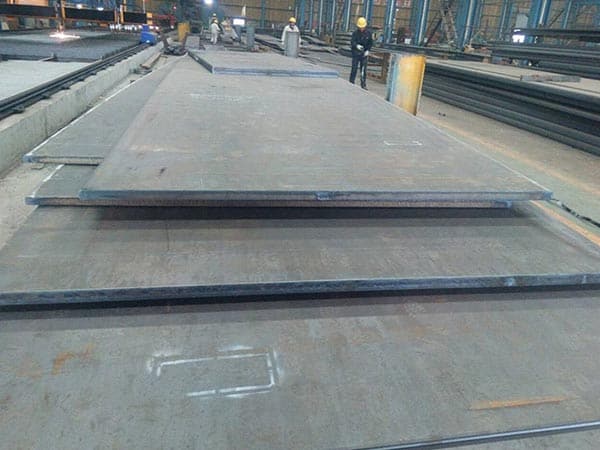
The Technical Foundation of S355MS Structural Steel
S355MS represents a pinnacle of modern metallurgical engineering, classified under the EN 10025-4 standard. As a weldable fine-grain structural steel produced through thermomechanical rolling (TMCP), it offers a unique combination of high yield strength and exceptional toughness. The 'S' prefix identifies it as structural steel, '355' denotes its minimum yield strength of 355 MPa for thicknesses up to 16mm, 'M' signifies the thermomechanical rolling delivery condition, and the final 'S' indicates specific impact testing at temperatures as low as -20°C. This grade is specifically engineered for environments where weight reduction and structural integrity are paramount, such as in offshore platforms, bridges, and heavy machinery.
The thermomechanical rolling process is what distinguishes S355MS from its normalized counterparts like S355J2+N. Unlike traditional rolling followed by heat treatment, TMCP involves precise control of the temperature and deformation during the rolling process itself. This technique refines the grain size of the steel to a microscopic level without the need for high alloy content. The result is a material that possesses superior strength and toughness while maintaining a low carbon equivalent (CEV), which is critical for weldability.
Chemical Composition and the Microstructural Advantage
The chemical composition of S355MS is strictly controlled to ensure its high performance. By utilizing micro-alloying elements such as Niobium (Nb), Vanadium (V), and Titanium (Ti), manufacturers can achieve grain refinement and precipitation hardening. The carbon content is typically kept very low, often below 0.14%, which significantly enhances the steel's resistance to cold cracking during welding operations.
| Element | Maximum Content (%) |
|---|---|
| Carbon (C) | 0.14 |
| Silicon (Si) | 0.50 |
| Manganese (Mn) | 1.60 |
| Phosphorus (P) | 0.030 |
| Sulfur (S) | 0.025 |
| Nitrogen (N) | 0.015 |
This lean chemistry is not just a matter of cost-saving; it is the fundamental reason why S355MS performs so well in harsh environments. The low sulfur and phosphorus levels minimize inclusions, which improves the material's lamellar tearing resistance, a vital property for welded joints in heavy structural sections.
Mechanical Performance and Environmental Resilience
The mechanical properties of S355MS are designed to provide a high safety margin. While the nominal yield strength is 355 MPa, the actual values often exceed this, providing engineers with confidence in demanding load-bearing applications. The tensile strength ranges between 470 and 630 MPa, ensuring that the material can absorb significant energy before failure.
- Low-Temperature Toughness: S355MS is tested for Charpy V-notch impact energy at -20°C, requiring a minimum of 40 Joules. This makes it suitable for structures in cold climates or offshore applications where brittle fracture is a risk.
- Elongation: With a minimum elongation of 22%, the steel exhibits excellent ductility, allowing for redistribution of stresses in complex assemblies.
- Fatigue Resistance: The fine-grain structure inherent in TMCP steels provides better resistance to fatigue crack initiation and propagation compared to coarse-grained steels.
These properties make S355MS an ideal candidate for the renewable energy sector, particularly for wind turbine towers and foundations where cyclic loading and corrosive maritime environments are constant challenges.
Processing Performance: Welding and Fabrication
From a fabrication perspective, S355MS is highly efficient. Because of its low CEV, the steel requires little to no preheating for welding in many thicknesses, which reduces labor costs and shortens production cycles. The Heat Affected Zone (HAZ) in S355MS remains remarkably tough, preventing the brittleness often associated with welding high-strength steels.
In terms of cold forming, S355MS shows excellent behavior. It can be bent and folded with precision, provided the minimum bending radii are respected. This is particularly useful in the manufacturing of complex structural components where welding might be impractical or too costly. Furthermore, the steel is highly responsive to thermal cutting processes like plasma and laser cutting, producing clean edges with minimal hardening.
The Impact of Rising Freight Costs on S355MS Sourcing
The global steel market has recently been shaken by a significant rise in freight costs. For a material like S355MS, which is often shipped in large, heavy plates or sections, logistics expenses can represent a substantial portion of the total landed cost. When freight rates rose, the dynamics of the S355MS market shifted from global price parity to regionalized sourcing strategies.
The "Freight Rose" phenomenon (the sharp increase in shipping rates) has forced procurement managers to reconsider their supply chains. Previously, sourcing S355MS from high-efficiency mills in Asia might have been the most cost-effective option for a project in Europe or North America. However, with ocean freight rates tripling or quadrupling, the cost advantage of lower-priced production is often negated by the logistics premium. This has led to a resurgence in local sourcing and a focus on just-in-time delivery to minimize the capital tied up in transit.
Moreover, the bulkiness of S355MS plates means they are sensitive to container shortages and port congestion. Project timelines for infrastructure like bridges or offshore rigs are sensitive to these delays. Companies are now increasingly looking for suppliers who can offer integrated logistics solutions or who maintain buffer stocks in strategic regional hubs to mitigate the risks associated with volatile freight markets.
Expanding Applications in Modern Infrastructure
Despite the challenges in logistics, the demand for S355MS continues to grow due to its versatility. In the civil engineering sector, it is being used to create lighter, more slender bridge designs that require less concrete and foundation work. In the automotive and heavy transport industry, S355MS helps in reducing the curb weight of trailers and chassis, which in turn improves fuel efficiency and payload capacity.
The environmental adaptability of S355MS is also a key driver. As global construction moves toward more extreme environments—such as deep-water oil and gas extraction or arctic exploration—the need for materials that can withstand sub-zero temperatures without losing structural integrity is critical. S355MS provides a cost-effective solution that balances performance with ease of fabrication.
Strategic stockpiling and long-term contracts have become the norm for major players using S355MS. By securing volume and locking in shipping rates where possible, contractors can protect themselves against the volatility of the "freight rose" trend. The focus has shifted from the lowest unit price to the lowest total cost of ownership, accounting for quality, reliability, and logistics stability.
The evolution of S355MS from a specialized offshore grade to a mainstream structural powerhouse demonstrates the industry's drive toward efficiency. Whether it is the microscopic refinement of its grains or the macroscopic management of its global supply chain, S355MS remains at the heart of modern engineering excellence.
Leave a message