
s355mc equivalent prices plunged
An in-depth analysis of the S355MC steel price plunge, covering mechanical properties, equivalent standards like Q355B and ASTM A1011, and expert procurement strategies for industrial manufacturing.
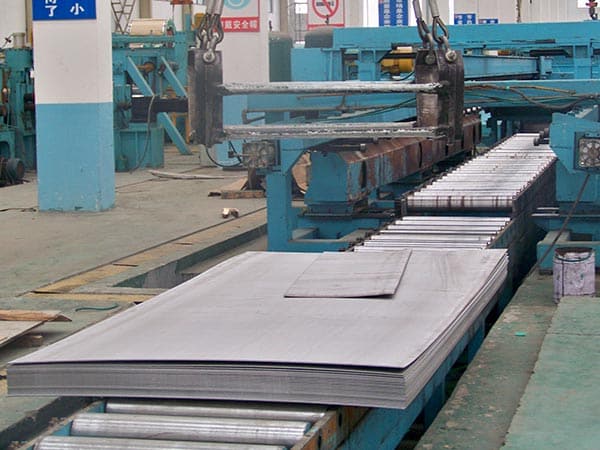
The Dynamics of the S355MC Steel Price Plunge
The global steel market has recently witnessed a significant shift, with S355MC equivalent prices plunged to levels that have caught the attention of procurement managers and structural engineers alike. S355MC, a thermomechanically rolled high-yield strength steel designed for cold forming, is a cornerstone of the modern automotive and heavy machinery industries. Understanding why these prices are fluctuating requires a look at both macroeconomic factors and the technical value proposition this specific grade offers. Current market corrections are driven by a surplus in production capacity and a temporary softening in certain heavy industrial sectors, making it a strategic window for stock replenishment.
S355MC belongs to the EN 10149-2 standard, which specifies hot-rolled flat products made of high-yield strength steels for cold forming. Unlike standard carbon steels, S355MC relies on a precise micro-alloying process. When the prices for these equivalents drop, it impacts a wide range of global standards, including the Chinese GB/T 1591 (Q355B), the American ASTM A1011 (HSLAS Grade 50), and the Japanese JIS G3134 (SPFH 540). The interconnectedness of these standards means that a price drop in one region often triggers a domino effect across the supply chain.
Technical Specifications and Chemical Composition
The allure of S355MC lies in its optimized chemical composition. To maintain its high yield strength of 355 MPa while ensuring excellent weldability and formability, manufacturers employ micro-alloying elements such as Niobium (Nb), Vanadium (V), and Titanium (Ti). These elements facilitate grain refinement, which is critical for the steel's performance under stress.
| Element | Maximum Content (%) |
|---|---|
| Carbon (C) | 0.12 |
| Manganese (Mn) | 1.50 |
| Silicon (Si) | 0.50 |
| Phosphorus (P) | 0.025 |
| Sulfur (S) | 0.020 |
| Aluminium (Al) | 0.015 |
This low carbon content is the primary reason for the material's superior weldability. When S355MC equivalent prices plunged, the cost-to-performance ratio became even more attractive for manufacturers who previously used lower-grade steels but required the weight-saving benefits of high-strength low-alloy (HSLA) steel.
Mechanical Properties and Industrial Utility
S355MC is defined by its mechanical resilience. It offers a minimum yield strength of 355 MPa, which allows for thinner sections to be used in construction and manufacturing without compromising structural integrity. This lead to a direct reduction in the overall weight of the final product, which is particularly vital in the transport sector for fuel efficiency.
- Yield Strength: Min 355 MPa (for thicknesses ≤ 16mm).
- Tensile Strength: 430 - 550 MPa.
- Elongation: Min 19% to 23% depending on thickness.
- Bending Radius: Excellent cold-forming properties with minimal risk of cracking.
The processing performance of S355MC is highly regarded. Its fine-grained structure ensures that during cold-bending or folding, the material maintains its internal cohesion. This prevents the formation of micro-cracks that could lead to catastrophic failure in load-bearing components. As prices for equivalents drop, industries such as crane manufacturing and chassis production can upgrade their material specifications without increasing their budget overhead.
Comparative Analysis of S355MC Equivalents
When searching for alternatives due to the S355MC equivalent prices plunged trend, it is essential to understand the nuances between different international standards. While they may be functionally equivalent, slight variations in alloying or testing requirements can exist.
- Q355B (China): Widely available and often the benchmark for the price plunge. It offers similar yield strength but may have different impact toughness requirements at sub-zero temperatures.
- ASTM A1011 HSLAS Class 1 Grade 50 (USA): Frequently used in the North American automotive market. It matches the yield strength but has specific requirements for copper content if atmospheric corrosion resistance is needed.
- St52-3 (Germany/Old DIN): The predecessor to modern EN standards. While many still refer to it, S355MC provides better formability due to its thermomechanical rolling process.
Selecting the right equivalent during a price dip requires a thorough review of the Mill Test Certificate (MTC). Engineers must verify that the elongation and yield-to-tensile ratio meet the specific safety factors of their design. The current price volatility allows for higher-spec versions (like S420MC or S460MC) to sometimes be priced competitively against the standard S355MC, providing an opportunity for over-engineering at a lower cost.
Environmental Adaptation and Longevity
S355MC exhibits commendable environmental adaptability. Although it is not a dedicated weathering steel like Corten, its low impurity level (low P and S) reduces the initiation points for pitting corrosion. In industrial environments, S355MC serves as an excellent substrate for galvanizing or sophisticated paint systems. The clean surface finish resulting from the thermomechanical rolling process ensures high adhesion for protective coatings.
For applications in colder climates, S355MC maintains its ductility better than standard S355J2 structural steel in many cold-forming scenarios. This makes it ideal for components of agricultural machinery that operate in diverse weather conditions. The price plunge in equivalents makes this high-durability material accessible to markets that were previously limited to basic carbon steels.
Optimizing Manufacturing Processes with S355MC
The economic benefit of the price drop extends into the fabrication shop. S355MC is designed for efficiency. Its consistency in thickness and flatness reduces the setup time for automated laser cutting and CNC bending machines. Because the material is "cleaner" than many commodity steels, laser cutting speeds can be increased, and nozzle wear is reduced.
Welding S355MC is straightforward. Due to its low Carbon Equivalent Value (CEV), preheating is rarely required for standard thicknesses. This significantly reduces labor costs and energy consumption. Whether using MIG, TIG, or submerged arc welding, the heat-affected zone (HAZ) remains stable, preserving the high-yield properties of the surrounding base metal. When the S355MC equivalent prices plunged, the total cost of ownership—including material cost and fabrication labor—reached an all-time low for many manufacturers.
Strategic Procurement in a Volatile Market
Navigating the market when prices plunge requires a data-driven approach. Buyers should not only look at the base price per ton but also consider the logistics and the reliability of the mill. High-quality S355MC is produced by top-tier mills using advanced thermomechanical control processes (TMCP). During a price dip, some lower-tier mills may attempt to flood the market; however, the consistency of mechanical properties in these batches can vary.
Strategic stockpiling during these periods can provide a competitive advantage for long-term projects. Since S355MC is a versatile grade used in everything from solar panel brackets to heavy-duty truck frames, its utility is universal. Keeping a reserve of high-quality S355MC or its equivalents ensures that production lines remain buffered against future price hikes or supply chain disruptions.
Expanding Industry Horizons
The current affordability of S355MC is driving innovation in sectors that were traditionally conservative with material choices. In the renewable energy sector, S355MC is increasingly used for wind turbine components and solar tracking systems where high strength-to-weight ratios are essential for handling wind loads. In the construction of modular buildings, the cold-forming capability of S355MC allows for complex, high-strength profiles that reduce the weight of the steel skeleton.
The automotive industry continues to be the largest consumer, using the price drop to offset the rising costs of electronics and battery components in electric vehicles. Chassis components, suspension parts, and reinforcements made from S355MC provide the necessary safety ratings while keeping the vehicle light enough to maximize range. As the global market stabilizes, the lessons learned from this price plunge will likely lead to a permanent shift toward high-strength, cold-forming grades as the new industry standard.
Leave a message