
What is the s355 steel grade extrusion technology
Discover the comprehensive guide to S355 steel grade extrusion technology. This article explores the mechanical properties, manufacturing processes, and industrial applications of extruded S355 profiles for high-performance engineering.
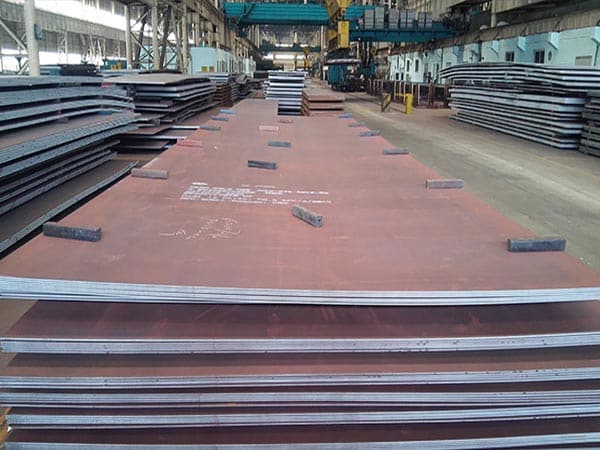
The Fundamentals of S355 Steel Grade and Extrusion Synergy
S355 steel is a high-strength, low-alloy structural steel complying with the European standard EN 10025-2. It is characterized by its minimum yield strength of 355 MPa, making it a cornerstone material for modern infrastructure and heavy machinery. When this robust material is combined with extrusion technology, it unlocks a new dimension of design flexibility and structural efficiency. Extrusion is a metal forming process where a heated billet of S355 steel is forced through a shaped die to create profiles with constant cross-sections. Unlike traditional rolling, extrusion allows for the creation of complex geometries, including hollow sections and intricate asymmetrical shapes that would be impossible or prohibitively expensive to produce via machining or welding.
The synergy between S355 and extrusion lies in the material's excellent hot-forming characteristics. The chemical composition of S355, which typically includes manganese (up to 1.60%) and silicon (up to 0.55%), provides the necessary ductility at elevated temperatures to flow through complex die orifices without compromising the internal integrity of the steel. This technology is particularly valuable for producing custom structural components where weight-to-strength ratios are critical.
Technical Specifications and Chemical Composition of S355
Understanding the extrusion behavior of S355 requires a deep dive into its metallurgical makeup. The standard is divided into several sub-grades based on impact strength testing temperatures, such as s355jr, S355J0, S355J2, and S355K2. These variations ensure that the extruded profiles can perform reliably in environments ranging from temperate construction sites to sub-zero offshore platforms.
| Element | S355JR Content (%) | S355J2 Content (%) |
|---|---|---|
| Carbon (C) | Max 0.24 | Max 0.20 |
| Manganese (Mn) | Max 1.60 | Max 1.60 |
| Silicon (Si) | Max 0.55 | Max 0.55 |
| Phosphorus (P) | Max 0.035 | Max 0.025 |
| Sulfur (S) | Max 0.035 | Max 0.025 |
The lower carbon content in the J2 variant enhances weldability and toughness, which is vital for extruded sections that will undergo further fabrication. The controlled levels of phosphorus and sulfur are essential for maintaining the cleanliness of the steel, preventing hot shortness (brittleness) during the high-temperature extrusion process.
The Hot Extrusion Process for S355 Steel
The extrusion of S355 steel is primarily a hot extrusion process, typically performed at temperatures between 1100°C and 1250°C. At these temperatures, the steel reaches a plastic state, reducing the force required to push it through the die. The process begins with heating a cylindrical billet in an induction furnace to ensure uniform temperature distribution. Uniformity is crucial; any cold spots in the billet can lead to uneven flow and defects in the final profile.
Once heated, the billet is placed into the container of the extrusion press. A hydraulic ram then applies immense pressure—often exceeding several thousand tons—forcing the S355 steel through the die. During this phase, glass lubrication is frequently employed. Molten glass acts as a lubricant between the hot steel and the die surfaces, reducing friction and protecting the die from excessive wear. This lubrication is a key differentiator between steel extrusion and the extrusion of softer metals like aluminum.
- Billet Preparation: Cutting and surface cleaning of S355 raw material.
- Heating: Precise temperature control to achieve optimal plasticity.
- Extrusion: High-pressure shaping through specialized tool steel dies.
- Cooling: Controlled cooling (air or water) to manage grain growth.
- Straightening: Mechanical stretching to correct any thermal distortion.
Mechanical Performance and Grain Refinement
One of the most significant advantages of S355 steel grade extrusion technology is the improvement in mechanical properties. The high pressure and severe plastic deformation involved in extrusion lead to grain refinement. As the steel passes through the die, the coarse crystalline structure of the cast or rolled billet is broken down and reorganized into a finer, more uniform grain structure. This refinement enhances both the yield strength and the impact toughness of the final profile.
Furthermore, the extrusion process aligns the grain flow of the steel with the longitudinal axis of the profile. This directional grain flow significantly improves the fatigue resistance of the component, making extruded S355 profiles superior to welded assemblies for dynamic load applications. The longitudinal strength is maximized, which is ideal for structural beams, rails, and support columns.
Environmental Adaptability and Corrosion Resistance
S355 steel is renowned for its adaptability to various environmental conditions. When extruded, the surface of the steel develops a dense, uniform oxide layer (mill scale) during cooling, which provides a basic level of protection. However, for long-term durability in harsh environments, extruded S355 components are often subjected to secondary treatments like hot-dip galvanizing or advanced coating systems.
In marine or industrial settings, the S355J2 grade is preferred due to its tested toughness at -20°C. Extrusion ensures that the material remains homogenous throughout the cross-section, reducing the risk of localized corrosion that often occurs at the heat-affected zones (HAZ) of welded structures. This homogeneity is a critical factor in the longevity of infrastructure exposed to corrosive elements.
Diverse Industry Applications of Extruded S355
The ability to produce custom shapes with high structural integrity makes extruded S355 steel indispensable across multiple sectors. In the construction industry, it is used for specialized curtain wall supports and complex bridge components where standard rolled sections fall short. The precision of extrusion allows for integrated features like grooves or interlocking joints, which simplify on-site assembly.
In the heavy machinery and transport sector, S355 extruded profiles are used for crane booms, forklift masts, and chassis members. These components benefit from the high strength-to-weight ratio provided by S355, allowing for increased payload capacity without sacrificing safety. The energy sector also utilizes this technology for wind turbine components and offshore oil rig supports, where the material must withstand extreme mechanical stress and environmental fatigue.
- Railway Engineering: Specialized track components and rolling stock frames.
- Mining Equipment: High-wear resistant profiles for conveyors and supports.
- Automotive: Structural reinforcements for heavy-duty commercial vehicles.
- Architectural Design: Aesthetic yet functional structural elements with complex curves.
Comparative Advantages: Extrusion vs. Traditional Methods
When evaluating S355 steel grade extrusion technology, it is essential to compare it with traditional manufacturing methods like rolling, casting, and welding. While rolling is highly efficient for standard shapes like I-beams or plates, it lacks the flexibility to create complex internal cavities or sharp asymmetrical features. Casting can produce complex shapes but often results in lower mechanical properties and internal porosity.
Extrusion bridges the gap by offering the complexity of casting with the mechanical superiorities of forging. Compared to welding multiple pieces together to form a profile, extrusion eliminates the risk of weld failure and reduces the labor-intensive inspection processes like X-ray or ultrasonic testing. The result is a monolithic component with consistent properties throughout, leading to higher reliability and lower lifecycle costs.
| Feature | Extrusion (S355) | Welded Assembly | Hot Rolling |
|---|---|---|---|
| Shape Complexity | Very High | High | Low |
| Structural Integrity | Monolithic (Superior) | Risk at Joints | High |
| Material Waste | Low | Moderate | Low |
| Tooling Cost | Moderate | Low | High (Setup) |
Future Trends in S355 Extrusion Technology
The evolution of S355 steel grade extrusion technology is currently focused on enhancing precision and sustainability. Advanced Computer-Aided Engineering (CAE) and finite element analysis (FEA) are being used to optimize die designs, predicting material flow and thermal gradients before the first billet is heated. This reduces trial-and-error waste and allows for even thinner wall thicknesses, further pushing the boundaries of lightweight structural design.
Additionally, there is a growing trend toward integrating heat treatment directly into the extrusion line. By controlling the cooling rate immediately after the profile exits the die, manufacturers can achieve specific mechanical properties (like T6-like tempering in aluminum, but adapted for steel microstructures) without the need for separate, energy-intensive reheating cycles. This not only improves the carbon footprint of the production process but also ensures a more consistent product for the end-user.
S355 steel grade extrusion technology represents a peak of metallurgical engineering, combining the time-tested reliability of structural steel with the sophisticated forming capabilities of modern extrusion. As industries demand more efficient, durable, and complex components, the role of extruded S355 will continue to expand, driving innovation in structural engineering and manufacturing efficiency across the globe.
Leave a message