
What type of steel is en 10149 2 astm equivalent?
A comprehensive technical guide comparing EN 10149-2 high yield strength steels (S315MC to S700MC) with ASTM equivalents like A1011 and A656. Learn about mechanical properties, chemical composition, and industrial applications.
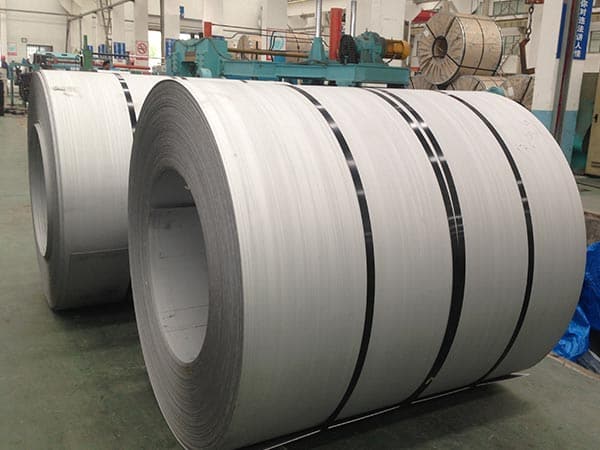
Understanding the Nature of EN 10149-2 High Yield Strength Steels
EN 10149-2 is a European standard that specifies the technical delivery conditions for hot-rolled flat products made of high yield strength steels for cold forming. These steels are thermomechanically rolled, a process that combines controlled rolling and controlled cooling to achieve a fine-grained microstructure without the need for additional heat treatment. This specific manufacturing route results in a material that possesses an exceptional balance of high strength, toughness, and superior formability.
When engineers and procurement specialists ask "What type of steel is EN 10149-2 ASTM equivalent?", they are usually looking for North American standards that offer similar mechanical performance and processing characteristics. The EN 10149-2 series includes grades such as S315MC, S355MC, S420MC, S460MC, S500MC, S550MC, S600MC, and S700MC. The 'S' denotes structural steel, the number represents the minimum yield strength in MPa, and 'MC' indicates thermomechanically rolled (M) steel suitable for cold forming (C).
Direct Comparison: EN 10149-2 vs. ASTM Equivalents
Finding a 1:1 match between European and American standards can be complex because ASTM (American Society for Testing and Materials) often categorizes steels by chemistry and end-use rather than just yield strength. However, the most common equivalents are found within ASTM A1011 (for thinner sections) and ASTM A656 (for higher strength structural applications).
| EN 10149-2 Grade | ASTM Equivalent (Closest) | Yield Strength (min MPa) | Tensile Strength (MPa) |
|---|---|---|---|
| S315MC | ASTM A1011 HSLAS Grade 45 Class 1 | 315 | 390-510 |
| S355MC | ASTM A1011 HSLAS Grade 50 / A656 Grade 50 | 355 | 430-550 |
| S420MC | ASTM A1011 HSLAS Grade 60 / A656 Grade 60 | 420 | 480-620 |
| S460MC | ASTM A656 Grade 65 | 460 | 520-670 |
| S500MC | ASTM A656 Grade 70 | 500 | 550-700 |
| S600MC | ASTM A656 Grade 80 (Modified) | 600 | 650-820 |
| S700MC | ASTM A656 Grade 100 (Approximate) | 700 | 750-950 |
Chemical Composition and Micro-alloying Philosophy
The secret behind the high performance of EN 10149-2 steels lies in their low carbon content and the strategic use of micro-alloying elements such as Niobium (Nb), Vanadium (V), and Titanium (Ti). Unlike traditional carbon steels that rely on high carbon and manganese for strength, these steels use grain refinement. This approach ensures that while the yield strength increases, the ductility and weldability remain excellent.
- Low Carbon Content: Typically below 0.12%, which significantly enhances weldability and reduces the risk of cold cracking.
- Grain Refinement: The addition of Nb and Ti creates fine precipitates that pin grain boundaries during the rolling process, resulting in a very fine ferritic-pearlitic or bainitic structure.
- Sulfur Control: EN 10149-2 requires very low sulfur levels (often ≤ 0.015%) and often involves inclusion shape control (e.g., Calcium treatment) to ensure the steel can be bent or flanged without tearing.
Mechanical Properties and Cold Forming Excellence
One of the defining characteristics of EN 10149-2 steels is their Cold Forming (C) capability. These steels are designed to be bent, crimped, and folded into complex shapes without losing structural integrity. For instance, S700MC allows for tight bending radii that would be impossible for standard structural steels of the same strength level.
The elongation values for these steels are remarkably high relative to their strength. S355MC typically offers an elongation (A5) of around 20-23%, while even the ultra-high-strength S700MC maintains an elongation of approximately 10-13%. This makes them ideal for weight-saving designs where thinner sections of high-strength steel replace thicker sections of lower-grade material.
Processing Performance: Welding, Cutting, and Bending
From a manufacturing perspective, EN 10149-2 grades offer significant advantages over traditional ASTM A36 or A572 steels. Their processing characteristics are optimized for modern industrial environments.
Welding: Due to the extremely low Carbon Equivalent (CEV), these steels can be welded using all standard methods (MIG/MAG, TIG, Submerged Arc) without the need for preheating in most thickness ranges. This reduces labor costs and increases throughput in fabrication shops.
Laser and Plasma Cutting: The clean chemistry and consistent flatness of thermomechanically rolled plates make them perfect for high-speed laser cutting. There is minimal distortion after cutting, which is critical for precision components in the automotive and crane industries.
Bending: These steels are specifically tested for their ability to withstand cold bending. Manufacturers provide guaranteed minimum bending radii, which allows designers to push the limits of geometry in chassis and frame construction.
Environmental Adaptability and Durability
While EN 10149-2 is not primarily a weathering steel (like Corten/ASTM A588), its fine-grained structure provides a degree of improved atmospheric corrosion resistance compared to coarse-grained mild steels. More importantly, these steels exhibit excellent low-temperature toughness. Many grades are tested at -20°C or -40°C to ensure they do not undergo brittle fracture in harsh climates, making them suitable for mobile machinery used in arctic or high-altitude environments.
Industry Applications: Where EN 10149-2 Shines
The adoption of EN 10149-2 and its ASTM equivalents is driven by the global push for "lightweighting." By using higher strength material, manufacturers can reduce the overall weight of a structure without sacrificing safety.
- Automotive Industry: Used for truck chassis, cross members, and structural reinforcements where weight reduction directly translates to fuel efficiency and increased payload.
- Lifting and Transportation: Telescopic cranes, trailer frames, and aerial work platforms rely on S700MC to achieve the necessary reach and lift capacity while keeping the deadweight low.
- Agricultural Machinery: Plows, harvesters, and silage trailers benefit from the impact resistance and formability of S420MC and S500MC.
- Cold Pressed Components: Any complex structural part that requires deep drawing or tight radius bending.
How to Choose Between EN and ASTM Standards
If your project is designed to European specifications, sticking with EN 10149-2 (e.g., S355MC) is advisable to ensure compliance with Eurocode requirements. However, if you are operating in the North American market, ASTM A656 Grade 80 is a very close functional equivalent to S550MC or S600MC. It is essential to verify the specific yield, tensile, and elongation requirements, as well as the impact testing temperature, before finalizing a substitution.
When sourcing these materials, always request a Mill Test Certificate (MTC) that specifies the thermomechanical rolling process (indicated by the 'M' suffix). This ensures that the material possesses the fine-grained structure necessary for the demanding cold-forming operations it was designed for.
Leave a message