
Main factors affecting s355mc steel equivalent price
An in-depth exploration of the technical and economic factors affecting S355MC steel equivalent prices, covering chemical composition, manufacturing processes, and global market trends.
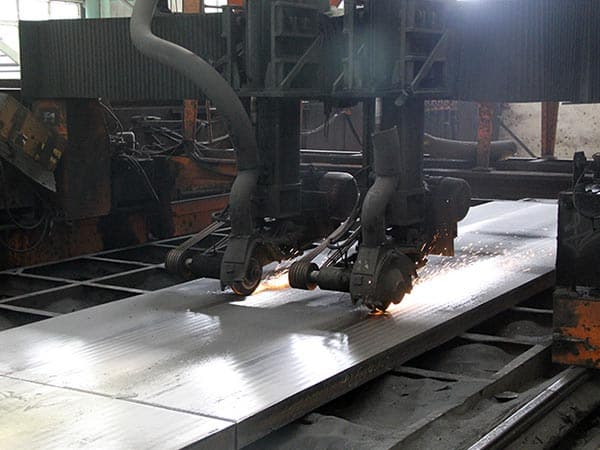
Technical Profile of S355MC High Yield Steel
S355MC is a thermomechanically rolled, high-yield-strength steel designed specifically for cold forming. Governed by the EN 10149-2 standard, this material is a cornerstone in the manufacturing of automotive frames, crane booms, and structural components where weight reduction without compromising safety is paramount. Understanding the price of S355MC equivalents requires a deep dive into its metallurgical DNA and the industrial processes that define its performance.
The 'S' denotes structural steel, '355' represents the minimum yield strength in Megapascals (MPa), and 'MC' signifies the thermomechanically rolled condition (M) and its suitability for cold forming (C). These specific designations ensure that the steel possesses high ductility and excellent weldability, characteristics that directly impact its production cost and market value.
The Impact of Chemical Composition on Pricing
One of the primary drivers of the S355MC steel equivalent price is the precise control of micro-alloying elements. Unlike standard carbon steels, S355MC relies on elements such as Niobium (Nb), Vanadium (V), and Titanium (Ti) to achieve grain refinement. These elements are subject to volatile global commodity pricing, which reflects directly on the final coil or plate cost.
- Niobium (Nb): Enhances yield strength through grain size control. Fluctuations in Niobium supply from major producers like Brazil significantly influence the base price of high-strength low-alloy (HSLA) steels.
- Titanium (Ti): Used for deoxidation and stabilization, preventing grain growth during welding.
- Low Carbon Content: S355MC maintains a very low carbon content (typically ≤0.12%) to ensure superior weldability and cold forming capacity. Achieving this low carbon level requires advanced oxygen furnace processing, which adds to the operational expense.
Comparing Global Equivalents and Their Price Variance
Procurement professionals often seek equivalents to S355MC to optimize supply chains. However, these equivalents are not always priced identically due to varying certification requirements and regional manufacturing standards. The following table highlights common equivalents and their key attributes:
| Standard | Grade | Yield Strength (min) | Tensile Strength | Key Characteristic |
|---|---|---|---|---|
| EN 10149-2 | S355MC | 355 MPa | 430-550 MPa | Excellent Cold Forming |
| GB/T 1591 | Q355B/C/D | 355 MPa | 470-630 MPa | General Structural Use |
| ASTM | A1011 HSLAS-F Gr 50 | 345 MPa | 450 MPa | High Formability |
| JIS G3134 | SPFH 540 | 355 MPa | 540 MPa | Automotive Structural |
While Q355B is often considered a close equivalent, it may lack the specific 'MC' thermomechanical processing required for extreme cold bending. This technical nuance means that while Q355B might be cheaper at a base level, the specialized S355MC commands a premium due to its enhanced grain structure and performance reliability in automated fabrication lines.
Manufacturing Process: Thermomechanical Rolling (TMCP)
The Thermomechanical Controlled Processing (TMCP) is a sophisticated rolling technique that combines controlled deformation and cooling. This process allows the steel to achieve high strength and toughness without the need for expensive heat treatments like quenching and tempering.
The energy intensity of TMCP is a major factor in the price of S355MC. During periods of high industrial electricity or natural gas costs, the price gap between standard hot-rolled steel and TMCP steel widens. Furthermore, the specialized rolling mills required for TMCP represent significant capital expenditure for steel mills, which is amortized through the product's market price.
Environmental Adaptability and Durability
S355MC is designed to perform in demanding environments. Its low carbon equivalent (CEV) ensures that it maintains structural integrity even at lower temperatures, reducing the risk of brittle fracture. This environmental adaptability makes it a preferred choice for heavy machinery operating in diverse climates.
From a pricing perspective, the demand for materials that can withstand harsh conditions drives the premium for S355MC. For instance, in the renewable energy sector—specifically for wind turbine components and transport frames—the reliability of S355MC reduces long-term maintenance costs, justifying its higher initial purchase price compared to standard structural grades.
Supply Chain Dynamics and Global Trade Policies
The S355MC steel equivalent price is rarely static, as it is heavily influenced by global trade dynamics. Anti-dumping duties, import tariffs, and regional quotas play a massive role in localized pricing. For example, trade barriers on Chinese steel imports in the EU or USA can force buyers to source from more expensive local mills, significantly increasing the landed cost of S355MC equivalents.
Logistics also play a critical role. Since S355MC is often sold in coils or large plates for automotive and heavy machinery sectors, the cost of specialized transport and moisture-controlled storage (to prevent surface rust) adds to the final quote. Buyers must consider whether the quoted price is FOB (Free On Board), CIF (Cost, Insurance, and Freight), or EXW (Ex Works), as these terms can shift the total cost by 5% to 15%.
Application Industry Expansion and Value-Added Services
The versatility of S355MC allows it to penetrate multiple high-growth industries. In the Automotive Industry, the push for lightweighting to increase fuel efficiency (or EV range) has made S355MC indispensable for chassis and suspension components. In the Construction Machinery sector, it is used for crane arms and excavator frames where high strength-to-weight ratios are essential.
Value-added services provided by stockholders or service centers also impact the price. These include:
- Precision Decoiling and Leveling: Ensuring the steel is perfectly flat for laser cutting.
- Custom Slitting: Providing specific widths for automated stamping lines.
- Testing and Certification: Providing 3.1 or 3.2 mill test certificates (MTC) which verify the chemical and mechanical properties.
Market Outlook: Why S355MC Prices Remain Resilient
Despite the cyclical nature of the steel market, S355MC prices tend to remain more resilient than commodity grades like S235JR. This is due to the technical barrier to entry; not every steel mill has the technology to produce high-quality TMCP steels that meet the stringent tolerances required by the automotive and aerospace support industries.
As global industries pivot toward more sustainable and efficient designs, the demand for high-yield steels like S355MC is projected to grow. This sustained demand, coupled with the rising costs of alloying elements and energy, suggests that while prices may fluctuate, the value proposition of S355MC remains high. Procurement strategies should focus on long-term partnerships with mills that can guarantee consistent metallurgical quality, as the cost of material failure in high-stress applications far outweighs the initial savings of a cheaper, non-compliant equivalent.
By analyzing the chemical precision, manufacturing complexity, and global trade factors, it becomes clear that the S355MC steel equivalent price is a reflection of its advanced engineering. For manufacturers, selecting this grade is an investment in product longevity, safety, and manufacturing efficiency.
Leave a message