
What is the notice of preheating before steel for truck chassis assemblies cutting
Explore the critical requirements for preheating high-strength steel used in truck chassis assemblies before thermal cutting. Learn about temperature controls, metallurgical impacts, and best practices to prevent cold cracking and ensure structural integr
The Critical Role of Preheating in Truck Chassis Steel Fabrication
In the modern automotive and heavy-duty transport manufacturing sectors, the structural integrity of a truck chassis is paramount. As the backbone of the vehicle, the chassis must withstand immense static and dynamic loads, vibration, and environmental stress. To achieve high payload capacity while minimizing weight, manufacturers increasingly turn to High-Strength Low-Alloy (HSLA) steels and ultra-high-strength thermomechanically rolled steels like S700MC or Q690D. However, the thermal cutting process—whether using flame, plasma, or laser—introduces localized heat that can significantly alter the material's properties. Understanding the notice of preheating before steel for truck chassis assemblies cutting is not merely a procedural suggestion; it is a fundamental metallurgical necessity to prevent catastrophic failure.
Preheating serves a dual purpose: it reduces the cooling rate of the Heat Affected Zone (HAZ) and assists in the diffusion of hydrogen, which is the primary culprit behind cold cracking. For truck chassis components, which are often subjected to rigorous fatigue cycles, any micro-crack initiated during the cutting process can propagate into a major structural failure under operational stress. This article provides a deep dive into the technical parameters, environmental factors, and industry-specific notices required for effective preheating.
Metallurgical Justification: Why Preheating is Non-Negotiable
The chemical composition of truck chassis steel, particularly the Carbon Equivalent (Ceq), determines its weldability and sensitivity to thermal cutting. When a high-energy heat source melts the steel during cutting, the surrounding material acts as a heat sink, causing rapid quenching. If the cooling rate is too high, the austenite transforms into brittle martensite instead of the desired fine-grained ferrite or pearlite. This brittle structure is highly susceptible to cracking, especially when residual stresses from the cutting process are present.
Hydrogen-Induced Cracking (HIC), also known as cold cracking, typically occurs at temperatures below 200°C, often several hours or even days after the cutting is completed. By preheating the steel, the temperature gradient between the cutting zone and the base metal is reduced. This slower cooling rate allows hydrogen atoms to diffuse out of the lattice, significantly lowering the risk of embrittlement. For chassis assemblies that utilize thicker plates or higher alloy content, the internal stresses are greater, making the preheating notice even more critical.
Technical Specifications for Preheating Temperatures
The required preheating temperature is not a fixed number; it depends on the steel grade, the thickness of the plate, and the specific cutting method employed. Generally, as the thickness increases, the heat sink effect becomes more pronounced, requiring higher preheat temperatures. The following table outlines the typical preheating requirements for common truck chassis steel grades under standard conditions:
| Steel Grade (Standard) | Plate Thickness (mm) | Recommended Preheat Temp (°C) | Carbon Equivalent (Typical) |
|---|---|---|---|
| S355J2W / Q355B | > 40mm | 100°C - 120°C | 0.38 - 0.42 |
| S500MC / Q500D | > 25mm | 100°C - 150°C | 0.45 - 0.48 |
| S700MC / Q690D | > 15mm | 120°C - 180°C | 0.50 - 0.55 |
| Hardox 450 (Wear Resistant) | > 10mm | 150°C - 200°C | 0.58 - 0.62 |
It is important to note that for thermomechanically rolled steels (MC grades), excessive preheating must be avoided. While preheating prevents cracking, exceeding 250°C can lead to grain coarsening and a reduction in yield strength, effectively neutralizing the benefits of the thermomechanical rolling process. Therefore, precision in temperature control is as important as the act of preheating itself.
Operational Notice: Best Practices for Execution
Executing the preheating process requires more than just a torch. To ensure the integrity of the truck chassis assembly, the following operational notices must be followed strictly:
- Uniformity of Heating: The heat must be applied uniformly across the entire thickness of the plate. Surface heating is insufficient; the core of the steel must reach the target temperature. It is recommended to heat a zone at least 75mm to 100mm wide on either side of the intended cut line.
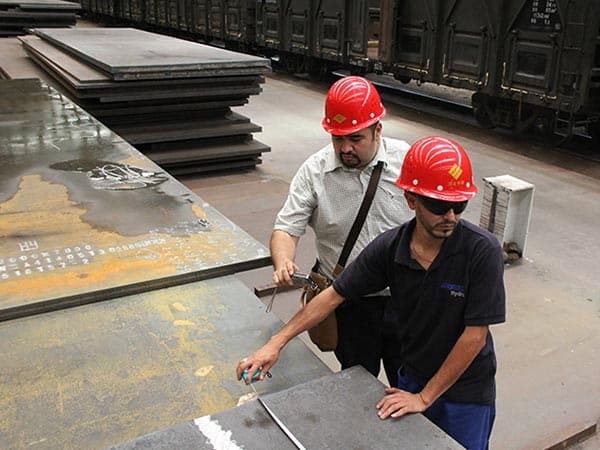
- Temperature Measurement: Use calibrated infrared thermometers or temperature-indicating crayons (Tempilstiks). Measurements should be taken on the side opposite the heat source whenever possible to ensure through-thickness heating.
- Soaking Time: For thick plates (above 50mm), a 'soaking' period is required. Once the surface reaches the target temperature, maintain the heat for several minutes to allow thermal equilibrium.
- Interpass Temperature: If multiple cuts are being made in close proximity, the interpass temperature must be monitored to ensure the material does not overheat or cool down too rapidly between passes.
Environmental Adaptability and External Factors
The environment in which the cutting takes place significantly influences the preheating strategy. In winter or in high-latitude regions where ambient temperatures drop below 5°C, the risk of cold cracking increases exponentially. In such cases, even steels that normally do not require preheating (such as thin S355 plates) should be warmed to at least 20°C to 30°C to remove moisture and reduce the initial thermal shock.
Moisture Management: Humidity and condensation are major sources of hydrogen. If the steel plates are stored in a damp environment, preheating serves the secondary function of evaporating surface moisture before the cutting arc or flame makes contact. This is particularly vital for plasma cutting, where the presence of water can lead to porosity and irregular kerf edges.
Impact on Downstream Process Performance
Proper preheating does more than prevent cracks; it improves the overall process performance of the chassis manufacturing line. A well-preheated plate exhibits better machinability in subsequent edge-grinding or drilling operations. Because the HAZ is less brittle, the wear on cutting tools and grinding discs is reduced.
Furthermore, preheating helps in maintaining the dimensional stability of the chassis rails. Rapid localized heating causes significant thermal expansion and subsequent contraction, which can lead to warping or 'bowing' of long chassis members. By reducing the temperature differential, preheating minimizes these internal stresses, ensuring that the rails remain straight and within the tight tolerances required for automated assembly and axle alignment.
Application Extension: From Standard Trucks to Specialized Heavy Equipment
While standard road trucks benefit from these practices, specialized sectors such as mining dump trucks, mobile cranes, and heavy-duty trailers require even more stringent adherence to preheating notices. These vehicles operate in extreme environments—from sub-zero arctic mines to scorching deserts—and carry loads that push the material to its elastic limit. For these applications, the steel used is often thicker and of higher grade (e.g., S960QL). In these scenarios, the preheating notice often includes post-heating (or hydrogen release baking) where the cut component is held at a specific temperature for several hours to ensure complete hydrogen effusion, ensuring the safety of the heavy equipment throughout its lifecycle.
Advanced Monitoring and Future Trends
As Industry 4.0 integrates into steel fabrication, the manual application of preheating is being replaced by automated induction heating systems. These systems use electromagnetic fields to heat the steel precisely and uniformly, with real-time feedback loops that adjust power based on integrated thermal sensors. This technology ensures that every truck chassis component is processed under identical, optimized conditions, removing the variability of human error and significantly enhancing the fatigue life of the final vehicle.
Adhering to the notice of preheating is a hallmark of quality in steel fabrication. By respecting the metallurgical limits of the material and implementing rigorous thermal controls, manufacturers can produce truck chassis assemblies that are not only lighter and more efficient but also inherently safe and durable for the long haul.
Leave a message