
Is S900MC mild steel?
Discover why S900MC is far from mild steel. This guide explores its 900MPa yield strength, chemical composition, welding techniques, and industrial applications.
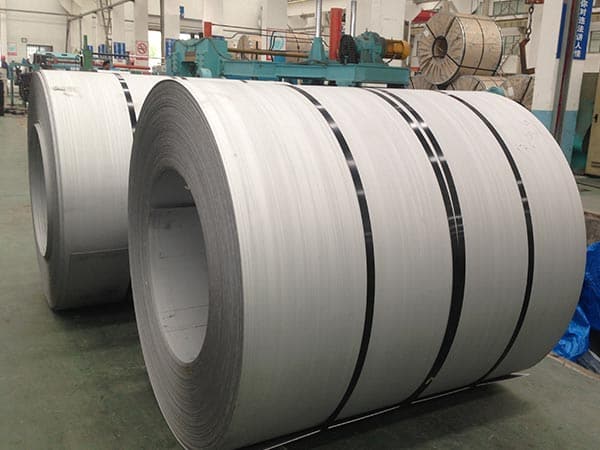
The Fundamental Distinction: S900MC vs. Mild Steel
To answer the question directly: No, S900MC is not mild steel. While both belong to the broad category of structural steels, they occupy entirely different ends of the performance spectrum. Mild steel, typically represented by grades like S235JR or ASTM A36, is characterized by its low carbon content and modest yield strength, usually hovering around 235 MPa. In stark contrast, S900MC is an Ultra-High Strength Steel (UHSS), specifically a thermomechanically rolled fine-grain steel designed for cold forming. The '900' in its designation signifies a minimum yield strength of 900 MPa, which is nearly four times the strength of standard mild steel.
Understanding S900MC requires looking at the EN 10149-2 standard, which governs hot-rolled flat products made of high yield strength steels for cold forming. The 'S' stands for structural steel, '900' for the yield strength in megapascals, 'M' denotes the thermomechanically rolled delivery condition, and 'C' indicates its suitability for cold forming. This grade represents the pinnacle of metallurgical engineering, balancing extreme load-bearing capacity with the ductility required for complex fabrication.
Chemical Engineering and the TMCP Process
The extraordinary properties of S900MC are not merely the result of adding carbon. In fact, increasing carbon content would make the steel brittle and difficult to weld. Instead, S900MC utilizes a Low Carbon, Micro-alloyed approach. It employs a combination of alloying elements such as Niobium (Nb), Vanadium (V), and Titanium (Ti) in minute quantities. These elements facilitate grain refinement during the Thermomechanical Control Process (TMCP).
During TMCP, the rolling temperature and deformation rates are strictly controlled. This process prevents the recrystallization of austenite grains, resulting in an exceptionally fine-grained microstructure (often a mixture of tempered martensite and bainite). This fine grain structure is the primary reason S900MC can achieve such high strength without sacrificing toughness or weldability. Unlike traditional quenched and tempered (Q&T) steels, the 'MC' steels derive their strength during the rolling process itself, which often results in better flatness and more consistent mechanical properties across the plate.
Mechanical Performance: A Comparative Analysis
When evaluating S900MC for engineering projects, it is essential to compare its mechanical profile with more common grades. The leap in performance dictates how engineers approach safety factors and material thickness.
| Property | Mild Steel (S235JR) | High Strength (S355MC) | Ultra-High Strength (S900MC) |
|---|---|---|---|
| Minimum Yield Strength (MPa) | 235 | 355 | 900 |
| Tensile Strength (MPa) | 360 - 510 | 430 - 550 | 930 - 1200 |
| Minimum Elongation (%) | 24 | 19 | 8 - 10 |
| Typical Applications | General construction | Automotive frames | Crane booms, Chassis |
The data clearly illustrates that S900MC is a specialized material. While mild steel offers high elongation (ductility), S900MC focuses on maximum load-to-weight ratio. This allows designers to reduce the thickness of components significantly while maintaining the same structural integrity, a concept known as lightweighting.
Fabrication Challenges: Welding and Cold Forming
Working with S900MC requires a departure from the techniques used for mild steel. Because the steel's strength is derived from its specific micro-alloyed and thermomechanically processed structure, excessive heat can "soften" the material, leading to a loss of strength in the Heat Affected Zone (HAZ).
- Welding Parameters: Low heat input is critical. Welders must monitor the t8/5 cooling time (the time it takes for the weld to cool from 800°C to 500°C) to ensure the microstructure does not transform into a weaker state. Matching or slightly under-matching filler metals are often used to prevent cold cracking.
- Cold Forming: Despite its high strength, the 'C' suffix confirms S900MC is formable. However, the bending radii must be significantly larger than those for mild steel. Engineers must also account for substantial springback—the tendency of the metal to return to its original shape after the forming pressure is released.
- Cutting: Laser and plasma cutting are the preferred methods. S900MC's clean chemical composition makes it highly suitable for high-precision laser cutting, resulting in smooth edges that require minimal post-processing.
Environmental Adaptability and Fatigue Resistance
S900MC is frequently used in environments where dynamic loads and extreme temperatures are the norm. One of its standout features is its low-temperature toughness. Many S900MC variants are tested for impact energy at -40°C or even -60°C, ensuring that the material does not undergo brittle fracture in arctic conditions or high-altitude applications.
Furthermore, the fine-grain structure provides superior fatigue resistance compared to mild steel. In applications like truck chassis or mobile crane outriggers, the material is subjected to millions of stress cycles. S900MC's ability to resist crack initiation and propagation extends the service life of the equipment, providing a higher return on investment despite the higher initial material cost.
Strategic Industry Applications
The shift from mild steel to S900MC is driven by the global demand for efficiency and carbon reduction. By using S900MC, manufacturers can reduce the dead weight of vehicles, thereby increasing payload capacity and reducing fuel consumption.
- Lifting Equipment: Mobile cranes and telescopic handlers utilize S900MC in their boom sections. The high strength allows for longer reaches and higher lifting capacities without making the crane too heavy for road travel.
- Transportation: High-load trailers and timber trucks use S900MC for their main longitudinal beams. Reducing the chassis weight by 30% directly translates to an extra ton of cargo capacity.
- Agriculture and Forestry: Harvesters and forwarders operate in brutal terrains. S900MC provides the necessary impact resistance and strength to withstand the stresses of uneven ground and heavy logs.
- Defense: Light armored vehicles benefit from the material's strength-to-weight ratio, providing structural protection while maintaining agility.
Economic and Sustainable Impact
While the price per ton of S900MC is higher than that of mild steel, the total cost of ownership often favors the high-strength option. Less material is required to achieve the same strength, which means fewer tons to purchase, transport, and weld. The reduction in weld volume alone can lead to significant savings in labor and consumables.
From a sustainability perspective, S900MC is a key enabler of the "Green Steel" movement. Lightweighting is the most effective way to reduce the carbon footprint of the transport sector. Every kilogram saved in the structure of a vehicle results in lower CO2 emissions throughout its entire operational life. Therefore, choosing S900MC is not just a technical decision, but a strategic move toward more sustainable engineering practices.
Leave a message