
How about the inventory of 700mce in China at present
A comprehensive analysis of 700MCE high-strength steel inventory in China, exploring mechanical properties, chemical composition, processing performance, and market supply dynamics.
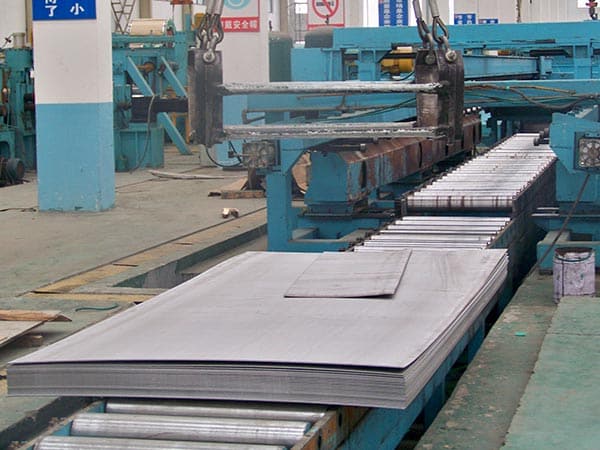
The Strategic Role of 700MCE in China's Industrial Evolution
The current landscape of 700MCE (often referred to as S700MC under European standards) in the Chinese market reflects a significant shift toward high-performance materials. As a thermomechanically rolled, high-strength low-alloy (HSLA) steel, 700MCE has become the backbone of lightweighting initiatives in the heavy machinery and automotive sectors. Unlike traditional structural steels, 700MCE offers a unique combination of high yield strength and excellent cold formability, making it indispensable for complex structural components. In the current economic climate, the inventory of 700MCE in China serves as a critical indicator of the health of the manufacturing and infrastructure sectors.
Quantitative Analysis of Current Inventory Levels in China
Inventory levels of 700MCE across China are currently characterized by regional concentration and demand-driven fluctuations. Major steel trading hubs such as Shanghai, Wuxi, and Lecong maintain the highest stock volumes. These regions serve as the primary distribution points for the Yangtze River Delta and the Pearl River Delta, where the majority of China's specialized vehicle manufacturers and heavy equipment producers are located. Currently, inventory levels are stabilizing as steel mills like Baosteel, Shougang, and Ansteel have optimized their production cycles to match the 'just-in-time' requirements of high-end manufacturing clients.
The supply chain for 700MCE is more specialized than that of standard carbon steels like Q235 or Q355. Because 700MCE requires precise thermomechanical control processes (TMCP), production is concentrated among top-tier mills. This concentration means that while overall inventory might seem lower than commodity grades, the availability of specific thicknesses (ranging from 2mm to 12mm) is generally well-maintained to support the ongoing demand for crane booms, truck chassis, and trailer frames.
| Major Production Hubs | Primary Manufacturers | Inventory Focus | Market Influence |
|---|---|---|---|
| East China (Shanghai/Wuxi) | Baosteel, Shagang | Automotive & Precision Machinery | High - Sets benchmark pricing |
| North China (Tianjin/Tangshan) | Shougang, HBIS | Heavy Construction Equipment | Moderate - Focus on structural grades |
| South China (Lecong) | Ansteel, Valin Steel | Logistics & Transport Vehicles | High - Major export gateway |
Mechanical Excellence: Why 700MCE Dominates the Structural Market
The inventory demand for 700MCE is driven primarily by its superior mechanical properties. With a minimum yield strength of 700 MPa, this material allows engineers to reduce the thickness of structural components without compromising safety or load-bearing capacity. This weight reduction is vital for the commercial vehicle industry, where lower curb weight translates directly into higher payloads and improved fuel efficiency.
The elongation properties of 700MCE are equally impressive, typically exceeding 12% to 15% depending on the thickness. This ensures that the steel can undergo significant deformation during the manufacturing process without cracking. The high tensile strength, ranging between 750 and 950 MPa, provides a robust safety margin for dynamic loading conditions found in mobile cranes and concrete pump trucks.
| Property | Value (Typical for 700MCE) | Unit |
|---|---|---|
| Yield Strength (ReH) | ≥ 700 | MPa |
| Tensile Strength (Rm) | 750 - 950 | MPa |
| Elongation (A5) | ≥ 12 | % |
| Impact Energy (-20°C) | ≥ 40 | Joules |
Chemical Composition and the Role of Micro-alloying
The consistency of 700MCE inventory in China is a testament to the advanced metallurgical capabilities of Chinese mills. The chemical composition is strictly controlled to ensure weldability and toughness. The use of micro-alloying elements such as Niobium (Nb), Vanadium (V), and Titanium (Ti) is central to achieving the high strength of 700MCE. These elements facilitate grain refinement during the rolling process, which is the primary mechanism for increasing strength without significantly increasing carbon content.
By keeping the carbon equivalent (CEV) low, 700MCE maintains excellent weldability. This is a critical factor for the inventory's turnover rate, as manufacturers prioritize materials that do not require extensive pre-heating or post-weld heat treatments. The low sulfur and phosphorus content also contributes to the internal cleanliness of the steel, reducing the risk of lamellar tearing in heavy-duty applications.
- Carbon (C): ≤ 0.12% - Ensures excellent weldability and prevents brittleness.
- Manganese (Mn): ≤ 2.10% - Enhances strength and hardenability.
- Silicon (Si): ≤ 0.60% - Acts as a deoxidizer and contributes to solid-solution strengthening.
- Micro-alloys (Nb+V+Ti): ≤ 0.22% - Essential for grain refinement and precipitation hardening.
Technological Processing and Environmental Adaptability
The inventory of 700MCE is not just about raw tonnage; it is about the availability of material that meets rigorous processing standards. 700MCE is designed for cold forming. Its fine-grained microstructure allows for tight bending radii, which is essential for creating the U-shaped beams and complex profiles used in modern truck frames. Manufacturers in China have invested heavily in high-precision laser cutting and CNC bending machines to leverage these properties.
In terms of environmental adaptability, 700MCE exhibits remarkable performance in low-temperature environments. Many infrastructure projects in Western and Northern China require materials that can withstand sub-zero temperatures without undergoing a ductile-to-brittle transition. 700MCE typically maintains high impact toughness at -20°C or even -40°C, making it a reliable choice for equipment operating in harsh climates. This versatility ensures that inventory is moved quickly across different geographic regions of China.
Market Outlook and Procurement Strategies
Looking at the current inventory trends, it is evident that 700MCE is no longer a niche product but a mainstream structural solution. The push for 'Green Manufacturing' in China has further accelerated the adoption of 700MCE. By using higher strength steel, manufacturers can use less material, reducing the overall carbon footprint of the production process. This alignment with national policy ensures a steady demand and a healthy inventory turnover for the foreseeable future.
For procurement professionals, navigating the 700MCE market in China requires a focus on quality certification and mill origin. While spot inventory is available, large-scale projects often benefit from direct mill orders to ensure batch consistency. The current market shows a trend toward value-added services, where stockholders offer pre-processed 700MCE parts, such as decoiled sheets or laser-cut blanks, to help manufacturers reduce lead times and scrap rates.
The inventory of 700MCE in China remains robust and technologically aligned with the needs of modern industry. The combination of high strength, superior formability, and excellent weldability continues to drive its dominance in the market. As China continues to lead the world in heavy machinery production and automotive innovation, 700MCE will remain a cornerstone of the steel supply chain, bridging the gap between traditional engineering and the high-efficiency requirements of the future.
Leave a message