
What is s355mc steel equivalent
Discover the comprehensive guide to S355MC steel equivalents, mechanical properties, and industrial applications. Learn how this thermomechanically rolled steel compares to ASTM, JIS, and GB standards.
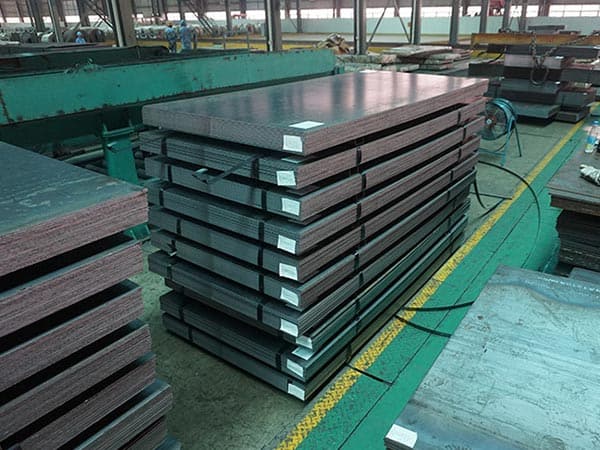
Understanding S355MC Steel and Its Global Equivalents
S355MC is a high-yield strength, thermomechanically rolled steel specifically designed for cold forming. Governed rong>EN 10149-2 standard, this material is a cornerstone in modern engineering where weight reduction and stntegrity are paramount. The 'S' denotes structural steel, '355' represents the minimum yield strength in megapascals indicates its thermomechanical rolling process, and 'C' signifies its suitability for cold forming. Identifying the trong>S355MC steel equivalent is crucial for global procurement and engineering consistency across differentstandards.
When searching for equivalents, engineers often look toward the American ASTM standards, the Japanese JIS standardChinese GB standards. While no two standards are identical in every micro-alloying detail, several grades offer compaanical performance and processing characteristics. Understanding these nuances ensures that substituted materials perbly under the same stress profiles as the original specification.
The Chemical Composition and Micro-alloying Strategy
The performance of S355MC is rooted in its precise chemical balance. Unlike traditional hot-rolled structural stee utilizes a low-carbon design supplemented by micro-alloying elements such as Niobium (Nb), Vanadium (V), and Titaniuis combination allows for a fine-grained microstructure, which is the secret behind its high strength and excellent t/p>
| Element | S355MC (EN 10149-2) Max % | ASTM A1011 HSLAS-F Gr 50 Max % | Q355MC (GB/T 1591) Max % |
|---|---|---|---|
| Carbon (C) | 0.12 | 0.15 | 0.12 |
| Manganese (Mn) | 1.50 | 1.35 | 1.50 |
| Silicon (Si) | 0.50 | - | 0.50 |
| Phosphorus (P) | 0.025 | 0.020 | 0.025 |
| Sulfur (S) | 0.020 | 0.015 | 0.020 |
The low carbon content is particularly beneficial for weldability. By keeping carbon levels below 0.12%, S355MC avormation of brittle martensite in the heat-affected zone (HAZ), making it an ideal candidate for complex welded assemhe transportation and heavy machinery sectors.
Mechanical Properties and Performance Benchmarks
The primary reason for selecting S355MC is its superior strength-to-weight ratio. With a minimum yield strength ofit allows designers to use thinner sections of steel compared to standard S235 or S275 grades without sacrificing safweight optimization is a key driver in reducing fuel consumption in vehicles and increasing the payload capacity of tp>
- Yield Strength: Min 355 MPa (for thicknesses ≤ 16mm).
- Tensile Strength: 430 to 550 MPa.
- Elongation: Min 19% (for thickness < 3mm) to 23% (for thickness ≥ 3mm).
- Impact Strength: While EN 10149-2 does not always mandate impact testing unless specified, the fstructure typically ensures good low-temperature toughness.
Compared to its equivalents, S355MC maintains a very tight tolerance on its mechanical properties, which is essenttomated manufacturing processes like robotic welding and CNC bending.
Cross-Reference Table: S355MC vs. Global Standards
For international projects, identifying the S355MC steel equivalent requires looking at the speciation requirements. Below is a cross-reference table for the most common global alternatives.
| Standard | Equivalent Grade | Similarity Level |
|---|---|---|
| European (EN 10149-2) | S355MC | Original Standard |
| Chinese (GB/T 1591) | Q355MC | High (Direct Match) |
| American (ASTM) | A1011 HSLAS-F Grade 50 | Moderate (Similar Yield) |
| Japanese (JIS G3134) | SPFH 540 | High (Automotive Focus) |
| ISO (ISO 6930) | HSS355 | High |
While Q355MC is the closest functional equivalent from the Chinese standard, the ASTM A100 is frequently used in North America. However, users should note that ASTM standards often have different rs for elongation and chemical tolerances, so a thorough review of the material test report (MTR) is always recommende
Superior Cold Forming and Welding Capabilities
One of the standout features of S355MC is its exceptional cold formability. The 'C' in its designation is not justit signifies that the steel can undergo severe bending and folding without cracking. This is achieved through the thecal rolling process, which refines the grain size to a level unattainable by conventional hot rolling.
Manufacturers utilizing S355MC benefit from consistent springback behavior, which is critical for precision componher it is a chassis rail for a heavy truck or a complex bracket for a crane, the material's ductility ensures that itaped into intricate geometries. Furthermore, its low carbon equivalent (CEV) makes it highly compatible with modern whniques, including MIG, TIG, and laser welding. The absence of pre-heating requirements for standard thicknesses signspeeds up production cycles.
Why Industry Leaders Choose S355MC for Heavy-Duty Applications
The adoption of S355MC spans across various high-stakes industries. In the automotive and transportation song>, it is the preferred choice for truck frames, trailers, and cold-pressed parts. The ability to reduce the thickn frame while maintaining the same load-bearing capacity directly translates to lower carbon emissions and higher effi>
In the construction and lifting equipment industry, S355MC is used for crane booms, telescopic arructural supports. The high yield strength ensures that these machines can handle immense stresses during operation. ly, the agricultural machinery sector utilizes S355MC for plow frames, harvester components, and silthe combination of strength and formability allows for the creation of durable, lightweight equipment.
Environmental Durability and Surface Treatment
While S355MC is not a weathering steel like Corten, its fine-grained surface provides an excellent substrate for vtective coatings. Whether it is hot-dip galvanizing, powder coating, or industrial painting, the surface quality of Sres superior adhesion and a long-lasting finish. This is vital for equipment exposed to harsh environmental condition road salt, humidity, and UV radiation.
The thermomechanical process also results in a very thin and tight mill scale compared to traditional hot-rolled phis makes the pickling process more efficient and results in a smoother surface finish after processing, which is hig in aesthetic applications or where precision fit-up is required.
Selecting the right S355MC steel equivalent involves more than just matching yield strength. It r understanding of the thermomechanical history, the micro-alloying elements, and the specific demands of the manufactess. By choosing S355MC or its direct equivalents like Q355MC or SPFH 540, engineers can achieve the perfect balance h, ductility, and weldability, driving innovation in structural design and manufacturing efficiency.
Leave a message