
What is the S960MC extrusion technology
Comprehensive analysis of S960MC steel extrusion and forming technologies, covering metallurgical properties, mechanical performance, and industrial applications for lightweight construction.
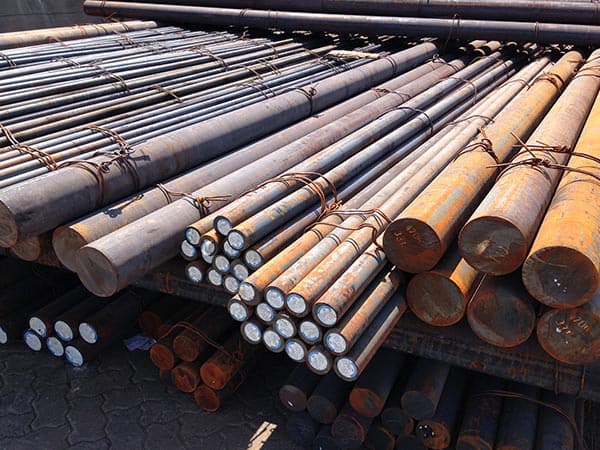
The Metallurgical Foundation of S960MC and Its Processing Evolution
S960MC represents the pinnacle of thermomechanically rolled (TMCP) high-strength low-alloy (HSLA) steels. To understand the S960MC extrusion technology, one must first grasp that this material is not a traditional carbon steel. It is engineered through a sophisticated cooling and rolling process that creates a fine-grained microstructure, primarily consisting of martensite or bainite with micro-alloying elements like Niobium (Nb), Vanadium (V), and Titanium (Ti). These elements facilitate grain refinement and precipitation hardening, allowing the steel to achieve a minimum yield strength of 960 MPa while maintaining remarkable ductility for its strength class.
While S960MC is typically produced as hot-rolled strip or plate according to EN 10149-2, the term "extrusion" in the context of this ultra-high-strength steel often refers to the specialized cold-forming and roll-forming processes used to create complex profiles. Unlike standard S235 or S355 grades, S960MC requires extreme precision during deformation. The "extrusion" effect is achieved through high-pressure roll forming where the material is forced through a series of dies or rollers to achieve specific cross-sections without compromising the internal grain structure. This process is critical for industries aiming to reduce weight without sacrificing structural integrity.
Mechanical Properties and Material Performance
The technical superiority of S960MC is defined by its strength-to-weight ratio. By utilizing S960MC instead of conventional structural steels, engineers can reduce the thickness of components by up to 50% or more. This weight reduction is the primary driver for its adoption in mobile cranes, transport trailers, and lifting equipment.
| Property | Value (Typical) | Unit |
|---|---|---|
| Yield Strength (ReH) | Min. 960 | MPa |
| Tensile Strength (Rm) | 980 - 1250 | MPa |
| Elongation (A5) | Min. 7 | % |
| Impact Energy (Charpy-V) | Min. 40J at -20°C | J |
The low carbon content (typically below 0.12%) ensures that S960MC remains weldable, a feature often lost in other high-strength materials. However, the extrusion and forming technology must account for the material's springback effect. Because of the high yield strength, the steel tends to return to its original shape after the forming load is removed. Advanced CNC roll-forming machines utilize predictive algorithms to over-bend the material, ensuring the final profile meets tight dimensional tolerances.
Technical Challenges in S960MC Profile Forming
Processing S960MC involves navigating several metallurgical boundaries. The extrusion-like forming of this steel demands high-quality tooling and a deep understanding of the material's work-hardening behavior. Several factors must be managed during the production of S960MC sections:
- Bend Radius Management: To prevent surface cracking, the minimum internal bend radius must be strictly controlled. For S960MC, this is typically 3.0 to 4.0 times the material thickness, depending on the orientation relative to the rolling direction.
- Tooling Wear: The high hardness of S960MC (approx. 300-350 HBW) causes significant abrasive wear on forming dies. Manufacturers often use tungsten carbide or specialized tool steels with PVD coatings to extend tool life.
- Edge Quality: Before forming or "extruding" a profile, the edges of the S960MC strip must be clean and free of burrs. Laser cutting is the preferred method, as it minimizes the Heat Affected Zone (HAZ) and prevents micro-cracks from propagating during the forming process.
Thermal Considerations and Welding Synergy
A common misconception is that S960MC can be treated like standard mild steel during thermal processing. The TMCP state of S960MC is sensitive to heat. If the material is heated above its tempering temperature (usually around 550°C to 600°C) for an extended period, the fine-grained structure can coarsen, leading to a localized drop in strength. This is why cold extrusion and cold forming are the preferred methods for shaping this grade.
When welding is required to join extruded profiles, low heat input methods such as MAG (Metal Active Gas) or laser-hybrid welding are recommended. The use of high-strength filler metals that match or slightly under-match the base metal's strength is a strategic choice to ensure the toughness of the joint. The goal is to maintain the integrity of the "extruded" shape while ensuring the assembly can withstand dynamic loads in harsh environments.
Industry-Specific Applications and Environmental Impact
The shift toward S960MC is largely driven by the global demand for energy efficiency. In the automotive and heavy transport sectors, every kilogram saved translates directly into lower CO2 emissions and higher payload capacity. S960MC profiles, created through advanced forming technology, are found in:
- Telescopic Booms: The high yield strength allows for longer reaches and higher lifting capacities in mobile cranes.
- Chassis Frames: Lightweight truck chassis made from S960MC offer superior fatigue resistance compared to heavier, lower-grade alternatives.
- Offshore Structures: The material's ability to maintain toughness at sub-zero temperatures makes it ideal for arctic and deep-sea environments.
- Mining Equipment: S960MC is used in the support structures of underground mining shields where space is limited and strength is non-negotiable.
Future Trends in Ultra-High Strength Steel Processing
As the industry moves toward even higher grades like S1100 and S1300, the lessons learned from S960MC extrusion technology are becoming the foundation for the next generation of structural engineering. We are seeing a move toward multi-stage incremental forming and the integration of real-time sensor data during the extrusion process to adjust for batch-to-batch variations in material chemistry. This ensures that even the most complex S960MC geometries can be produced with the consistency required for safety-critical applications.
The economic advantage of S960MC lies not just in the material itself, but in the total lifecycle cost. While the initial processing and forming costs may be higher due to the need for specialized equipment, the reduction in raw material volume, lower welding consumables, and decreased transport costs provide a compelling return on investment for modern manufacturers.
Leave a message