
What is the cheapest s420mc steel properties?
Discover the technical advantages and cost-effective properties of S420MC steel. This guide covers its mechanical strength, chemical composition, processing performance, and why it is the preferred choice for weight-saving industrial applications.
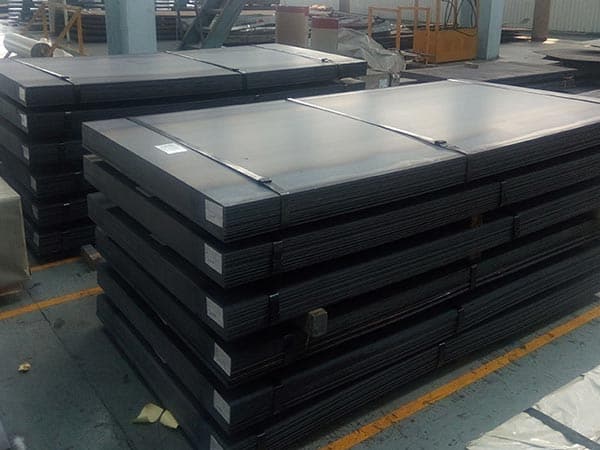
The Economic and Technical Synergy of S420MC Steel
In the competitive landscape of modern manufacturing, selecting a material that balances high performance with cost-efficiency is a primary objective for engineers. S420MC steel, a high-yield-strength cold-forming steel governed by the EN 10149-2 standard, stands out as a premier solution. The designation "S" refers to structural steel, "420" indicates a minimum yield strength of 420 MPa, and "MC" signifies that the steel is thermomechanically rolled (M) and intended for cold forming (C). Understanding why this grade is often considered the "cheapest" high-performance option requires a deep dive into its metallurgical design and life-cycle value.
The core appeal of S420MC lies in its ability to offer superior strength-to-weight ratios. By utilizing this grade, manufacturers can reduce the thickness of structural components without compromising safety or integrity. This reduction in material volume directly translates to lower procurement costs, reduced transport expenses, and improved fuel efficiency in automotive applications. It is not merely about the price per ton, but the "cost per unit of strength" that makes S420MC a market leader.
Chemical Composition: The Secret to Micro-Alloyed Efficiency
The cost-effectiveness of S420MC is rooted in its precise chemical makeup. Unlike high-alloy steels that rely on expensive elements like nickel or chromium, S420MC achieves its properties through micro-alloying and Thermomechanical Controlled Processing (TMCP). This process refines the grain structure, allowing the steel to achieve high strength with very low carbon content.
| Element | Maximum Percentage (%) |
|---|---|
| Carbon (C) | 0.12 | Manganese (Mn) | 1.60 | Silicon (Si) | 0.50 | Phosphorus (P) | 0.025 | Sulfur (S) | 0.015 | Aluminum (Al) | 0.015 (min) | Niobium (Nb) / Titanium (Ti) | 0.09 / 0.15 |
The low carbon content (max 0.12%) is critical. It ensures that the steel remains highly weldable and ductile. The addition of trace amounts of Niobium (Nb), Vanadium (V), or Titanium (Ti) creates fine precipitates that pin grain boundaries during the rolling process. This grain refinement is the most cost-efficient method to increase yield strength while simultaneously improving toughness, a combination rarely found in traditional hot-rolled carbon steels.
Mechanical Properties and Structural Integrity
The mechanical profile of S420MC is designed for demanding structural roles. While the yield strength is the headline figure, the relationship between tensile strength and elongation defines its versatility in the workshop.
- Yield Strength (ReH): Minimum 420 MPa for thicknesses up to 16mm.
- Tensile Strength (Rm): Ranges between 480 and 620 MPa.
- Elongation (A80mm): Typically 16% to 19% depending on thickness, ensuring the material can withstand significant deformation before fracture.
- Impact Strength: While EN 10149-2 does not always mandate impact testing unless specified, the fine-grained structure inherently provides good low-temperature toughness.
These properties allow for Value Engineering. When replacing a standard S355 grade with S420MC, a designer can often reduce the material thickness by 15-20%. For a heavy-duty trailer or a crane arm, this weight saving is cumulative, leading to massive operational savings over the equipment's lifespan.
Exceptional Cold Forming and Processing Performance
One of the most significant cost-saving attributes of S420MC is its ease of processing. High-strength steels are often difficult to bend or shape, but the "MC" series is specifically engineered for cold forming. This reduces the need for expensive hot-forming processes or specialized heavy-duty tooling.
Bending and Folding: S420MC can be bent to tight radii. For thicknesses (t) under 3mm, a minimum bending radius of 0.25t is often achievable, while thicker plates (up to 6mm) typically require a radius of 1.0t. This allows for complex geometries in chassis design, which can eliminate the need for multiple welded joints, further reducing production costs.
Weldability: Due to its low Carbon Equivalent (CEV), S420MC is exceptionally easy to weld using standard methods such as MAG, TIG, or laser welding. There is no requirement for pre-heating in most standard thicknesses, which accelerates production cycles and reduces energy consumption. The heat-affected zone (HAZ) remains stable, maintaining the structural integrity of the assembly.
Environmental Adaptability and Longevity
S420MC exhibits robust performance across various environmental conditions. Its fine-grained structure provides a level of resistance to atmospheric corrosion that exceeds basic carbon steels, although it is typically used with a protective coating (galvanization or painting) in exposed environments. Because of its low impurity levels (low Phosphorus and Sulfur), it is less susceptible to hydrogen-induced cracking and other environmental embrittlement issues.
In terms of sustainability, the ability to use less steel to achieve the same structural goal is a major environmental win. Reducing the mass of a vehicle directly lowers CO2 emissions during its operational life. Furthermore, S420MC is 100% recyclable, fitting perfectly into the circular economy models of modern industry.
Strategic Applications: Where S420MC Delivers Maximum Value
The adoption of S420MC is widespread across industries where the "strength-to-weight-to-cost" triangle is critical. Its properties make it indispensable in the following sectors:
- Automotive Industry: Used for longitudinal beams, cross members, and chassis components. It provides the necessary crash resistance while keeping the vehicle light.
- Heavy Machinery: Ideal for crane booms, excavator arms, and agricultural equipment where high lifting capacity must be balanced with the machine's own weight.
- Transportation: Truck trailers, cold-pressed frames, and container side panels benefit from the increased payload capacity enabled by thinner S420MC sections.
- Storage Systems: High-density racking and shelving systems use S420MC to support heavy loads with minimal steel volume.
Comparative Analysis: S420MC vs. Traditional Grades
To truly appreciate the value of S420MC, one must compare it to more common grades like S355. While S355 is ubiquitous and has a lower price per kilogram, the total project cost often favors S420MC.
| Feature | s355jr (Hot Rolled) | S420MC (Thermomechanical) |
|---|---|---|
| Yield Strength | 355 MPa | 420 MPa | Weight Potential | Standard | ~18% Reduction possible | Formability | Moderate | Excellent (Cold Forming) | Weldability | Good | Excellent (Lower Carbon) | Total Project Cost | Baseline | Often Lower due to volume savings |
The shift from S355 to S420MC is a hallmark of sophisticated engineering. It represents a move away from "bulk material" thinking toward "performance material" application. By utilizing the higher yield point, engineers can design sleeker, more efficient structures that are easier to assemble and cheaper to operate.
Technical Guidance for Purchasing and Quality Assurance
When sourcing S420MC, it is vital to ensure the material meets the strict requirements of EN 10149-2. Buyers should look for Mill Test Certificates (MTC) that verify the thermomechanical rolling process. Because the strength is derived from the rolling temperature and speed control rather than just chemistry, the "M" condition is non-negotiable. If the material is subsequently heated above 580°C during processing (such as in stress-relieving or hot forming), it may lose its high-strength properties. Therefore, cold processing is the intended and most cost-effective route.
Furthermore, surface quality is a key consideration. S420MC is often supplied in a pickled and oiled condition, which provides a clean surface for laser cutting and prevents tool wear during bending. This "clean" start reduces the need for secondary cleaning or grinding, shaving more time and cost off the production line.
Analyzing the long-term benefits, S420MC emerges as a highly economical choice. It bridges the gap between basic structural steels and ultra-high-strength quenched and tempered grades. For most structural and transport applications, it provides the "sweet spot" of high strength, exceptional ductility, and manageable cost, ensuring that the final product is both high-performing and commercially viable.
Leave a message