
What is the manufacturing method of density of domex steel
Explore the sophisticated manufacturing methods behind Domex steel, focusing on thermomechanical rolling, density considerations, and how this high-strength steel optimizes industrial performance.
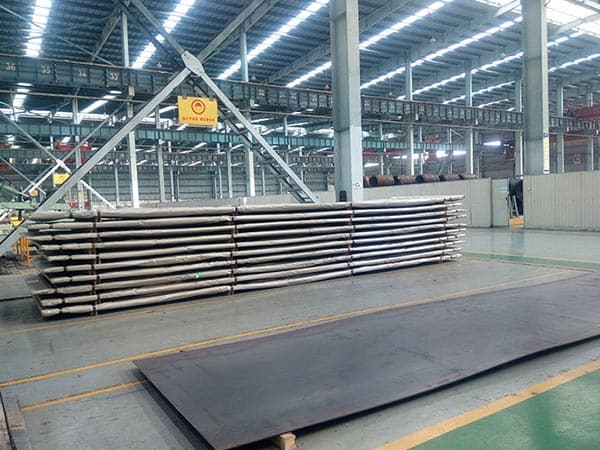
Understanding the Physical Essence: Does Domex Steel Have a Unique Density?
When discussing the density of Domex steel, it is essential to clarify a fundamental physical principle: almost all carbon and low-alloy steels share a nearly identical density of approximately 7.85 g/cm³ (or 7850 kg/m³). Domex, a brand of high-strength low-alloy (HSLA) steel developed by SSAB (now largely integrated into the Strenx brand), does not deviate from this physical constant. However, the "manufacturing method of density" in a commercial and engineering context refers to how the manufacturing process allows for a reduction in effective density or weight-to-strength ratio in finished structures.
The manufacturing method that defines Domex is not about changing the atomic packing of iron atoms, but about refining the microstructure to such a degree that thinner gauges can replace thicker, heavier standard steels. This results in a significant reduction in the total mass of a component while maintaining or even increasing its load-bearing capacity. The secret lies in Thermomechanically Controlled Processing (TMCP).
The Core Manufacturing Method: Thermomechanically Controlled Processing (TMCP)
The primary manufacturing method for Domex steel is thermomechanical rolling. Unlike traditional hot rolling, where the steel is rolled at high temperatures and then allowed to cool naturally, TMCP involves a strictly controlled temperature and deformation schedule. This process is designed to manipulate the grain size of the steel at a microscopic level.
- Reheating: The steel slabs are heated to a precise temperature, usually around 1200°C, to ensure a uniform austenitic structure.
- Controlled Rolling: The rolling occurs in specific temperature windows. A significant portion of the reduction happens at temperatures where recrystallization of austenite is suppressed. This creates "pancaked" austenite grains with a high density of deformation bands.
- Accelerated Cooling: Immediately after the final rolling pass, the steel is subjected to rapid, controlled cooling (water quenching or laminar flow). This forces the deformed austenite to transform into an extremely fine-grained ferrite and pearlite (or bainite) structure.
This grain refinement is the only mechanism that simultaneously increases both the yield strength and the toughness of the steel. By producing grains that are often 10 times smaller than those in standard S235 or S355 steels, the manufacturing process allows Domex to achieve yield strengths from 240 MPa up to 700 MPa and beyond.
Chemical Composition and Micro-alloying Strategies
The density of Domex steel remains stable because the alloying elements are used in very small, precise quantities. The "low alloy" part of HSLA is critical. Domex relies on micro-alloying with elements such as Niobium (Nb), Vanadium (V), and Titanium (Ti).
These elements serve two main purposes in the manufacturing method. First, they form fine carbonitrides that pin grain boundaries, preventing grain growth during the heating and rolling phases. Second, they provide precipitation hardening. Because the total alloy content is kept low (often with a carbon equivalent value much lower than traditional steels), the weldability of the material remains exceptional despite its high strength.
Mechanical Superiority: Beyond Standard Carbon Steel
The result of this sophisticated manufacturing method is a material with mechanical properties that allow for revolutionary design changes. While the density is 7.85 g/cm³, the strength-to-weight ratio is where Domex excels. For example, replacing a 10mm plate of S355 with a 6mm plate of Domex 700 reduces the weight by 40% without sacrificing the structural integrity of the part.
| Property | Standard Carbon Steel (S355) | Domex 700 (High Strength) | Impact on Design |
|---|---|---|---|
| Density (kg/m³) | 7850 | 7850 | No change in material volume weight |
| Yield Strength (MPa) | 355 | 700 | Allows for 40-50% thickness reduction |
| Elongation (%) | ~20% | ~12-15% | Maintains excellent formability |
| Min. Bending Radius | 1.5 x t | 0.8 - 1.5 x t | Superior cold forming capabilities |
Processing Performance: Weldability and Cold Forming
One of the most significant advantages of the Domex manufacturing method is the impact on downstream processing. Because the strength is derived from grain refinement rather than high carbon content, Domex steel behaves exceptionally well during fabrication.
Weldability: Domex has a very low Carbon Equivalent (CEV). This means it can be welded using standard methods (MIG/MAG, TIG, Submerged Arc) without the need for expensive pre-heating in most thicknesses. This reduces production time and energy costs in the workshop.
Cold Forming: Despite its high strength, Domex is designed for cold forming. The manufacturing process ensures that the steel has uniform properties in both the longitudinal and transverse directions. This isotropy allows fabricators to bend the steel with tight radii without cracking, which is essential for creating complex, lightweight profiles for trailer chassis or crane booms.
Environmental Resilience and Sustainability
The manufacturing method of Domex steel contributes significantly to environmental sustainability. By enabling the construction of lighter vehicles and machinery, it reduces fuel consumption and CO2 emissions throughout the lifecycle of the product. In the transport industry, every kilogram saved in the chassis is an extra kilogram of payload that can be carried.
Furthermore, the TMCP process itself is more energy-efficient than traditional Quench and Temper (Q&T) processes because it utilizes the heat from the rolling mill to achieve the desired properties, eliminating the need for a separate reheating and quenching cycle. The high purity of the steel also makes it 100% recyclable, fitting perfectly into a circular economy.
Industry Applications: Where Density Meets Efficiency
The application of Domex steel is widespread in industries where weight reduction is a critical performance metric. By utilizing the "effective density" advantages provided by the high-strength manufacturing method, engineers can push the boundaries of what is possible.
- Automotive and Transport: Used for truck chassis, trailers, and side-impact beams. The weight savings directly translate to lower operational costs and higher efficiency.
- Lifting and Handling: Crane booms and telescopic arms benefit from the high strength-to-weight ratio, allowing for longer reach and higher lifting capacities.
- Agriculture: Lightweight trailers and soil-working tools made from Domex are more durable and require less tractor power to pull.
- Construction: High-strength profiles for buildings and bridges where reducing the dead weight of the structure is a priority.
Strategic Implementation in Modern Engineering
Adopting Domex steel requires a shift in engineering mindset. Designers must move away from "thick is strong" to "smart geometry and high-strength material." The manufacturing method of Domex provides the toolset for this transition. By understanding that the physical density is a constant, but the structural efficiency is a variable controlled by material science, manufacturers can create products that are lighter, stronger, and more sustainable.
When selecting a grade, it is vital to consider the specific requirements of the application, such as impact toughness at low temperatures (Domex is available in grades that perform down to -40°C or -60°C) and the specific bending requirements of the fabrication process. The consistency of Domex steel, guaranteed by the rigorous TMCP manufacturing method, ensures that every batch of steel performs predictably in the workshop and in the field.
Leave a message