
What is the S700MC sheet equivalent
Explore the S700MC sheet equivalent across global standards like ASTM, GB, and JIS. This guide covers mechanical properties, welding, and industrial applications.
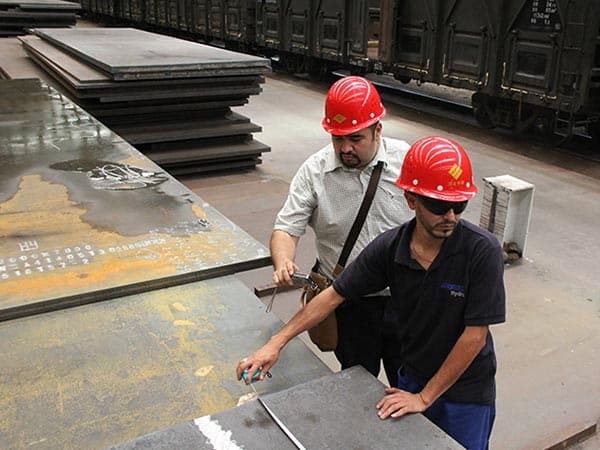
Understanding S700MC: The Benchmark for High-Strength Structural Steel
S700MC is a thermomechanically rolled, high-strength low-alloy (HSLA) steel grade defined under the European standard EN 10149-2. The 'S' denotes structural steel, '700' represents the minimum yield strength of 700 MPa, and 'MC' indicates that the material is thermomechanically rolled (M) and possesses high cold-forming properties (C). This steel is engineered for applications where weight reduction is critical without compromising structural integrity. By utilizing micro-alloying elements such as Niobium (Nb), Vanadium (V), and Titanium (Ti), S700MC achieves an exceptional strength-to-weight ratio, making it a favorite in the heavy transport and lifting industries.
Identifying the S700MC Sheet Equivalent Across Global Standards
When sourcing materials globally, finding the exact S700MC sheet equivalent is essential for maintaining engineering safety factors. While standards differ in their testing methodologies and trace element tolerances, several grades are widely accepted as functional equivalents.
- Chinese Standard (GB/T 1591): The most direct equivalent is Q700D or Q700E. The 'Q' stands for yield strength (Qing), and '700' matches the MPa rating. The 'D' and 'E' suffixes indicate impact toughness testing at -20°C and -40°C respectively.
- American Standard (ASTM): There is no 1:1 identical ASTM grade, but ASTM A1011/A1018 Grade 100 (Type 1 or 2) is often used. However, engineers must verify the elongation and bending radius, as ASTM standards sometimes allow for different ductility profiles compared to EN 10149-2.
- Japanese Standard (JIS): JIS G3134 SPFH 780 is a close match, though it is primarily focused on hot-rolled plates for automobile structural uses with slightly different tensile requirements.
- Proprietary Brands: Many high-end mills produce S700MC under their own brand names, which often exceed the minimum requirements of the EN standard. Examples include Strenx 700 (formerly Domex 700) by SSAB, PERFORM 700 by ThyssenKrupp, and ALFORM 700 by Voestalpine.
| Standard | Equivalent Grade | Yield Strength (min) | Tensile Strength |
|---|---|---|---|
| EN 10149-2 | S700MC | 700 MPa | 750-950 MPa |
| GB/T 1591 | Q700D/E | 700 MPa | 750-950 MPa |
| ASTM | A1011/A1018 Gr.100 | 690 MPa | 760 MPa (min) |
| JIS G3134 | SPFH 780 | 700 MPa | 780 MPa (min) |
Chemical Composition and Micro-Alloying Strategy
The performance of S700MC is rooted in its precise chemical makeup. Unlike traditional carbon steels that rely on high carbon content for strength, S700MC maintains a low carbon equivalent (CEV). This is achieved through micro-alloying, which refines the grain structure during the thermomechanical rolling process.
The low carbon content (typically ≤ 0.12%) is the secret behind its excellent weldability. Manganese (Mn) is kept around 2.10% to enhance toughness and strength. The addition of Niobium, Vanadium, and Titanium creates fine precipitates that pin grain boundaries, preventing grain growth and ensuring the steel remains ductile even at high strength levels. Sulfur and Phosphorus levels are kept extremely low (≤ 0.015% and ≤ 0.025% respectively) to ensure the material is clean and resistant to lamellar tearing.
Mechanical Properties and Cold Forming Capabilities
One of the primary reasons engineers seek an S700MC sheet equivalent is its cold-forming capability. Despite its high yield strength, this steel can be bent to tight radii. For thicknesses (t) less than 3mm, the recommended minimum internal bending radius is often as low as 1.0t to 1.5t, depending on the orientation (transverse vs. longitudinal).
The elongation properties are also noteworthy. S700MC typically offers a minimum elongation of 10% to 13% (depending on thickness). This ductility is vital for the safety of structural components that may be subject to dynamic loads or accidental impacts, as it allows the material to absorb energy through plastic deformation rather than brittle fracture.
Welding and Processing Performance
Processing S700MC requires an understanding of its thermomechanical history. Because the strength is derived from the rolling process and micro-alloying rather than heat treatment, excessive heat input during welding can lead to a softening of the Heat Affected Zone (HAZ).
- Welding Methods: S700MC is compatible with MAG (Metal Active Gas), MIG, and Laser welding. Due to the low CEV, preheating is generally unnecessary for standard thicknesses, which significantly reduces fabrication costs.
- Filler Metals: It is recommended to use filler metals that match the yield strength of the base material, such as those meeting AWS A5.28 ER100S-G or ER110S-G standards.
- Cutting: Laser cutting is highly effective for S700MC, producing clean edges with minimal thermal distortion. Plasma and waterjet cutting are also viable alternatives depending on the required precision.
Environmental Adaptability and Fatigue Resistance
S700MC performs exceptionally well in cold environments, particularly the Q700E or S700MC grades tested at -40°C. This makes it suitable for machinery operating in arctic conditions or high-altitude regions. Regarding fatigue resistance, the fine-grained structure of S700MC provides a higher fatigue limit compared to traditional S355 structural steels. This allows for the design of lighter components that can withstand millions of load cycles, which is a critical requirement for trailer chassis and crane booms.
While S700MC is not inherently corrosion-resistant like weathering steel or stainless steel, its smooth surface finish (typical of hot-rolled pickled and oiled products) provides an excellent substrate for protective coatings. Zinc-rich primers and powder coatings adhere well, ensuring long-term durability in corrosive industrial environments.
Expanding Applications: Where S700MC Shines
The drive for "lightweighting" across various industries has propelled S700MC into the spotlight. By replacing S355 with S700MC, designers can often reduce the thickness of structural members by 30% to 40% while maintaining the same load-bearing capacity.
- Transportation: Used in the construction of long-haul trailer frames, side guards, and cross members. Reducing the dead weight of a trailer directly increases its payload capacity and fuel efficiency.
- Lifting Equipment: Telescopic crane booms and aerial work platforms utilize S700MC to reach higher altitudes while keeping the overall vehicle weight within road-legal limits.
- Agricultural Machinery: Heavy-duty plows, harvesters, and silage trailers benefit from the impact resistance and high strength of S700MC, allowing them to withstand the rigors of soil interaction.
- Renewable Energy: Support structures for solar arrays and components for wind turbine transport frames often specify S700MC for its reliability and ease of fabrication.
Strategic Selection of S700MC Equivalents
Choosing the right S700MC sheet equivalent involves more than just matching yield strength. Engineers must consider the directionality of properties. Since S700MC is thermomechanically rolled, its properties can vary slightly between the rolling direction and the transverse direction. When substituting with an ASTM or GB grade, verify that the impact energy (Charpy V-notch) requirements meet the specific environmental demands of the project.
Furthermore, the surface quality is paramount. S700MC is often supplied in a pickled and oiled (P&O) condition, which removes mill scale and provides a superior surface for automated welding and laser cutting. If an equivalent grade is supplied with heavy mill scale, it may require additional shot blasting, increasing production time and costs. Always consult with the material supplier to ensure the equivalent grade meets the specific tolerances for flatness and thickness required for high-precision manufacturing.
Leave a message