
How to correct the tortuosity of 1.8974 steel for large truss truck boom
A technical guide on correcting tortuosity in 1.8974 (S700MC) steel truss booms, focusing on mechanical properties, thermal limits, and precision engineering.
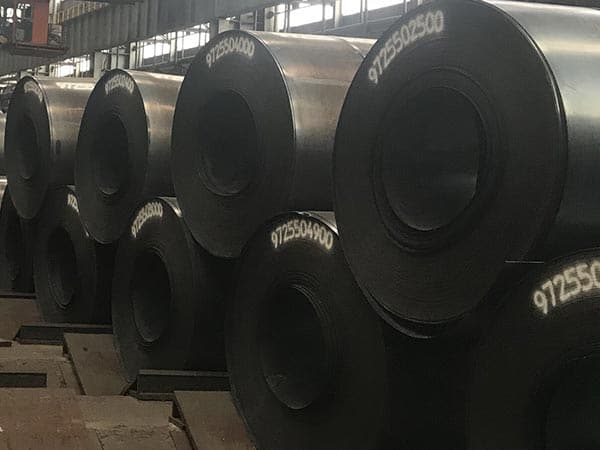
Metallurgical Foundation of 1.8974 Steel in Heavy Machinery
The material 1.8974, commonly known under the EN 10149-2 standard as S700MC, represents a pinnacle of thermomechanically rolled high-strength steel. For large truss truck booms, this steel is selected not just for its 700 MPa yield strength, but for its exceptional weight-to-performance ratio. When manufacturing complex truss structures, the inherent residual stresses from the TMCP (Thermomechanically Controlled Process) and subsequent cutting or welding often lead to tortuosity—a deviation from the longitudinal axis that can compromise the structural integrity of a crane or concrete pump boom.
Understanding 1.8974 requires a look at its fine-grained microstructure. Unlike traditional normalized steels, S700MC gains its strength from a combination of micro-alloying elements like Niobium (Nb), Vanadium (V), and Titanium (Ti), coupled with precise cooling rates. This makes the correction of tortuosity a delicate balance between mechanical force and thermal management. If the correction process ignores these metallurgical nuances, the risk of softening the material or inducing micro-cracks becomes a reality.
Mechanical Properties and Their Impact on Straightening
The high yield strength of 1.8974 means that the elastic recovery, or "springback," during cold straightening is significantly higher than that of standard S355 grade steels. When dealing with a large truss boom, the geometric complexity adds another layer of difficulty. The following table outlines the key mechanical attributes that influence how 1.8974 reacts to correction forces:
| Property | Value (Typical) | Impact on Correction |
|---|---|---|
| Yield Strength (ReH) | Min. 700 MPa | Requires higher pressure for permanent deformation. |
| Tensile Strength (Rm) | 750 - 950 MPa | Determines the safety margin before fracture. |
| Elongation (A5) | Min. 12% | Limits the degree of cold bending allowed. |
| Impact Energy (-40°C) | Min. 27 J | Ensures toughness during cold weather correction. |
To effectively correct tortuosity, engineers must calculate the over-bending factor. Because 1.8974 resists deformation, the boom must be bent slightly past the point of perfect straightness to allow it to "settle" into the desired position. This requires high-precision hydraulic presses with sensitive feedback loops to prevent overstressing the welded joints of the truss.
Cold Straightening Techniques for Truss Booms
Cold straightening is the preferred method for 1.8974 steel to maintain its TMCP-derived properties. For a large truss truck boom, this usually involves a multi-point hydraulic straightening station. The process begins with a laser-based measurement of the boom's deviation along its entire length.
- Point Loading: Strategic pressure is applied to the peaks of the curvature. It is vital to use wide-area pressure pads to avoid localized denting of the 1.8974 tubes or plates.
- Incremental Adjustment: Rather than a single heavy press, incremental loading reduces the risk of sudden brittle failure, especially near heat-affected zones (HAZ) of welds.
- Stress Relief: While cold straightening corrects the shape, it can introduce new internal stresses. In some high-spec applications, vibration stress relief (VSR) is used alongside mechanical correction to stabilize the atomic lattice without applying heat.
Thermal Correction: The 580°C Critical Threshold
When mechanical force alone is insufficient to correct severe tortuosity, thermal straightening (flame straightening) is employed. However, 1.8974 is highly sensitive to heat. Exceeding certain temperatures will cause grain growth and the precipitation of micro-alloying elements, leading to a drastic drop in yield strength.
The golden rule for 1.8974 is never to exceed 580°C. At temperatures above this threshold, the thermomechanical treatment is effectively "undone." Practitioners should use temperature-indicating crayons or infrared pyrometers to monitor the heating zones. The heating should be localized (wedge-shaped or spot heating) to induce shrinkage upon cooling, which pulls the structure back into alignment.
Rapid quenching with water should be avoided for S700MC. Air cooling is recommended to prevent the formation of brittle martensite, which could lead to catastrophic failure when the boom is under operational load in the field.
Environmental Adaptability and Long-term Stability
Truss truck booms made of 1.8974 often operate in extreme environments, from arctic construction sites to humid coastal regions. The correction process must account for the steel's environmental adaptability. If the tortuosity correction is performed improperly, the resulting residual stresses can become focal points for stress corrosion cracking (SCC) or accelerated fatigue under cyclic loading.
Because 1.8974 has a low carbon equivalent (CEV), its weldability is excellent, which is why it is used in trusses. However, the interaction between the weld metal and the base metal during the straightening process is critical. The HAZ is often the stiffest part of the structure; applying correction forces directly to a weld bead is a recipe for disaster. Forces should be distributed across the base metal to allow the natural elasticity of the 1.8974 to facilitate the shift.
Advanced Inspection Protocols Post-Correction
Once the 1.8974 truss boom has reached the required straightness tolerances (often within 1mm per meter of length), a rigorous inspection phase must follow. Correcting tortuosity is a form of plastic deformation, and the integrity of the material must be verified.
- Magnetic Particle Inspection (MPI): Essential for detecting surface cracks that may have opened during the straightening process, particularly in the corners of square hollow sections.
- Ultrasonic Testing (UT): Used to ensure that no internal delamination has occurred in the 1.8974 plate, especially if heavy cold-forming was required.
- Hardness Testing: A portable Brinell or Vickers tester can verify that thermal correction did not soften the steel. If the hardness drops significantly below the original mill certificate values, the load-bearing capacity of the boom must be re-evaluated.
The use of 1.8974 steel allows for longer, lighter, and stronger booms, but it demands a higher level of craftsmanship. By respecting the metallurgical limits of S700MC and employing a data-driven approach to both mechanical and thermal correction, manufacturers can ensure that their large truss structures meet the most stringent safety and performance standards in the global lifting industry.
Leave a message