
How to calculate 1.0984 steel for boom weight
Learn how to calculate the weight and structural performance of 1.0984 (S500MC) steel for crane booms. This guide covers mechanical properties, density factors, and weight reduction strategies.
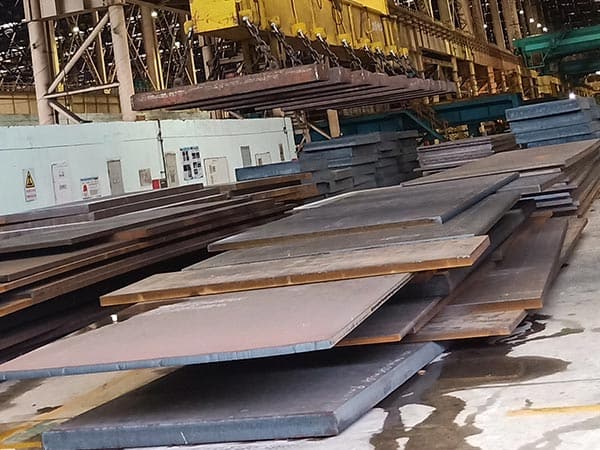
Introduction to 1.0984 Steel in Lifting Equipment
In the world of heavy machinery and lifting technology, 1.0984 steel—standardized as S500MC under EN 10149-2—represents a critical material for structural efficiency. Engineering a boom requires a delicate balance between maximizing lifting capacity and minimizing the dead weight of the structure. The 1.0984 grade is a thermomechanically rolled, high-yield strength steel specifically designed for cold forming. Its popularity stems from its ability to maintain structural integrity while allowing for thinner sections compared to traditional structural steels like S355.
Calculating the weight of a boom made from 1.0984 involves more than just simple volume-to-mass conversion. It requires an understanding of how the material's yield strength (500 MPa) allows for gauge reduction, which directly impacts the final weight of the telescopic or lattice boom sections. This article provides a technical deep dive into the properties of 1.0984 and the methodology for precise weight calculation in engineering applications.
The Fundamental Physics: Calculating Mass and Density
The first step in calculating the weight of any 1.0984 steel component is establishing the density. Like most carbon and low-alloy steels, 1.0984 has a standard density of 7,850 kg/m³ (or 7.85 g/cm³). To find the weight (W), you must determine the volume (V) of the steel used in the boom sections.
The basic formula is: W = V × ρ, where W is weight, V is volume in cubic meters, and ρ is the density. For a boom section, which is typically a hollow rectangular or hexagonal profile, the volume is calculated by subtracting the inner volume from the outer volume based on the plate thickness.
When working with 1.0984, engineers often use the following table to estimate the weight of flat plates before they are formed into boom shapes:
| Thickness (mm) | Weight per Square Meter (kg/m²) | Yield Strength (MPa) |
|---|---|---|
| 3.0 | 23.55 | 500 |
| 4.0 | 31.40 | 500 |
| 6.0 | 47.10 | 500 |
| 8.0 | 62.80 | 500 |
| 10.0 | 78.50 | 500 |
Chemical Composition and Its Impact on Weight Optimization
The ability to use 1.0984 for weight-sensitive booms is rooted in its chemical composition. Unlike standard hot-rolled steels, 1.0984 uses micro-alloying elements such as Niobium (Nb), Vanadium (V), and Titanium (Ti). These elements refine the grain structure during the thermomechanical rolling process.
- Carbon (C) Content: Max 0.12%. Low carbon ensures excellent weldability, which is vital for complex boom structures.
- Manganese (Mn): Max 1.60%. Enhances strength and toughness.
- Silicon (Si): Max 0.50%. Acts as a deoxidizer.
- Micro-alloys: The combination of Nb, V, and Ti allows for high strength without increasing the thickness of the plate.
By utilizing these elements, 1.0984 achieves a yield strength of 500 MPa. In practical terms, this means an engineer can replace a 10mm thick S355 plate with an 8mm thick 1.0984 plate while maintaining similar load-bearing capabilities. This 20% reduction in thickness results in a direct 20% reduction in boom weight, which is the primary goal of using high-strength low-alloy (HSLA) steels.
Mechanical Properties: Beyond the Yield Strength
When calculating the boom weight, one must also consider the mechanical limits to ensure safety factors are met. 1.0984 is not just about strength; its ductility and impact resistance are crucial for mobile cranes and aerial platforms operating in varying climates.
The tensile strength of 1.0984 ranges between 550 and 700 MPa. The elongation at break (A5) is typically around 12% to 14% for thicknesses under 3mm and slightly higher for thicker sections. This ductility allows the steel to absorb energy during sudden load shifts without catastrophic failure. When calculating the weight for a boom, the designer must account for the "buckling limit." High-strength steel allows for thinner walls, but thinner walls are more susceptible to local buckling. Therefore, weight calculation must be paired with Finite Element Analysis (FEA) to ensure the geometry supports the reduced mass.
Calculating Weight for Different Boom Geometries
Booms are rarely simple boxes. Modern telescopic booms use U-shaped shells or complex polygonal cross-sections to maximize the moment of inertia. To calculate the weight of a 1.0984 steel telescopic boom, follow these steps:
1. Section Perimeter Calculation: Calculate the centerline perimeter of the cross-section. For a U-shape, this includes the bottom radius and the vertical sides.
2. Area of Steel: Multiply the perimeter by the thickness (t). Since 1.0984 allows for tighter bending radii (typically 1.0 to 1.5 times the thickness), the corner areas are more compact, reducing the total amount of material used compared to lower-grade steels that require larger radii.
3. Length and Overlap: In telescopic designs, calculate the weight of each section and add the weight of the overlap areas (where one section sits inside another). 1.0984’s high surface quality allows for smoother sliding between these sections, often reducing the need for heavy internal wear plates.
Processing Performance: Bending and Welding Considerations
The weight of the final assembly is also influenced by how 1.0984 is processed. Because it is a cold-forming steel, it can be bent into complex shapes that eliminate the need for heavy longitudinal welds. Reducing the number of welds not only reduces the weight of the filler metal but also minimizes the heat-affected zone (HAZ), which can otherwise weaken the structure and require thicker plates to compensate.
When welding 1.0984, the low carbon equivalent (CEV) ensures that the steel remains crack-resistant. This allows for the use of high-efficiency welding processes like MAG (Metal Active Gas) welding. Designers should calculate the weight of the weld consumables, which typically adds about 1-3% to the total structural weight of a large boom.
Environmental Adaptability and Long-term Weight Efficiency
1.0984 steel exhibits good resistance to atmospheric corrosion compared to standard carbon steels, although it still requires painting or coating. However, its real environmental advantage lies in operational efficiency. A lighter boom means the vehicle carrying it consumes less fuel during transport and can carry a larger payload. For every 100kg saved in the boom weight through the use of 1.0984, the lifting capacity at long radii can increase significantly due to the reduction in the overturning moment.
Furthermore, 1.0984 performs well in low-temperature environments, maintaining its toughness. This makes it suitable for equipment used in arctic conditions or high-altitude construction, where material brittleness could lead to failure. When calculating the weight for these environments, engineers often apply a "dynamic factor" to the weight to account for the increased stress of cold-weather operations.
Conclusion of Technical Factors for 1.0984 Weight Analysis
To accurately calculate the 1.0984 steel for boom weight, one must integrate the material's physical density with its superior mechanical properties. The transition from standard steel to 1.0984 (S500MC) is a strategic move to optimize the strength-to-weight ratio. By leveraging its 500 MPa yield strength, engineers can significantly reduce plate thickness, leading to lighter, faster, and more efficient lifting machinery.
Whether you are designing a truck-mounted crane, an excavator arm, or a concrete pump boom, the calculation starts with the 7,850 kg/m³ density but ends with the sophisticated application of micro-alloyed metallurgy. Understanding the interplay between thickness, bending limits, and weldability is the key to mastering weight calculation for 1.0984 steel structures.
Leave a message