
What is the s355mc equivalent price export to Australia
Comprehensive analysis of S355MC steel equivalents for the Australian market, including AS/NZS 1594 HU350. Detailed insights into mechanical properties, processing performance, and export pricing factors for industrial applications.
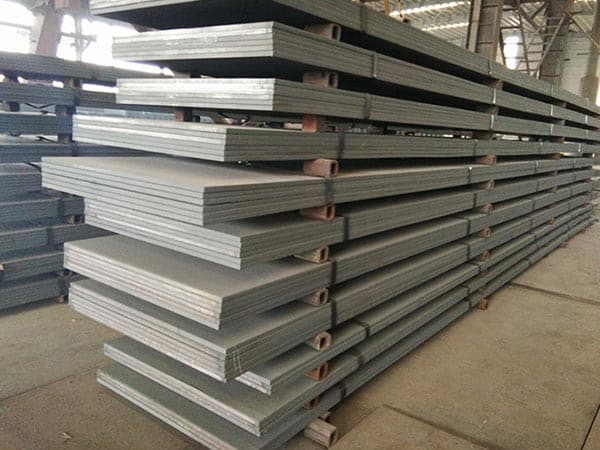
Understanding S355MC and its Strategic Importance in Global Trade
S355MC is a high-strength, low-alloy (HSLA) steel grade governed by the European standard EN 10149-2. Known for its exceptional thermomechanically rolled properties, it offers a unique combination of high yield strength and superior cold-forming capabilities. For businesses targeting the Australian market, identifying the correct equivalent is paramount to ensuring structural integrity and compliance with local engineering standards. The Australian steel market is characterized by rigorous quality requirements, primarily defined by the Australian/New Zealand Standards (AS/NZS). When exporting to Australia, the most common equivalent for S355MC is found under the AS/NZS 1594 specification, specifically Grade HU350, or AS/NZS 3678 Grade 350 for structural plates.
Chemical Composition and Metallurgical Design
The performance of S355MC is rooted in its precise chemical makeup. Unlike traditional carbon steels, S355MC utilizes micro-alloying elements such as Niobium (Nb), Vanadium (V), and Titanium (Ti). These elements facilitate grain refinement during the thermomechanical rolling process. This results in a fine-grained microstructure that enhances both strength and toughness without the need for excessive carbon content. Low carbon levels are critical for maintaining weldability, a feature highly valued in the Australian transport and mining sectors.
| Element | S355MC (EN 10149-2) % Max | AS/NZS 1594 HU350 % Max |
|---|---|---|
| Carbon (C) | 0.12 | 0.20 |
| Manganese (Mn) | 1.50 | 1.60 |
| Silicon (Si) | 0.50 | 0.45 |
| Phosphorus (P) | 0.025 | 0.040 |
| Sulphur (S) | 0.020 | 0.030 |
The comparative analysis shows that while S355MC has stricter limits on carbon and impurities, HU350 offers a broader range that accommodates various manufacturing routes while maintaining the required 350-355 MPa yield strength threshold. The lower carbon equivalent (CEV) of S355MC often makes it more attractive for precision laser cutting and high-speed robotic welding compared to some domestic Australian grades.
Mechanical Performance and Structural Integrity
In the context of the Australian landscape, where infrastructure is often subjected to extreme temperature fluctuations and heavy loads, the mechanical properties of S355MC provide a significant advantage. The "MC" suffix denotes that the steel is thermomechanically rolled, which ensures consistent mechanical properties throughout the coil or plate. The yield strength is rated at a minimum of 355 MPa, which aligns perfectly with the Australian Grade 350 requirements.
- Yield Strength: Min 355 MPa (for thicknesses ≤ 16mm).
- Tensile Strength: 430–550 MPa.
- Elongation: Minimum 19% (on a gauge length of 5.65√So), ensuring high ductility.
- Impact Toughness: Often tested at -20°C or -40°C depending on specific project requirements, vital for Australian mining equipment operating in diverse climates.
The high ductility of S355MC allows for tighter bending radii during fabrication. For Australian manufacturers producing truck chassis, crane booms, or agricultural machinery, this means they can achieve complex shapes without the risk of cracking, reducing the overall weight of the structure while maintaining high load-bearing capacity.
Processing Advantages: Bending and Welding
Fabrication costs in Australia are relatively high, making the processing efficiency of the raw material a key economic driver. S355MC excels in this regard. Its low carbon content ensures that it can be welded using standard methods such as MIG/MAG, TIG, and submerged arc welding without the necessity for extensive pre-heating in most standard thicknesses. This directly translates to faster production cycles and lower energy consumption.
Furthermore, the cold-forming properties are exceptional. When substituting S355MC for an Australian equivalent, engineers must note the minimum bending radius. S355MC typically allows for a bending radius of 0.5t to 1.5t (where t is the thickness), which is often superior to standard structural grades. This capability allows for more innovative designs in the Australian automotive and specialized trailer manufacturing industries.
Environmental Adaptability in the Australian Context
Australia’s environment ranges from highly corrosive coastal regions to arid, high-heat inland areas. S355MC, while not a dedicated weathering steel, possesses a clean surface finish due to the controlled rolling process, which provides an excellent substrate for galvanizing or high-performance coatings. In the Australian construction industry, compliance with AS/NZS 2312 for corrosion protection is standard. S355MC's chemical uniformity ensures that protective coatings adhere consistently, preventing premature failure of the structure.
Analyzing the Export Price to Australia
Determining the "equivalent price" for exporting S355MC to Australia involves a multi-faceted calculation. It is not merely the mill price but a combination of several logistics and regulatory factors. As of current market trends, the price is influenced by the following variables:
1. Base Material Cost (FOB): This is the price at the port of departure. It fluctuates based on global iron ore prices and coking coal costs. S355MC typically carries a premium over standard S235 or Grade 250 steels due to the micro-alloying elements and the sophisticated thermomechanical rolling process.
2. Freight and Logistics (CFR/CIF): Shipping to major Australian ports like Melbourne, Sydney, Brisbane, or Fremantle involves significant maritime costs. The choice between containerized shipping (for coils and smaller plates) and breakbulk (for large structural sections) significantly impacts the final landed price. Currently, freight rates are subject to volatility based on global fuel prices and port congestion.
3. Exchange Rate Fluctuations: Since steel is primarily traded in USD, the AUD/USD exchange rate is a critical factor for Australian importers. A weaker Australian dollar increases the domestic cost of imported S355MC equivalents.
4. Import Duties and Compliance Costs: Australia has strict anti-dumping regulations on certain steel products from specific countries. It is essential to verify if the country of origin is subject to these duties. Additionally, many Australian projects require certification by the Australasian Certification Authority for Reinforcing and Structural Steels (ACRS) or third-party testing to ensure the material meets AS/NZS standards.
Key Applications in the Australian Market
The demand for S355MC equivalent steel in Australia is driven by several high-growth sectors. In the Mining Industry, it is used for the fabrication of conveyors, hoppers, and mobile equipment where weight reduction is necessary to increase payload. The Transport Sector utilizes this grade for lightweight trailer frames and heavy-duty truck components to meet strict road weight limits.
In the Renewable Energy Sector, particularly in wind turbine tower components and solar tracking frames, the high strength-to-weight ratio of S355MC allows for more efficient material usage, which is critical for the economic viability of large-scale projects across the Outback. The Agricultural Machinery sector also benefits from its impact resistance and formability, producing durable equipment capable of withstanding the harsh Australian soil conditions.
Strategic Sourcing and Quality Assurance
For Australian buyers, sourcing S355MC requires a partner who understands the nuances of international standards. Providing Mill Test Certificates (MTC) that clearly state the chemical composition and mechanical test results is non-negotiable. Furthermore, ensuring the material is marked correctly and protected from moisture during the long sea transit is vital to prevent oxidation and surface degradation.
When comparing prices, it is advisable to look at the "Total Cost of Ownership." While a specific mill might offer a lower FOB price, the quality of the thermomechanical rolling might differ. Superior S355MC will result in less scrap during bending and fewer welding defects, ultimately providing better value than a cheaper, lower-quality equivalent. The Australian market rewards reliability and consistency, making high-grade S355MC a preferred choice for long-term structural projects.
By focusing on the technical synergy between EN 10149-2 S355MC and AS/NZS 1594 HU350, exporters can effectively penetrate the Australian market, providing a product that meets both the economic and engineering demands of this unique region.
Leave a message