
S355MC hot rolled steel prices plunged
A comprehensive analysis of S355MC hot rolled steel following recent price shifts. Explore its mechanical properties, cold forming advantages, and strategic application in heavy machinery and automotive sectors.
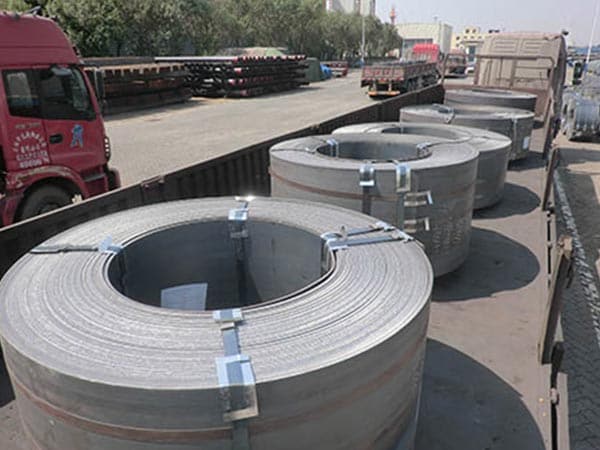
Decoding the S355MC Price Shift: Beyond the Market Volatility
The recent volatility in the global steel market has seen S355MC hot rolled steel prices plunged, creating a significant window of opportunity for manufacturers and structural engineers. While price fluctuations often trigger immediate procurement reactions, understanding the intrinsic value of S355MC requires a deep dive into its metallurgical profile and performance characteristics. S355MC is not merely a commodity; it is a high-strength, low-alloy (HSLA) steel designed for cold forming, governed by the EN 10149-2 standard. The current price correction allows industries to upgrade from standard carbon steels to this high-performance grade without the traditional cost premium.
The 'MC' suffix denotes that this steel is thermomechanically rolled (M) and intended for cold forming (C). This specific manufacturing process involves precise temperature control during rolling, which refines the grain structure. Unlike traditional normalized steels, S355MC achieves its strength through a combination of fine-grain strengthening and micro-alloying with elements like niobium (Nb), vanadium (V), and titanium (Ti). This metallurgical precision ensures that even as prices drop, the structural integrity and reliability of the material remain uncompromisingly high.
Technical Specifications and Mechanical Superiority
When evaluating S355MC, the focus must remain on its yield strength and ductility balance. With a minimum yield strength of 355 MPa, it offers a significant step up from standard S235 or S275 grades. This strength allows for substantial weight reduction in final products—a critical factor in the automotive and transportation sectors where fuel efficiency is tied directly to vehicle mass.
| Property | Value (Thickness ≤ 16mm) | Testing Standard |
|---|---|---|
| Yield Strength (ReH) | Min 355 MPa | EN ISO 6892-1 |
| Tensile Strength (Rm) | 430 - 550 MPa | EN ISO 6892-1 |
| Elongation (A80mm) | Min 19% | EN ISO 6892-1 |
| Bending Radius (180°) | 0.5t (Thickness dependent) | Internal Standard |
The table above illustrates the robust nature of S355MC. The high elongation percentage is particularly noteworthy, as it indicates the material's ability to undergo significant deformation without fracturing. This makes it an ideal candidate for complex geometries that require deep drawing or tight-radius bending. As S355MC hot rolled steel prices plunged, the cost-to-strength ratio has become exceptionally favorable, allowing engineers to specify thinner sections that perform as well as thicker, heavier, and more expensive alternatives.
Processing Performance: Welding and Cold Forming
One of the primary reasons S355MC remains a favorite among fabricators is its exceptional weldability. Due to its low carbon equivalent (CEV), the risk of cold cracking in the heat-affected zone (HAZ) is minimal. This eliminates the need for expensive pre-heating or post-weld heat treatments in most applications, directly reducing labor costs and cycle times. Whether using MIG, TIG, or submerged arc welding, S355MC maintains a stable arc and produces clean, high-strength joints.
- Cold Bending: S355MC is specifically engineered for cold forming. It can be bent to very tight radii without surface cracking, which is essential for chassis components and crane arms.
- Laser Cutting: The clean surface finish and consistent chemical composition of high-quality S355MC ensure high-speed laser cutting with minimal dross, reducing the need for secondary grinding.
- Punching and Shearing: Its fine-grained structure prevents edge delamination during high-speed punching operations, extending tool life and ensuring dimensional accuracy.
The synergy between its mechanical properties and processing ease means that the current price drop is not just a saving on raw materials, but a saving across the entire production chain. Lower material costs combined with reduced processing energy and time create a massive competitive advantage for early adopters during this market phase.
Environmental Adaptability and Longevity
S355MC exhibits excellent atmospheric corrosion resistance compared to standard carbon steels, thanks to its micro-alloyed composition. While it is not a weathering steel like Corten, the density of its surface oxide layer provides a better substrate for galvanizing or painting. In environments where moisture and salt are prevalent, such as agricultural machinery or coastal construction, the durability of S355MC ensures a longer service life and lower maintenance intervals.
Furthermore, the move towards sustainable manufacturing highlights the importance of material efficiency. By using S355MC to design lighter structures, companies can reduce their overall carbon footprint. Less steel used means less energy consumed in melting, rolling, and transportation. The current plunge in prices makes this "green" transition more economically viable for small and medium-sized enterprises that were previously deterred by the price gap between HSLA and mild steels.
Strategic Application in Modern Industry
The utilization of S355MC spans across various high-stress environments. In the heavy machinery sector, it is the backbone of telescopic cranes and earthmoving equipment. The material's ability to withstand dynamic loads and vibrations without fatigue failure is paramount. As prices reach new lows, we are seeing a shift in the construction industry where S355MC is replacing traditional S355J2 for cold-formed sections and profiles, offering better surface quality and tighter tolerances.
In the automotive industry, S355MC is used extensively for truck frames, cross members, and suspension components. The demand for lighter trucks to accommodate heavy battery packs in electric vehicles (EVs) has made S355MC more relevant than ever. The price drop allows manufacturers to offset some of the high costs associated with EV battery technology by economizing on the structural steel components without sacrificing safety or performance.
Procurement Intelligence: Navigating the Price Drop
While the headline that S355MC hot rolled steel prices plunged is encouraging, procurement specialists must exercise due diligence. Not all S355MC is created equal. The market often sees an influx of "sub-prime" materials during price dips. It is crucial to verify the Mill Test Certificate (MTC) to ensure compliance with EN 10149-2. Key indicators to check include the grain size index and the specific micro-alloying content. A reputable supplier will provide full traceability, ensuring that the cost savings do not come at the expense of material reliability.
Strategic stockpiling during this period can hedge against future price hikes. However, storage conditions are vital. Hot rolled coils and sheets should be kept in a climate-controlled environment to prevent flash rusting, which can interfere with subsequent laser cutting or welding processes. Leveraging the current market lows to build a buffer of high-quality S355MC can stabilize production costs for the upcoming fiscal quarters, providing a shield against the inherent volatility of the global commodities market.
Future Outlook: The Role of HSLA Steels
The trajectory of S355MC is firmly upward in terms of adoption, regardless of short-term price movements. As global standards for safety and efficiency become more stringent, the shift toward high-strength low-alloy steels is inevitable. The current price plunge serves as a catalyst, accelerating the phase-out of obsolete, heavier steel grades. Engineers who master the application of S355MC today will be better positioned to design the next generation of high-efficiency machinery and infrastructure.
Ultimately, the value of S355MC lies in its versatility. It bridges the gap between everyday structural steel and specialized ultra-high-strength grades. Its balanced profile of strength, formability, and weldability makes it a universal solution for modern engineering challenges. By capitalizing on the current market conditions, businesses can enhance their product quality while optimizing their bottom line, proving that technical expertise and market timing are the twin pillars of industrial success.
Leave a message