
What are the common defects in welding area of automobile frame steel S355MC welding parts
Expert analysis of common welding defects in S355MC automotive frame steel, including metallurgical causes, heat-affected zone softening, and prevention strategies for high-strength chassis components.
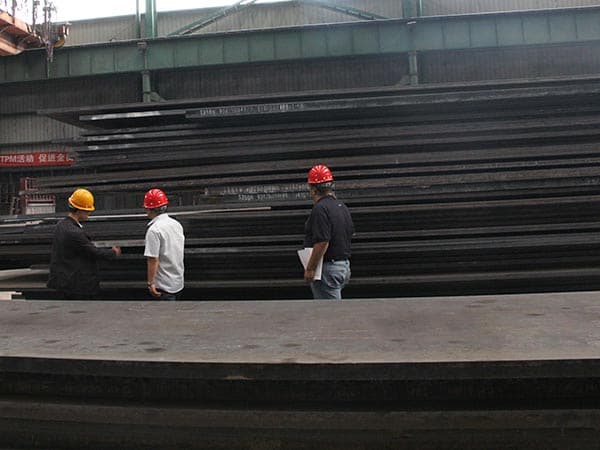
The Critical Role of S355MC in Modern Automotive Chassis Engineering
S355MC is a high-strength low-alloy (HSLA) steel produced through thermomechanical rolling, specifically designed for cold forming and structural applications in the automotive industry. Its widespread use in truck frames, chassis crossmembers, and longitudinal beams is due to its exceptional balance of high yield strength, excellent ductility, and weight-reduction potential. However, the thermomechanical control process (TMCP) that gives S355MC its superior properties also makes it sensitive to the thermal cycles inherent in welding. Understanding the common defects in the welding area is paramount for ensuring the structural integrity and fatigue life of vehicle frames.
Metallurgical Characteristics and Weldability of S355MC
Before addressing specific defects, it is essential to understand the material's chemistry. S355MC features a low carbon content (typically ≤0.12%) and is micro-alloyed with elements like niobium (Nb), vanadium (V), and titanium (Ti). These elements facilitate grain refinement and precipitation hardening. The carbon equivalent (Ceq) is generally low, which suggests good weldability. However, the strength of S355MC is derived from its fine-grained microstructure achieved during rolling. When subjected to the high heat of Gas Metal Arc Welding (GMAW) or Laser Welding, this microstructure can undergo significant changes, leading to defects that are not always visible to the naked eye.
| Element | C (max) | Mn (max) | Si (max) | P (max) | S (max) | Al (min) | Nb+Ti+V (max) |
|---|---|---|---|---|---|---|---|
| S355MC Content (%) | 0.12 | 1.50 | 0.50 | 0.025 | 0.020 | 0.015 | 0.22 |
Porosity: The Gas Entrapment Challenge
Porosity is one of the most frequent defects encountered in S355MC welding parts. It manifests as small spherical or elongated cavities within the weld metal. In automotive frame production, porosity is often linked to surface conditions. S355MC plates may have a thin layer of scale or protective oil. If the welding area is not properly cleaned, these hydrocarbons decompose under the arc, releasing hydrogen and carbon monoxide into the molten pool.
Shielding Gas Issues: Inadequate gas coverage or turbulence in the shielding gas flow (often Ar+CO2 mixtures) allows atmospheric nitrogen and oxygen to enter the weld pool. For S355MC, which is often welded at high speeds in automated lines, the stability of the gas shield is critical. High travel speeds can create a vacuum effect behind the torch, sucking in air and resulting in clustered porosity. Controlling the gas flow rate and ensuring the torch angle is optimized are vital steps in mitigating this risk.
The Phenomenon of Heat-Affected Zone (HAZ) Softening
A unique challenge with thermomechanically rolled steels like S355MC is the "softening" of the heat-affected zone. This is not a defect in the traditional sense like a crack, but it is a structural weakness that can lead to premature failure. During welding, the region adjacent to the fusion line is heated to temperatures between 500°C and 800°C. This thermal input causes grain growth and the dissolution of the micro-alloying precipitates that provide the steel's strength.
- Microstructural Degradation: The fine ferrite-pearlite structure transforms into a coarser grain structure, significantly reducing the local yield strength.
- Impact on Fatigue: Since automobile frames are subject to dynamic loading, the soft zone becomes a site for strain localization, reducing the fatigue life of the entire assembly.
- Prevention: Minimizing heat input (kJ/mm) is the primary defense. Using modern pulsed-arc technologies or laser-hybrid welding can help narrow the HAZ and maintain the integrity of the base metal.
Cold Cracking and Hydrogen-Induced Cracking (HIC)
While S355MC has a low carbon equivalent, the risk of cold cracking still exists, especially in thick-walled frame components or when welding in high-humidity environments. Cold cracks usually occur after the weld has cooled down to room temperature, often triggered by the presence of diffusible hydrogen, a susceptible microstructure (like martensite), and high residual stresses.
Residual Stress in Frames: Automotive frames are complex structures with many constrained joints. The shrinkage of the weld metal creates intense tensile stresses. If the hydrogen levels are not controlled—perhaps through damp electrodes or contaminated wire—cracks can initiate at the weld toe or root. Preheating is rarely required for S355MC due to its low Ceq, but ensuring that the material is dry and using low-hydrogen consumables is mandatory for high-stress chassis joints.
Undercut and Geometric Imperfections
In the pursuit of high productivity, automotive manufacturers often push welding speeds to the limit. This frequently results in "undercut"—a groove melted into the base metal adjacent to the weld toe that is not filled by the weld metal. For an S355MC frame, an undercut acts as a severe stress concentrator.
The Danger of Stress Concentration: In a vehicle chassis, the frame must absorb shocks and vibrations. An undercut in a critical joint can reduce the effective thickness of the S355MC plate and serve as a nucleation point for fatigue cracks. Automated optical inspection (AOI) is now standard in many lines to detect undercuts exceeding 0.5mm, which is often the limit for structural safety in heavy-duty truck frames.
Incomplete Fusion and Penetration
Incomplete fusion occurs when the weld metal does not properly bond with the S355MC base metal or previous weld beads. This is often caused by incorrect torch positioning or insufficient current. Given the high thermal conductivity of steel, if the arc does not directly strike the joint root, the molten pool may simply "bridge" the gap without fusing the metal.
Impact on Structural Load: A joint with incomplete penetration lacks the cross-sectional area required to carry the design load. In S355MC welding parts, this defect is particularly dangerous because it is often internal and cannot be detected by visual inspection alone. Ultrasonic or X-ray testing is required to ensure that the full thickness of the frame component is joined.
| Defect Type | Primary Cause in S355MC | Mitigation Strategy |
|---|---|---|
| Porosity | Surface oil/rust or gas turbulence | Strict cleaning and optimized gas flow |
| HAZ Softening | Excessive heat input | Low-heat welding processes (Pulsed GMAW) |
| Undercut | Excessive travel speed or voltage | Parameter optimization and torch angle adjustment |
| Cold Cracking | Hydrogen contamination + Residual stress | Use of dry consumables and stress relief design |
Burn-through in Thin-Walled S355MC Components
Modern automotive design emphasizes light-weighting, leading to the use of thinner S355MC sheets (e.g., 2.0mm to 4.0mm). Burn-through occurs when the welding arc penetrates entirely through the base metal, leaving a hole. This is a common issue when welding gaps are inconsistent or when the heat input is too high for the material thickness. Precise fit-up and the use of sophisticated gap-bridging welding programs (like CMT - Cold Metal Transfer) are essential to prevent this defect in thin-walled frame sections.
Environmental Adaptability and Corrosion Resistance of Welds
Automobile frames are exposed to harsh environments, including road salt, moisture, and temperature fluctuations. The welding area of S355MC is more susceptible to corrosion than the base metal due to the destruction of the mill scale and the change in surface chemistry. If welding defects like slag inclusions or surface pores are present, they can trap moisture and accelerate localized corrosion (pitting). Ensuring a clean, smooth weld bead profile is not just about aesthetics; it is a critical factor in the long-term environmental durability of the chassis.
Optimizing S355MC Welding for Zero Defects
Achieving high-quality welds in S355MC requires a holistic approach that combines metallurgical knowledge with process control. The use of high-quality filler metals that match the strength of S355MC while providing sufficient toughness is the first step. Furthermore, the implementation of robotic welding with real-time monitoring of voltage, current, and gas flow ensures consistency that manual welding cannot match.
Advanced techniques such as Tandem GMAW or Laser-MAG hybrid welding are increasingly used for S355MC frames. These processes allow for high speeds and deep penetration while keeping the total heat input low, thereby minimizing the risk of HAZ softening and distortion. Regular macro-etch testing and hardness mapping across the weld cross-section should be part of the quality assurance protocol to verify that the softening effect remains within acceptable limits for the specific vehicle application.
By strictly controlling the welding parameters and maintaining rigorous surface preparation standards, manufacturers can fully leverage the high-strength properties of S355MC. This ensures that the automobile frame remains robust, safe, and capable of withstanding the rigorous demands of modern transport throughout its service life.
Leave a message