
What is the cold forming S355MC high-strength steel with hot rolled
Discover the comprehensive guide to S355MC high-strength hot-rolled steel. Explore its mechanical properties, chemical composition, cold forming capabilities, and diverse industrial applications in this expert analysis.
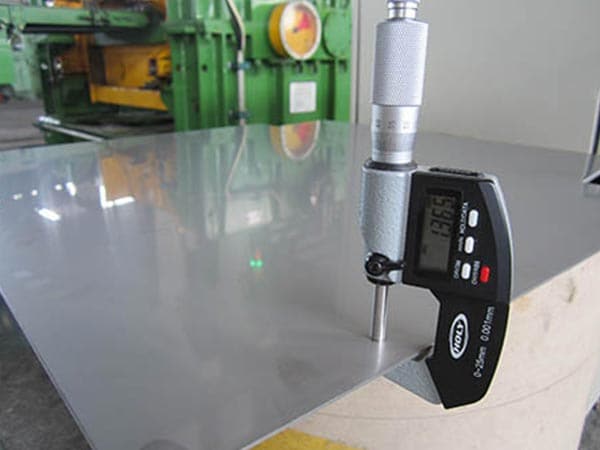
Understanding the Essence of S355MC High-Strength Steel
S355MC is a high-strength, thermomechanically rolled steel grade designed specifically for cold forming. As defined by the European standard EN 10149-2, this material is a staple in modern engineering where weight reduction and structural integrity are paramount. The nomenclature reveals its core characteristics: 'S' stands for structural steel, '355' indicates a minimum yield strength of 355 MPa, 'M' refers to the thermomechanical rolling process, and 'C' signifies its suitability for cold forming. Unlike standard structural steels, S355MC is engineered to provide a superior balance of strength and ductility, making it an ideal choice for complex shapes and high-load components.
The Science of Thermomechanical Rolling (TMCP)
The exceptional properties of S355MC are not merely a result of its chemistry but are deeply rooted in its manufacturing process. Thermomechanical Control Process (TMCP) involves precise temperature control during the rolling stages. By rolling the steel at specific temperatures and controlling the cooling rate, manufacturers can achieve an extremely fine-grained microstructure. This grain refinement is the primary mechanism that allows S355MC to achieve high yield strength without the need for excessive alloying elements. This process ensures that the steel maintains excellent toughness even at low temperatures, a critical factor for equipment operating in harsh environments.
Chemical Composition and Micro-Alloying
The chemical profile of S355MC is meticulously balanced to optimize weldability and formability. One of its most significant advantages is its low carbon content, which typically stays below 0.12%. To compensate for the low carbon while increasing strength, micro-alloying elements such as Niobium (Nb), Vanadium (V), and Titanium (Ti) are added. These elements facilitate grain refinement and precipitation hardening during the TMCP process.
| Element | Maximum Content (%) |
|---|---|
| Carbon (C) | 0.12 |
| Manganese (Mn) | 1.50 |
| Silicon (Si) | 0.50 |
| Phosphorus (P) | 0.025 |
| Sulphur (S) | 0.020 |
| Aluminium (Al) | 0.015 |
| Niobium (Nb) | 0.09 |
This lean chemical composition results in a low Carbon Equivalent Value (CEV), which translates directly into excellent weldability. Engineers can utilize standard welding techniques without the extensive pre-heating requirements often associated with high-strength materials.
Mechanical Performance and Ductility
S355MC is prized for its mechanical consistency. While it offers a minimum yield strength of 355 MPa, its tensile strength ranges between 430 and 550 MPa. What truly sets it apart is its elongation capacity. For thicknesses less than 3mm, the minimum elongation is typically around 19%, while thicker sections maintain high ductility. This allows the material to undergo significant deformation during cold forming without cracking or localized necking.
- Yield Strength: Min 355 MPa
- Tensile Strength: 430 - 550 MPa
- Elongation (A80mm): Min 19% (depending on thickness)
- Impact Energy: Often specified at -20°C or -40°C for specific applications
Superior Cold Forming Capabilities
The 'C' in S355MC highlights its primary purpose: cold forming. This includes processes such as bending, flanging, and cold-rolling into profiles. Because of its fine-grained structure, S355MC exhibits very low springback compared to other high-strength steels. This predictability is crucial for precision manufacturing, where tight tolerances are required. When bending S355MC, the minimum recommended bending radius is remarkably small, often as low as 0.5 to 1.5 times the material thickness, depending on the bending angle and grain direction.
Fabricators benefit from reduced tool wear and higher production speeds. The material's consistency ensures that batch-to-batch variations are minimized, leading to stable production cycles in automated stamping and pressing lines.
Weldability and Fabrication Efficiency
In modern manufacturing, the ease of joining materials is as important as the strength of the material itself. S355MC excels in this regard. Due to its low alloy content and controlled impurities, it is compatible with all conventional welding methods, including MAG, TIG, and laser welding. The heat-affected zone (HAZ) in S355MC remains relatively tough, and the risk of cold cracking is significantly lower than in traditional structural steels like s355jr. This eliminates the need for costly post-weld heat treatments in many structural applications, reducing overall production time and energy consumption.
Industrial Applications: Where S355MC Shines
The versatility of S355MC has led to its widespread adoption across multiple sectors. Its high strength-to-weight ratio makes it a favorite for industries looking to optimize performance while reducing fuel consumption or material costs.
Automotive and Transportation: S355MC is extensively used in the production of truck chassis, longitudinal beams, and cross members. By using S355MC instead of traditional steels, manufacturers can reduce the weight of the vehicle frame without compromising safety or load-bearing capacity. It is also found in car seat frames and complex suspension components.
Heavy Machinery and Lifting Equipment: For mobile cranes, excavators, and agricultural machinery, S355MC provides the necessary strength to handle dynamic loads. Its ability to be cold-formed into complex telescopic boom sections or structural brackets makes it indispensable for modern equipment design.
Structural Profiles and Cold-Rolled Sections: Many C-profiles, Z-profiles, and Sigma-sections used in solar mounting systems and warehouse racking are manufactured from S355MC. Its high yield strength allows for thinner walls, which reduces the total weight of the structure and simplifies installation.
Environmental Adaptability and Longevity
While S355MC is not a weathering steel, its fine-grained structure provides a consistent surface for protective coatings. Whether it is hot-dip galvanizing, powder coating, or specialized painting, the steel's clean surface chemistry ensures excellent adhesion. In low-temperature environments, the TMCP process ensures that the steel remains ductile, preventing brittle fractures that can occur in standard steels when exposed to sub-zero temperatures. This makes it suitable for equipment used in arctic conditions or high-altitude applications.
Economic Advantages of Switching to S355MC
The transition to S355MC often results in significant cost savings. Although the price per ton might be slightly higher than basic carbon steel, the ability to use thinner gauges to achieve the same structural performance leads to a reduction in total material weight. This 'lightweighting' reduces shipping costs, welding consumables, and handling time. Furthermore, the high precision achievable during cold forming reduces scrap rates and the need for secondary finishing operations.
As industries move toward more sustainable practices, the efficiency of S355MC aligns with global goals. Less material used means a lower carbon footprint for the final product, and the excellent recyclability of HSLA steels ensures a circular lifecycle for the metal.
Technical Comparison: S355MC vs. S355JR
It is common to confuse S355MC with S355JR, as both share the same minimum yield strength. However, the differences are profound. S355JR is a standard hot-rolled structural steel (EN 10025-2) with higher carbon content and a coarser grain structure. S355JR is generally cheaper and suitable for general construction, but it lacks the cold-forming precision and superior weldability of S355MC. For any application involving intricate bending or weight-sensitive design, S355MC is the technically superior choice.
| Feature | S355MC (EN 10149-2) | S355JR (EN 10025-2) |
|---|---|---|
| Manufacturing | Thermomechanical Rolling | Standard Hot Rolling |
| Carbon Content | Very Low (~0.12%) | Higher (~0.20-0.24%) |
| Cold Forming | Excellent | Limited |
| Weldability | Superior (Low CEV) | Good |
| Grain Size | Fine Grained | Standard |
Choosing S355MC represents a commitment to high-performance engineering. Its unique combination of strength, formability, and weldability allows designers to push the boundaries of what is possible in steel fabrication, ensuring that modern structures and machines are lighter, stronger, and more efficient than ever before.
Leave a message