
s700 mild steel technical data
Comprehensive technical analysis of S700 high-strength steel, detailing its chemical composition, mechanical performance, processing capabilities, and industrial weight-reduction benefits.
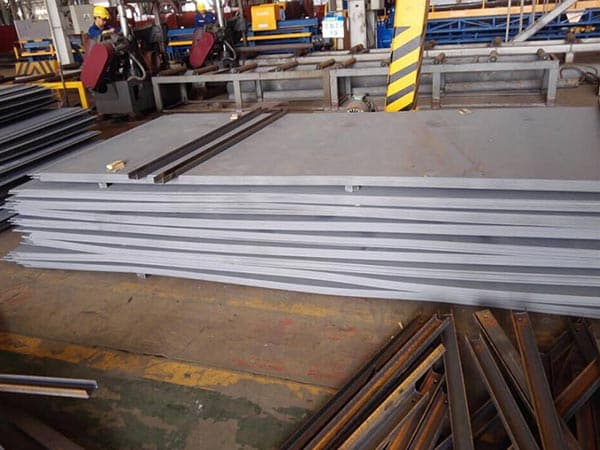
Understanding the Evolution of S700 High-Strength Structural Steel
S700 represents a significant leap in metallurgical engineering, moving far beyond the capabilities of traditional mild steels like S235 or S355. While often categorized under the broad umbrella of structural steels, S700 is specifically a high-yield, thermomechanically rolled (MC) or quenched and tempered (QL) steel designed for applications where weight reduction and high load-bearing capacity are critical. The '700' designation refers to its minimum yield strength of 700 MPa, a figure that allows engineers to drastically reduce material thickness without compromising structural integrity.
This material is engineered to meet the demanding requirements of modern infrastructure and heavy machinery. By utilizing advanced alloying techniques and controlled rolling processes, S700 achieves a fine-grained microstructure that provides an optimal balance between hardness, ductility, and toughness. This technical deep-dive explores the multifaceted attributes that make S700 a preferred choice for high-performance engineering projects.
Chemical Composition and Microstructural Integrity
The superior performance of S700 is rooted in its precise chemical makeup. Unlike standard mild steels that rely primarily on carbon for strength, S700 utilizes micro-alloying elements such as Niobium (Nb), Vanadium (V), and Titanium (Ti). These elements facilitate grain refinement during the thermomechanical rolling process, resulting in a structure that resists deformation and fracture more effectively than coarse-grained alternatives.
Maintaining a low carbon equivalent (CEV) is vital for S700. A lower carbon content ensures that the steel remains highly weldable and less prone to cold cracking, a common issue in older generations of high-strength alloys. Below is a typical chemical composition profile for S700MC (thermomechanically rolled) steel:
| Element | Max Content (%) |
|---|---|
| Carbon (C) | 0.12 |
| Manganese (Mn) | 2.10 |
| Silicon (Si) | 0.60 |
| Phosphorus (P) | 0.025 |
| Sulfur (S) | 0.015 |
| Aluminium (Al) | 0.015 |
| Nb + V + Ti | 0.22 |
The inclusion of Manganese enhances hardenability and tensile strength, while the controlled levels of Phosphorus and Sulfur ensure the steel's purity and impact resistance. The synergy of these elements allows S700 to maintain its properties even under extreme mechanical stress.
Mechanical Properties: Strength, Ductility, and Impact Resistance
The primary technical advantage of S700 is its high yield-to-tensile ratio. This allows for the design of lighter components that can withstand higher working loads. For instance, replacing S355 with S700 can result in a weight saving of up to 30-40% in certain structural applications, directly translating to fuel efficiency in transport and lower material costs in construction.
Mechanical performance is not just about raw strength; it is also about how the material behaves under different temperatures and loading conditions. S700 exhibits excellent low-temperature toughness, which is essential for equipment operating in arctic conditions or high-altitude environments.
| Property | Value (Typical for S700MC) |
|---|---|
| Minimum Yield Strength (ReH) | 700 MPa |
| Tensile Strength (Rm) | 750 - 950 MPa |
| Minimum Elongation (A5) | 10% - 12% |
| Impact Energy (Charpy-V) | 40J at -20°C / -40°C |
Note: The specific elongation and impact values may vary slightly depending on the plate thickness and the specific sub-grade (e.g., S700MC vs. S700QL).
Advanced Processing and Fabrication Capabilities
One of the misconceptions regarding high-strength steel is that it is difficult to process. S700 is specifically designed to be fabrication-friendly. Its low carbon content and fine-grain structure allow for excellent cold forming and welding results, provided that standard industry protocols are followed.
- Cold Forming: S700 can be bent and folded with precision. Due to its high yield strength, the spring-back effect is more pronounced than in mild steel, requiring adjustments in the bending radius and tool pressure. Manufacturers typically recommend a minimum bending radius of 1.5 to 2.0 times the plate thickness.
- Welding: S700 is compatible with all conventional welding methods, including MIG/MAG, TIG, and submerged arc welding. Because of the low CEV, preheating is often unnecessary for thinner sections, which speeds up production cycles. However, it is crucial to manage heat input to avoid softening the Heat Affected Zone (HAZ).
- Machining and Cutting: Laser, plasma, and waterjet cutting are highly effective for S700. The material's consistency ensures clean edges and minimal thermal distortion during the cutting process.
Environmental Adaptability and Durability
The longevity of a structural material is dictated by its ability to withstand environmental degradation. S700's refined microstructure provides a degree of inherent resistance to atmospheric corrosion compared to standard carbon steels, though it still requires appropriate surface treatments like galvanizing or high-performance coating systems for long-term outdoor exposure.
Furthermore, S700's fatigue resistance is a critical factor in its environmental adaptability. In cyclic loading environments, such as bridges or crane booms, the material's ability to resist crack initiation and propagation ensures a longer service life and reduced maintenance intervals. This durability makes it a sustainable choice, as it reduces the frequency of replacement and the total lifecycle carbon footprint of the project.
Strategic Industrial Applications
The technical data of S700 makes it indispensable across several high-stakes industries. Its primary role is to serve as a high-performance alternative to heavier, bulkier steel grades.
- Lifting and Transport: Crane booms, telescopic arms, and truck chassis benefit immensely from S700. By using thinner, stronger plates, manufacturers can increase the payload capacity of vehicles while staying within legal weight limits.
- Automotive Engineering: S700 is used in the manufacturing of safety components and structural frames for heavy-duty trailers and specialized transport equipment, where high energy absorption and strength are required.
- Renewable Energy: In the wind energy sector, S700 is utilized for tower components and support structures that must withstand constant vibration and high wind loads.
- Mining and Earthmoving: The buckets of excavators and the bodies of dump trucks use S700 to resist the abrasive and high-impact nature of mining operations while keeping the equipment's dead weight to a minimum.
Economic Efficiency and Material Optimization
While the per-ton price of S700 may be higher than that of standard mild steel, the total project cost often decreases when using high-strength grades. The reduction in material volume leads to several cost-saving streams. First, less steel is purchased. Second, welding volumes are reduced because thinner plates require fewer weld passes and less filler material. Third, transportation costs for the raw material and the finished product are lower due to the reduced weight.
Implementing S700 requires a shift in design philosophy. Engineers must move away from "thick is strong" toward a more nuanced approach that leverages the high yield strength of the material. This optimization not only improves the performance of the final product but also contributes to global sustainability goals by reducing the energy required for steel production and transportation.
Quality Standards and Compliance
S700 is produced in accordance with stringent international standards, most notably EN 10149-2 for thermomechanically rolled steels and EN 10025-6 for quenched and tempered steels. These standards ensure that every batch of S700 meets the minimum requirements for yield strength, tensile strength, and impact toughness. When sourcing S700, it is essential to verify the material test certificates (MTC) to ensure compliance with the specific project requirements, particularly regarding impact testing temperatures and chemical limits.
The reliability of S700 is backed by rigorous testing protocols, including ultrasonic testing for internal defects and spectral analysis for chemical verification. This level of quality assurance is what allows S700 to be used in critical load-bearing structures where failure is not an option.
Leave a message