
What is the price of wys700 steel per ton in Shanghai, China
Explore the current price of WYS700 steel in Shanghai. This detailed guide covers its mechanical properties, chemical composition, processing techniques, and industrial applications.
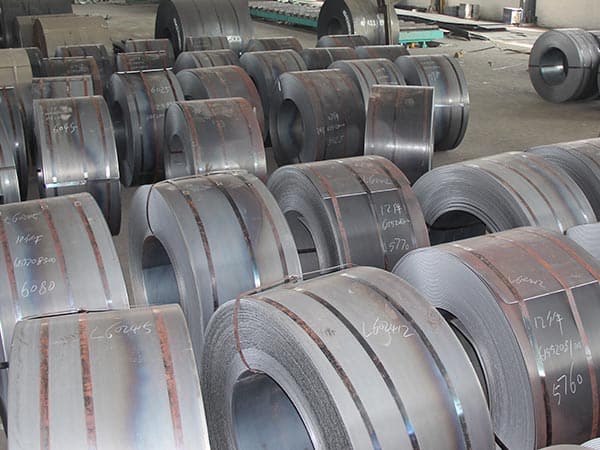
Current Market Dynamics of WYS700 Steel in Shanghai
Understanding the price of WYS700 steel in the Shanghai market requires a deep dive into the intersection of supply chain logistics, raw material costs, and the specific technical requirements of high-strength structural projects. As a premier hub for steel distribution in China, Shanghai's pricing often serves as a benchmark for the rest of the country. Currently, the price of WYS700 steel plates fluctuates based on thickness, width, and the reputation of the manufacturing mill, such as Wuyang Iron and Steel (HBIS). For procurement professionals, it is essential to recognize that WYS700 is not a commodity grade but a high-performance material designed for weight reduction and structural integrity.
In the current economic climate, the price per ton for WYS700 in Shanghai typically ranges between 5,800 RMB and 7,500 RMB. This variance is attributed to several factors: the cost of alloying elements like Niobium and Vanadium, the complexity of the Thermo-Mechanical Controlled Processing (TMCP) used during rolling, and the logistical advantages of being near the Baoshan or Songjiang warehousing districts. Large-scale infrastructure projects in the Yangtze River Delta continue to drive demand, ensuring that liquidity for this specific grade remains high despite global market volatility.
Technical Specifications and Chemical Composition
WYS700 is categorized as a high-yield strength, low-alloy (HSLA) steel. Its performance is rooted in a precise chemical balance that allows for high strength without sacrificing weldability or toughness. Unlike standard carbon steels, WYS700 utilizes micro-alloying techniques to refine grain size, which is critical for maintaining structural stability under extreme loads.
| Element | Carbon (C) | Silicon (Si) | Manganese (Mn) | Phosphorus (P) | Sulfur (S) | Nb+V+Ti |
|---|---|---|---|---|---|---|
| Max % | 0.12 | 0.50 | 2.10 | 0.025 | 0.010 | 0.22 |
The low carbon equivalent (Ceq) is a standout feature of WYS700. By keeping carbon levels low and utilizing elements like Manganese and micro-alloys (Niobium, Vanadium, Titanium), the steel achieves a fine-grained microstructure. This composition ensures that the material remains ductile even at sub-zero temperatures, a vital requirement for machinery operating in northern climates or high-altitude environments.
Mechanical Properties and Performance Benchmarks
The "700" in WYS700 signifies its minimum yield strength of 700 MPa. This high strength-to-weight ratio allows engineers to design lighter structures without compromising safety. In the competitive Shanghai steel market, buyers often compare WYS700 with European standards like S700MC or Chinese national standards like Q700.
| Property | Yield Strength (MPa) | Tensile Strength (MPa) | Elongation (%) | Impact Energy (-20°C) |
|---|---|---|---|---|
| Value | ≥ 700 | 750 - 950 | ≥ 12 | ≥ 40J |
Beyond simple strength, the fatigue resistance of WYS700 is exceptional. Within the heavy machinery manufacturing sector, components such as crane booms and chassis are subjected to cyclic loading. WYS700’s refined grain structure prevents the rapid propagation of micro-cracks, significantly extending the service life of the equipment. This durability is a primary reason why the price premium over standard Q355B steel is justified for long-term investment.
Advanced Processing and Fabrication Capabilities
One of the most critical aspects of WYS700 is its fabrication flexibility. High-strength steels are often notoriously difficult to weld or bend, but WYS700 is engineered to overcome these challenges. When sourcing from Shanghai suppliers, it is important to verify that the material has undergone proper TMCP treatment, as this determines how the steel will react during secondary manufacturing.
- Welding Performance: Due to its low carbon content, WYS700 exhibits excellent weldability. It can be joined using standard methods such as MAG, TIG, or submerged arc welding. Preheating is often unnecessary for thinner sections, which reduces labor costs and increases production speed.
- Cold Forming: Despite its high strength, WYS700 can be cold-formed into complex shapes. Manufacturers of truck frames benefit from its ability to maintain tight bending radii without cracking, provided the grain direction is considered during the layout process.
- Precision Cutting: Whether using laser, plasma, or waterjet cutting, WYS700 maintains a clean edge with minimal heat-affected zones (HAZ). This precision is vital for components that require tight tolerances in the assembly of telescopic cranes.
Expanding Industry Applications
The adoption of WYS700 is accelerating across various sectors that prioritize efficiency and carbon footprint reduction. By using WYS700, manufacturers can reduce the total weight of a vehicle or structure by up to 30%, leading to lower fuel consumption and higher payload capacities.
Within the mobile crane and lifting equipment industry, WYS700 is the standard for telescopic sections. Its ability to withstand high buckling stresses while remaining light allows for longer reach and higher lift capacities. Similarly, in the transportation sector, high-strength trailers and semi-trailers made from WYS700 offer superior performance on China's expanding highway networks.
The mining and construction machinery sector also relies on WYS700 for dump truck bodies and excavator components. The material's resistance to impact and abrasion, combined with its structural strength, makes it ideal for the harsh environments found in open-pit mines. Furthermore, as offshore wind energy projects grow near Shanghai's coastline, the demand for high-strength structural plates that can withstand corrosive marine environments continues to rise.
Strategic Procurement Factors in the Shanghai Region
When evaluating the price of WYS700 steel per ton in Shanghai, buyers must look beyond the initial quote. The total cost of ownership involves several localized factors. First, the timing of the purchase is crucial. Steel prices in China often fluctuate based on seasonal construction cycles and government environmental policies that may restrict production in northern mills, shifting demand to Shanghai's local inventory.
Second, quality certification is non-negotiable. Ensure that the WYS700 comes with a genuine Mill Test Certificate (MTC) that details the chemical analysis and mechanical testing results. In the Shanghai market, reputable traders will provide traceability back to the original furnace heat. Third, logistical efficiency plays a role. Shanghai’s sophisticated port infrastructure and inland transport networks allow for rapid delivery, which can offset higher per-ton prices by reducing project downtime.
Looking ahead, the price of WYS700 is expected to remain stable with a slight upward bias as the industry shifts toward higher-quality, sustainable materials. The focus on "Green Steel" and low-carbon manufacturing processes may introduce new variables into the pricing equation, but the fundamental value of WYS700 as a high-performance structural solution remains unchallenged. For businesses looking to optimize their engineering designs, WYS700 represents a sophisticated balance of cost, strength, and reliability.
Leave a message