
S700MC high strength car beam steel considered mild steel?
A deep dive into S700MC high-strength steel properties, comparing it with mild steel to understand why it dominates the automotive and heavy machinery industries.
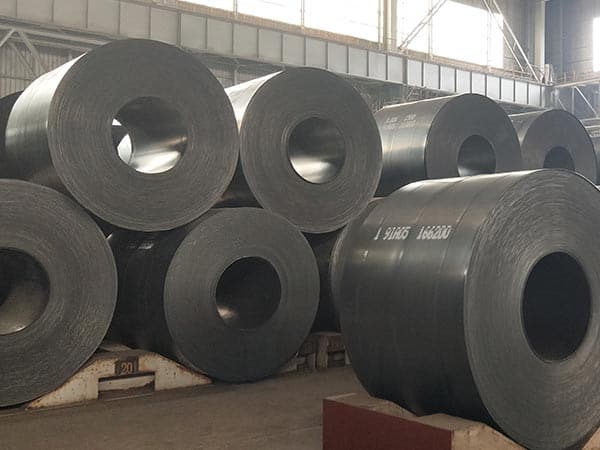
The Fundamental Distinction Between S700MC and Mild Steel
To address the question directly: S700MC is absolutely not mild steel. While both are iron-based alloys, they exist at opposite ends of the structural performance spectrum. Mild steel, typically categorized as low-carbon steel (like S235 or ASTM A36), possesses a yield strength of approximately 235 MPa. In stark contrast, S700MC is a high-strength low-alloy (HSLA) steel produced through a specialized thermomechanically rolled process, boasting a minimum yield strength of 700 MPa. This makes it nearly three times stronger than conventional mild steel.
The confusion often arises because S700MC maintains excellent ductility and formability, characteristics usually associated with softer, lower-strength steels. However, S700MC achieves this through sophisticated grain refinement and micro-alloying rather than simply increasing carbon content. Understanding the metallurgical nuances of S700MC reveals why it has replaced mild steel in critical load-bearing applications, particularly in the automotive and heavy transport sectors.
Chemical Composition and the Role of Micro-alloying
The secret to S700MC’s performance lies in its chemistry. Unlike mild steel, which relies on basic iron and carbon structures, S700MC utilizes a precise blend of micro-alloying elements such as Niobium (Nb), Vanadium (V), and Titanium (Ti). These elements, even in minute quantities, significantly influence the steel's microstructure during the rolling process.
- Niobium (Nb): Increases yield strength by refining the grain size and providing precipitation hardening.
- Titanium (Ti): Stabilizes the structure at high temperatures and prevents grain growth during welding.
- Vanadium (V): Enhances toughness and strength through the formation of fine carbides.
- Low Carbon Content: S700MC typically keeps carbon below 0.12%. This is lower than many mild steels, which ensures superior weldability and prevents the formation of brittle martensite in the heat-affected zone (HAZ).
By keeping the carbon equivalent low, S700MC avoids the typical trade-off where higher strength leads to poor weldability. This makes it an engineered material far superior to the generic commodity known as mild steel.
Mechanical Performance: A Comparative Analysis
When evaluating S700MC against standard structural steels, the mechanical data highlights a massive leap in efficiency. The following table illustrates the performance gap between S700MC and common mild steel (S235JR) and medium-strength steel (S355J2).
| Property | Mild Steel (S235JR) | Structural Steel (S355J2) | High Strength Steel (S700MC) |
|---|---|---|---|
| Min. Yield Strength (MPa) | 235 | 355 | 700 |
| Tensile Strength (MPa) | 360 - 510 | 470 - 630 | 750 - 950 | 24% | 20% | 10% - 12% (depending on thickness) |
| Production Method | Hot Rolled | Hot Rolled | Thermomechanically Rolled (MC) |
The high yield-to-tensile ratio of S700MC allows engineers to design components that can withstand significantly higher loads without permanent deformation. For the automotive industry, this translates to thinner sections that offer the same or better safety margins than thicker, heavier mild steel plates.
Thermomechanical Rolling (TMCP): The Engine of Strength
The "MC" in S700MC stands for thermomechanically rolled. This is a sophisticated manufacturing process where the temperature and the reduction ratio of the rolling mill are strictly controlled. Unlike traditional hot rolling, where the steel is allowed to cool naturally, TMCP involves controlled cooling rates that freeze the fine-grained microstructure in place.
This process results in a very fine ferrite-pearlite or bainitic structure. The fine grain size is the only strengthening mechanism that simultaneously improves both strength and toughness. Mild steel lacks this refined microstructure, often possessing large, irregular grains that are more susceptible to crack propagation and fatigue failure under cyclic loading.
Fabrication and Processing Advantages
Despite its extreme strength, S700MC is designed for ease of fabrication. This is a critical requirement for car beams and truck chassis. Many users assume that high-strength steel is difficult to work with, but S700MC defies this stereotype through several key attributes:
Cold Forming and Bending: S700MC is specifically optimized for cold forming. It can be bent to tight radii without cracking, provided the minimum inner bend radius is respected. This allows for the creation of complex U-beams and C-channels used in vehicle frames.
Welding Compatibility: Because of its low carbon equivalent (CEV), S700MC can be welded using standard methods like MAG (Metal Active Gas) or laser welding without the need for extensive pre-heating. This is a major advantage over older high-carbon steels where welding often caused cracking.
Laser Cutting: The clean chemical composition and consistent thickness of S700MC make it an ideal candidate for high-speed laser cutting. The edges remain clean, and the heat-affected zone is minimal, preserving the integrity of the component.
Weight Reduction and Environmental Impact
The primary driver for using S700MC instead of mild steel is "lightweighting." In the transport industry, reducing the weight of the vehicle frame (the "dead weight") directly increases the payload capacity and fuel efficiency. By switching from a 10mm mild steel plate to a 4mm or 5mm S700MC plate, manufacturers can achieve weight savings of up to 50% for specific structural components.
This reduction in material usage also has a profound environmental impact. Less steel produced means lower CO2 emissions during the manufacturing phase, and lighter vehicles consume less energy over their operational lifespan. S700MC is therefore a cornerstone of modern green engineering in the logistics and automotive sectors.
Common Applications in Modern Industry
The versatility of S700MC extends far beyond simple car beams. Its unique combination of high yield strength and excellent toughness makes it the material of choice for demanding environments:
- Truck Chassis and Cross Members: S700MC provides the rigidity needed for heavy-duty hauling while minimizing the chassis weight.
- Crane Booms and Lifting Equipment: The high strength-to-weight ratio allows for longer reach and higher lifting capacities in mobile cranes.
- Agricultural Machinery: Plows, trailers, and harvesters benefit from the abrasion resistance and structural integrity of S700MC.
- Cold-Formed Sections: Used in building structures where high load-bearing capacity is required in a compact profile.
Technical Challenges: Springback and Tooling
While S700MC is superior to mild steel, it does require different handling in the workshop. The most notable challenge is springback. Because the steel is so strong, it has a higher elastic recovery after bending compared to mild steel. Fabricators must compensate by "over-bending" the material or using CNC-controlled press brakes that can account for the material's high yield point.
Additionally, the tooling used for punching or shearing S700MC must be made of high-quality tool steel. The forces required to cut S700MC are significantly higher than those for mild steel, which can lead to faster wear on standard blades and dies if they are not properly maintained or upgraded for high-strength applications.
The Future of High-Strength Structural Steels
As global standards for fuel economy and safety become more stringent, the reliance on mild steel for structural components is rapidly fading. S700MC represents the current gold standard for balanced performance, but the industry is already looking toward even higher grades like S900MC and S1100MC. However, S700MC remains the "sweet spot" for most manufacturers, offering the best compromise between cost, strength, and ease of processing.
Choosing S700MC over mild steel is not just a material upgrade; it is a strategic decision to embrace modern metallurgical science. It allows for sleeker designs, higher safety ratings, and a more sustainable approach to heavy manufacturing. For anyone involved in the design or production of car beams and heavy equipment, recognizing that S700MC is a high-performance alloy—and not just another form of mild steel—is essential for staying competitive in today's market.
Leave a message