
What are the top 5 s700mc steel equivalent in india mills in Iran
Explore the top S700MC steel equivalents from leading Indian and Iranian mills. This technical guide covers mechanical properties, chemical composition, and industrial applications for heavy-duty engineering.
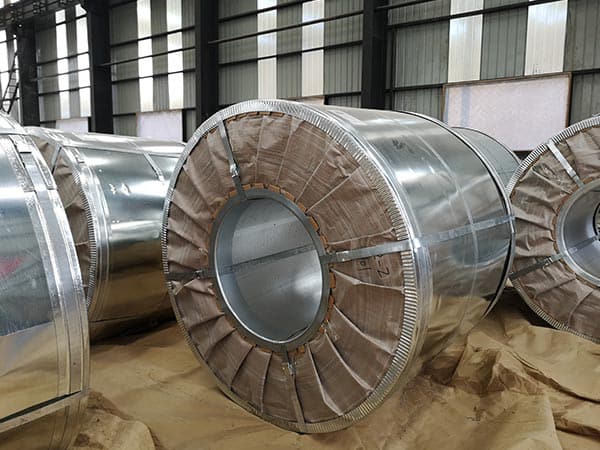
Understanding S700MC: The Benchmark for High-Strength Low-Alloy Steel
S700MC is a high-yield-strength structural steel produced via thermomechanically controlled processing (TMCP). Governed by the EN 10149-2 standard, this grade is specifically engineered for cold-forming applications where weight reduction and structural integrity are paramount. The 'S' denotes structural steel, '700' signifies a minimum yield strength of 700 MPa, and 'MC' indicates its thermomechanically rolled state with high cold-formability. For engineers and procurement specialists in India and Iran, identifying equivalents requires a deep dive into the metallurgical properties and the specific capabilities of local steel giants.
The demand for S700MC equivalents has surged in the automotive, crane manufacturing, and heavy machinery sectors. By utilizing these high-strength materials, manufacturers can reduce the thickness of structural components without compromising safety, leading to lighter vehicles and lower fuel consumption. The chemistry of these steels is characterized by low carbon content and micro-alloying with elements like Niobium (Nb), Titanium (Ti), and Vanadium (V), which facilitate grain refinement and precipitation hardening during the TMCP process.
Top 5 S700MC Steel Equivalents from Indian Mills
The Indian steel industry has evolved significantly, with major players now capable of producing high-performance HSLA steels that match or exceed international standards. When looking for S700MC equivalents in India, the following mills and their respective grades are the primary choices:
- 1. JSW Steel - JSW Trusteel 700: JSW Steel utilizes advanced TMCP technology to produce high-strength hot-rolled coils. Their 700 MPa grade is widely used in truck chassis and long-member construction, offering excellent bendability and weldability.
- 2. Tata Steel - Tata Astrum / High Strength Structural Steel: Tata Steel provides high-strength grades that align with IS 2062 E700 standards. Their focus on clean steel technology ensures minimal inclusions, which is critical for maintaining fatigue resistance in dynamic load applications.
- 3. ArcelorMittal Nippon Steel (AM/NS) India - AM/NS 700: Combining European and Japanese expertise, AM/NS India produces high-strength steels with tight dimensional tolerances and consistent mechanical properties, making them a direct substitute for European S700MC.
- 4. Steel Authority of India Limited (SAIL) - SAILMA 700HI: SAIL's micro-alloyed high-strength grades are specifically designed for heavy-duty infrastructure and mobile equipment. The 'HI' designation often refers to improved impact toughness at low temperatures.
- 5. Essar Steel (Legacy AM/NS) - High Strength Grades: Historically, Essar was a pioneer in high-strength plates in India, and their legacy continues under the AM/NS banner, providing robust alternatives for the construction and yellow goods industry.
Leading S700MC Steel Equivalents from Iranian Mills
Iran possesses one of the most robust steel industries in the Middle East, with facilities capable of producing sophisticated high-strength grades. The following mills provide the closest equivalents to S700MC:
- 1. Mobarakeh Steel Company (MSC): As the largest steel producer in the region, MSC produces high-strength low-alloy steels that strictly follow the EN 10149-2 standard. Their S700MC equivalent is frequently used in the domestic automotive and heavy transport sectors.
- 2. Oxin Steel Khuzestan: Specialized in heavy plates, Oxin Steel produces high-strength grades that meet the requirements for structural engineering and pressure vessels. Their ability to produce thicker sections with high yield strength makes them unique in the Iranian market.
- 3. Khuzestan Steel Company (KSC): While primarily a billet and slab producer, their high-quality feed material is used by downstream rollers to produce high-strength structural sections equivalent to S700MC.
- 4. Ahvaz Rolling and Pipe Mills Company (ARPCO): They focus on specialized strips and coils, often catering to the specific needs of the Iranian oil and gas and transport industries requiring high-strength formable steels.
- 5. Esfahan Steel Company (ESCO): Known for structural sections, ESCO produces high-strength beams and channels that utilize micro-alloying techniques similar to those used in S700MC production to ensure structural efficiency.
Technical Comparison: Mechanical and Chemical Properties
To ensure a successful substitution, it is vital to compare the mechanical properties and chemical compositions of these equivalents. The following table provides a generalized comparison between standard S700MC and its typical Indian and Iranian counterparts.
| Property/Grade | S700MC (EN 10149-2) | Indian Equivalent (IS 2062 E700) | Iranian Equivalent (MSC S700MC) |
|---|---|---|---|
| Yield Strength (min MPa) | 700 | 700 | 700 |
| Tensile Strength (MPa) | 750 - 950 | 750 - 940 | 750 - 950 |
| Elongation (min %) | 12 (t < 3mm) | 12 | 12 |
| Carbon (max %) | 0.12 | 0.12 - 0.15 | 0.12 |
| Manganese (max %) | 2.10 | 2.00 | 2.10 |
| Micro-alloying (Nb, Ti, V) | Total < 0.22% | Present | Present |
The chemical composition is kept low in carbon to ensure that the steel remains weldable and ductile. The strength is derived not from carbon, but from the grain refinement achieved during the controlled cooling process on the hot strip mill.
Processing Performance: Welding and Cold Forming
One of the primary reasons for selecting S700MC or its equivalents is the ease of processing. Despite its high strength, the material behaves exceptionally well during fabrication. In terms of weldability, the low carbon equivalent (CEV) value ensures that these steels can be welded using standard methods like MIG/MAG, submerged arc welding (SAW), and laser welding without the mandatory need for preheating, provided the thickness is within reasonable limits.
Cold forming is another critical attribute. The fine-grained microstructure allows for tight bending radii. For S700MC equivalents, a typical minimum bending radius is 1.0 to 1.5 times the thickness (t), depending on the orientation of the bend relative to the rolling direction. This is essential for manufacturing complex chassis components and telescopic crane booms where precision and strength are required simultaneously.
Environmental Adaptability and Fatigue Resistance
High-strength steels must perform reliably under varying environmental conditions. Indian mills often optimize their E700 grades for high-temperature stability and humidity resistance, given the tropical climate. Conversely, Iranian steel used in mountainous or desert regions must withstand significant temperature fluctuations. The impact toughness of S700MC equivalents is typically tested at -20°C or -40°C to ensure the material does not undergo brittle fracture in cold climates.
Fatigue resistance is a major factor in the lifespan of mobile equipment. The TMCP process creates a very uniform microstructure that resists crack initiation. When substituting S700MC with Indian or Iranian equivalents, it is important to verify the surface quality, as surface decarburization or scale can negatively impact fatigue life. Leading mills like JSW and Mobarakeh use advanced descaling systems to ensure a superior surface finish.
Expanding Industrial Applications
The transition to S700MC equivalents is driving innovation across several industries. In the transportation sector, the use of 700 MPa steel for trailer frames and side members reduces the tare weight of the vehicle, allowing for higher payloads. This is particularly relevant in the logistics hubs of Mumbai and Tehran, where efficiency is key to profitability.
In the construction and lifting equipment industry, the high strength-to-weight ratio allows for the design of longer crane booms and more robust earthmoving equipment. The energy sector also benefits, as high-strength steels are used in the supports for solar panels and wind turbine components, where wind loads require high structural stiffness but logistics favor lighter parts for easier assembly in remote areas.
Strategic Procurement Considerations
When sourcing S700MC equivalents in India or Iran, buyers must look beyond the name of the grade. It is essential to request Mill Test Certificates (MTC) that confirm compliance with EN 10149-2 or the equivalent national standard. Attention should be paid to the 'Carbon Equivalent' value to ensure welding compatibility with existing shop floor procedures. Furthermore, verifying the mill's capability to provide specific widths and thicknesses can prevent unnecessary welding seams in large-scale projects. Both Indian and Iranian mills have significantly closed the gap with European producers, offering high-quality HSLA solutions that provide a competitive edge in modern engineering and manufacturing.
Leave a message