
S900MC automobile frame steel density
Detailed analysis of S900MC automobile frame steel, covering density, mechanical properties, thermomechanical processing, and advanced application insights for automotive lightweighting.
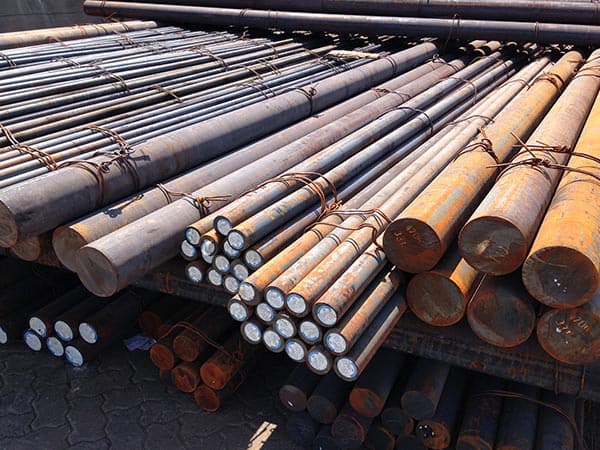
S900MC Density: The Physical Foundation of Lightweight Design
In the rigorous world of automotive engineering, the density of structural materials dictates the potential for weight reduction and fuel efficiency. S900MC automobile frame steel, governed by the EN 10149-2 standard, possesses a density of approximately 7.85 g/cm³ (7850 kg/m³). While this value aligns with conventional carbon steels, the true engineering value of S900MC lies in its exceptional strength-to-weight ratio. By utilizing a material with a yield strength of 900 MPa, designers can significantly reduce the cross-sectional thickness of frame components without compromising structural integrity, effectively achieving a "lighter" chassis despite the constant density of the metal itself.
Calculations for the mass of heavy-duty truck longitudinal beams or telescopic crane arms rely on this precise density figure. When compared to traditional S355 structural steel, S900MC allows for a weight reduction of up to 30-40% in specific load-bearing applications. This density constant, paired with high tensile performance, ensures that the vehicle's dead weight is minimized, directly translating to higher payload capacities and reduced carbon emissions during operation.
Chemical Composition and Micro-alloying Strategy
The high performance of S900MC is not a result of high alloy content but rather a sophisticated micro-alloying strategy combined with precise thermomechanical processing. The chemical composition is strictly controlled to maintain weldability and formability while achieving ultra-high strength.
| Element | Maximum Content (%) |
|---|---|
| Carbon (C) | 0.20 |
| Manganese (Mn) | 2.20 |
| Silicon (Si) | 0.60 |
| Phosphorus (P) | 0.025 |
| Sulfur (S) | 0.015 |
| Aluminum (Al) | 0.015 |
| Niobium (Nb) + Titanium (Ti) + Vanadium (V) | 0.22 |
The inclusion of Niobium (Nb) and Titanium (Ti) is critical. These elements form fine carbonitride precipitates during the cooling process, which pin grain boundaries and prevent grain growth. This results in an extremely fine-grained microstructure, which is the primary mechanism behind the steel's high yield strength and excellent low-temperature toughness.
Mechanical Properties and Structural Integrity
S900MC is classified as a high-strength cold-forming steel. Its mechanical properties are tailored for components that must withstand extreme dynamic and static loads. The "900" in its designation refers to its minimum yield strength, a benchmark that places it at the pinnacle of thermomechanically rolled strip steels.
- Yield Strength (ReH): Minimum 900 MPa.
- Tensile Strength (Rm): 930 to 1200 MPa.
- Elongation (A5): Minimum 7% (thickness dependent).
- Impact Energy: Typically tested at -20°C or -40°C to ensure brittle fracture resistance.
The stress-strain behavior of S900MC exhibits a continuous yielding characteristic, which is beneficial for complex forming operations. However, the high yield-to-tensile ratio requires careful consideration during the design phase, particularly regarding the elastic springback that occurs after cold forming.
Thermomechanical Controlled Processing (TMCP)
The manufacturing of S900MC relies on Thermomechanical Controlled Processing (TMCP). Unlike traditional normalized steels, TMCP steel gains its properties through a combination of specific rolling temperatures and accelerated cooling rates. This process refines the grain size to a level unattainable through conventional heat treatment.
Because the strength is derived from this specific rolling history, S900MC should not be subjected to subsequent high-temperature heat treatments. Heating the material above its transformation temperature (typically around 580°C to 600°C for extended periods) will lead to grain coarsening and a dramatic loss of yield strength. This characteristic necessitates cold forming or very carefully controlled welding procedures during fabrication.
Advanced Fabrication: Bending and Cutting
Processing S900MC requires equipment capable of handling high-force requirements. When cold bending, the minimum mandrel radius is larger than that of lower-strength grades to prevent cracking on the outer tension surface.
- Bending Radius: For thicknesses (t) less than 3mm, a minimum radius of 3.0t is recommended for a 90° bend.
- Springback: Due to the high yield strength, springback is significantly greater than in S355 or S700MC. Tooling must be designed with over-bending compensation.
- Edge Quality: Laser cutting is the preferred method for S900MC. The high precision and narrow heat-affected zone (HAZ) preserve the material's properties near the cut edge. Plasma cutting is also viable but requires higher feed speeds to minimize heat input.
Welding Metallurgy and Joint Efficiency
Welding S900MC is entirely feasible using standard processes such as MAG (Metal Active Gas) or laser welding, provided the heat input is strictly monitored. The primary challenge is the potential softening of the Heat Affected Zone (HAZ). Excessive heat input can cause the fine-grained structure to revert to a coarser state, creating a localized region with lower strength than the base metal.
To maintain joint efficiency, it is recommended to use filler metals with matching or slightly lower strength, depending on the design requirements. Low heat input techniques, such as pulsed arc welding, help control the t8/5 cooling time, ensuring that the cooling rate is fast enough to maintain a fine microstructure but slow enough to avoid hydrogen-induced cracking. Preheating is generally not required for S900MC due to its low carbon equivalent (CEV), which enhances its resistance to cold cracking.
Environmental Adaptability and Fatigue Life
Automobile frames are subjected to harsh environmental conditions, including corrosive road salts and cyclic loading. S900MC offers robust fatigue resistance due to its homogeneous microstructure and high tensile strength. Fatigue cracks are less likely to initiate in the fine-grained matrix compared to coarser structural steels.
Regarding corrosion, while S900MC is not a weathering steel, its low alloy content makes it highly receptive to modern coating systems. E-coating (electrophoretic deposition) and hot-dip galvanizing are commonly used. However, if hot-dip galvanizing is chosen, the immersion time must be minimized, and the potential for liquid metal embrittlement must be assessed, although this is rare for this specific grade.
Industrial Applications and Economic Impact
The adoption of S900MC is most prevalent in industries where weight is a critical performance metric. In the transport sector, it is used for the longitudinal members of truck chassis, cross members, and bumper brackets. In the lifting and mobile crane industry, S900MC is the standard for telescopic booms, where the reduction in self-weight allows for greater reach and lifting capacity.
From an economic perspective, while the cost per ton of S900MC is higher than that of S355, the total cost of the structure often decreases. Thinner plates lead to lower total weight, which reduces material consumption and shipping costs. Furthermore, the reduction in weld volume due to thinner sections can lead to faster production cycles and lower filler metal consumption, offsetting the higher initial material price.
The shift toward S900MC represents a move toward sustainable engineering. By enabling lighter vehicles, it reduces fuel consumption and increases the efficiency of global logistics. As manufacturing technologies continue to evolve, the integration of S900MC into complex automotive architectures will remain a cornerstone of high-performance structural design.
Leave a message