
What is the scope of S960MC automobile wheels steel processing
Explore the comprehensive processing scope of S960MC high-strength steel for automotive wheels, covering mechanical properties, cold forming, welding, and industrial applications.
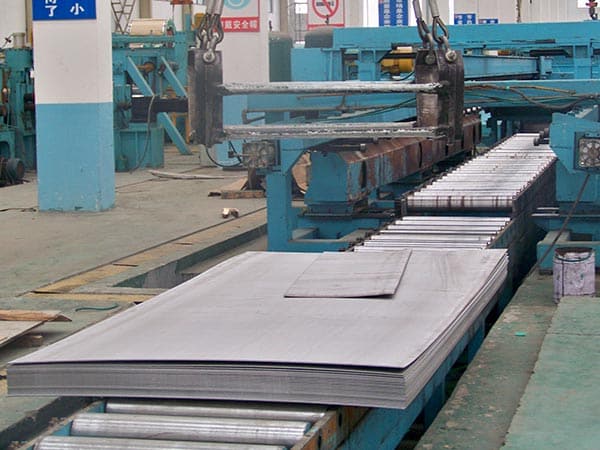
The Evolution of S960MC in High-Performance Wheel Manufacturing
As the automotive industry pivots toward lightweighting and energy efficiency, the demand for materials that combine extreme strength with workability has skyrocketed. S960MC, a thermomechanically rolled high-strength low-alloy (HSLA) steel, stands at the pinnacle of this transformation. Designed specifically for cold forming, this steel grade offers a minimum yield strength of 960 MPa, making it an ideal candidate for heavy-duty truck wheels, commercial vehicle chassis, and specialized structural components. Understanding the scope of S960MC processing requires a deep dive into its metallurgical profile and how it responds to various manufacturing stresses.
Chemical Composition and Metallurgical Foundations
The processing characteristics of S960MC are dictated by its precise chemical makeup. Unlike traditional carbon steels, S960MC utilizes a micro-alloying strategy involving elements like Niobium (Nb), Vanadium (V), and Titanium (Ti). These elements facilitate grain refinement during the thermomechanical rolling process, resulting in a fine-grained microstructure that balances hardness with ductility. This structural integrity is what allows the steel to be processed into complex wheel geometries without losing its load-bearing capacity.
| Element | Max Content (%) | Impact on Processing |
|---|---|---|
| Carbon (C) | 0.20 | Ensures weldability while maintaining hardness. |
| Manganese (Mn) | 2.20 | Increases hardenability and tensile strength. |
| Silicon (Si) | 0.60 | Improves deoxidation and solid solution strengthening. |
| Niobium (Nb) | 0.09 | Refines grain size for better toughness. |
Mechanical Performance Metrics for Wheel Engineering
When processing S960MC for automobile wheels, engineers must account for its high yield-to-tensile ratio. The material exhibits a tensile strength between 980 and 1250 MPa. This high energy absorption capacity is critical for wheel discs and rims that face constant cyclic loading and impact from uneven road surfaces. The elongation properties, typically around 7% to 10% (depending on thickness), define the limits of how much the material can be stretched during the spinning or stamping process.
Advanced Cold Forming and Bending Scope
One of the primary processing scopes for S960MC is cold forming. Despite its extreme strength, the material is engineered for excellent bendability. However, the high strength necessitates significant force and precise control over springback. Springback in S960MC is much more pronounced than in standard S355 or S700MC grades. Manufacturers must use sophisticated CNC press brakes and stamping dies that can compensate for this elastic recovery.
- Minimum Bending Radius: For thicknesses (t) under 3mm, a bending radius of at least 2.5t to 3t is recommended to prevent micro-cracking on the outer tension zone.
- Die Clearance: Increased clearance in stamping dies is necessary to accommodate the material's resistance and prevent premature tool wear.
- Surface Quality: The cold-rolled surface of S960MC allows for high-precision forming, which is essential for the aerodynamic profiles of modern wheels.
Precision Cutting: Laser vs. Plasma
In the fabrication of wheel centers and cooling vents, cutting precision is paramount. S960MC responds exceptionally well to laser cutting due to its clean chemical composition and low impurity levels. Laser cutting provides a narrow heat-affected zone (HAZ), which is vital for maintaining the structural integrity of the 960 MPa yield strength near the edges. While plasma cutting is feasible for thicker sections, laser cutting remains the preferred method for automotive applications where fatigue resistance at the cut edge is a critical safety factor.
Welding Challenges and Best Practices
Welding S960MC is a critical part of the processing scope, especially for multi-piece wheels or attaching the disc to the rim. The primary challenge is the potential softening of the Heat Affected Zone (HAZ). Because S960MC gains its strength from thermomechanical rolling and micro-alloying, excessive heat input can lead to grain growth and a localized reduction in strength. To mitigate this, low heat input welding techniques such as Metal Active Gas (MAG) or Laser Hybrid Welding are employed.
- Filler Materials: Use high-strength filler wires that match the base metal's mechanical properties, such as those compliant with AWS A5.28 (e.g., ER110S-G).
- Cooling Rates: Controlling the t8/5 cooling time (the time it takes to cool from 800°C to 500°C) is essential to ensure the microstructure remains martensitic/bainitic without becoming brittle.
- Preheating: Generally, S960MC does not require preheating if the ambient temperature is above 5°C and the thickness is moderate, which simplifies the production line flow.
Fatigue Resistance and Environmental Adaptation
Automobile wheels are safety-critical components subject to millions of stress cycles. S960MC exhibits superior fatigue strength compared to traditional steels, allowing for thinner gauges without compromising safety. This reduction in unsprung mass improves vehicle handling and fuel economy. Furthermore, the material's fine grain structure provides decent resistance to atmospheric corrosion, though wheels are typically coated with zinc-rich primers or powder coatings to ensure longevity in salt-heavy winter environments.
Expanding Industry Applications Beyond Wheels
While the focus here is on automobile wheels, the processing scope of S960MC extends to other high-stress automotive and transport sectors. Its ability to be formed into complex shapes while maintaining ultra-high strength makes it suitable for:
- Chassis Cross-members: Where weight reduction directly impacts payload capacity.
- Crane Booms and Lifting Equipment: Utilizing the high strength-to-weight ratio for extended reach.
- Safety Cages and Roll Bars: Providing maximum protection in high-impact scenarios.
Economic and Technical Optimization
Adopting S960MC in a production environment requires an initial investment in high-tonnage machinery and specialized tooling. However, the long-term benefits are substantial. By reducing the thickness of the wheel components by 20-30% compared to S700MC, manufacturers can offset the higher material cost per ton through weight savings and reduced shipping costs. The processing scope thus encompasses not just the physical shaping of the steel, but also a strategic shift in design philosophy toward "leaner and stronger" engineering.
Surface Treatment and Finishing
The final stage in the processing scope is surface preparation. S960MC is suitable for various finishing processes, including pickling, oiling, and painting. Due to its smooth surface finish from the thermomechanical rolling process, it requires minimal grinding or preparation before coating. This ensures that the aesthetic requirements of high-end automotive wheels are met alongside the rigorous mechanical demands. It is important to avoid high-temperature galvanizing processes that might exceed the tempering temperature of the steel, as this could compromise the 960 MPa yield strength.
Leave a message